North Georgia’s weather is unpredictable and unforgiving. Hailstorms, high winds, heavy rain, and ice events can hit any county from Bartow to Pickens with little warning. One missed inspection item can turn a minor repair into a full roof replacement, costing tens of thousands of dollars and disrupting your tenants or operations. Biannual professional inspections plus post-storm checks are the industry standard for commercial properties in this region. This guide gives you a complete, actionable checklist covering inspection timing, core components, storm protocols, and advanced monitoring so you can protect your investment all year long.
Table of Contents
- Inspection routines and timing: Building a storm-ready roof
- Core checklist items: What to inspect every time
- Storm damage protocol: What to do before and after major weather events
- Advanced roof monitoring and maintenance tips
- Why most commercial roof checklists fail North Georgia buildings
- Get expert help for commercial roof inspection and storm prep
- Frequently asked questions
Key Takeaways
| Point | Details |
|---|---|
| Inspect twice yearly | Professional spring and fall inspections plus storm checks prevent failures. |
| Prioritize drainage | Clearing debris from drains and gutters avoids 80 percent of roof damage. |
| Document everything | Photos and logs support insurance claims and warranty compliance after storms. |
| Use advanced testing | Infrared and drone surveys catch hidden issues for long-term roof health. |
Inspection routines and timing: Building a storm-ready roof
With the stakes set, it’s critical to understand how often and when to check your roof to stay ahead of potential failures. A reactive approach costs far more than a proactive one. Scheduling inspections around North Georgia’s seasonal patterns is the single most effective thing you can do.
Recommended inspection schedule:
| Inspection type | Frequency | Trigger |
|---|---|---|
| Routine professional | Twice per year | Spring and fall |
| Post-storm check | After every major event | Wind, hail, heavy rain, ice |
| Quarterly walk-through | Every 3 months | High-traffic or aging roofs |
| Special inspection | As needed | Renovations, HVAC additions |
Industry-standard practice calls for biannual professional inspections plus post-storm evaluations for commercial properties in North Georgia. Spring inspections catch winter damage before summer storms arrive. Fall inspections prepare your roof for ice and wind season.
There are three inspection stages every property manager should recognize:
- Routine inspections: Scheduled visits by a licensed professional, documented in a log
- Emergency inspections: Triggered immediately after significant weather events
- Special inspections: Required after major building changes like rooftop HVAC installations or additions
Assigning clear responsibility matters just as much as the schedule itself. Designate one person internally to coordinate with your roofing contractor, maintain the inspection log, and flag issues that need professional attention. Without ownership, inspections get delayed or skipped entirely.
Keep a written log for every visit. Record the date, inspector name, weather conditions, findings, and any corrective actions taken. This log is critical for warranty claims and insurance documentation. You can find additional roofing maintenance tips to help build your internal process.
Pro Tip: Schedule your spring inspection in March or early April, before storm season peaks. That gives you time to complete any repairs before June weather arrives.
For properties with rooftop equipment, foot traffic from maintenance crews, or aging membranes, quarterly walk-throughs add an important layer of protection. Pair those with your twice-yearly professional visits and your commercial roofing services relationship, and you have a solid, layered defense.
Core checklist items: What to inspect every time
Now that inspection timing is clear, let’s drill down into exactly what every North Georgia commercial roof inspection should cover. A thorough inspection goes beyond a quick visual scan. It targets the specific components most vulnerable to this region’s weather patterns.
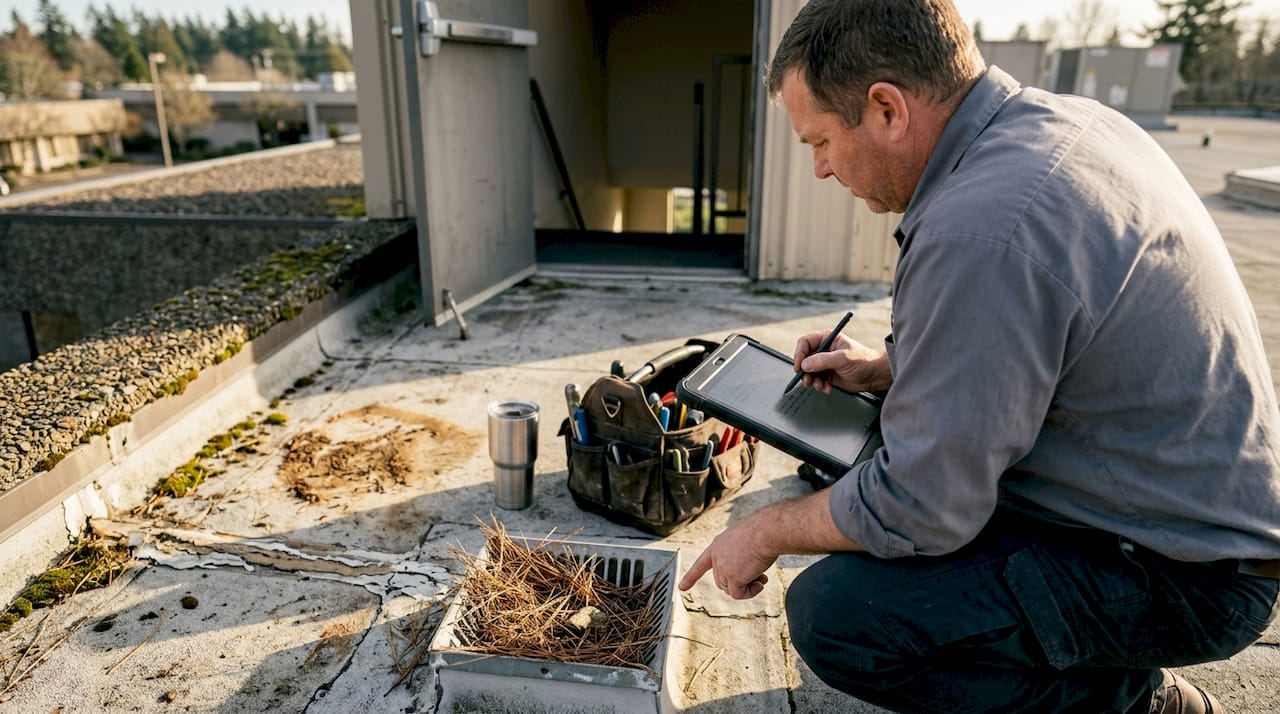
Essential inspection checklist:
| Component | What to look for | Risk level |
|---|---|---|
| Drainage (drains, scuppers, gutters) | Debris, blockages, physical damage | High |
| Membrane | Blisters, cracks, open seams | High |
| Flashing | Gaps, rust, improper sealing | High |
| Seams and joints | Separation, lifting, adhesive failure | Medium-High |
| Penetrations (HVAC, pipes, vents) | Gaps, cracked sealant, rust | Medium |
| Overhanging branches | Proximity, contact with roof surface | Medium |
Clearing debris from drains, gutters, and scuppers prevents ponding water, which is one of the leading causes of membrane failure. Debris causes the vast majority of drainage failures on flat and low-slope commercial roofs. Always test flow after clearing to confirm water moves freely.
Here is what to prioritize on every inspection:
- Drainage: Remove all debris first. Then run water through the system to confirm proper flow. Standing water after 48 hours signals a drainage problem.
- Membrane: Look for blisters, which indicate trapped moisture. Check for cracks or open seams, especially near edges and penetrations.
- Flashing: Inspect every edge, corner, and penetration point. Gaps or rust here allow water to enter the building structure directly.
- Scuppers and gutters: Clear blockages and check for physical damage or sagging. Damaged gutters redirect water toward the building foundation.
- Overhanging branches: Trim any branches within 10 feet of the roof. Branches cause impact damage during storms and create shade that holds moisture.
Pro Tip: Use a simple checklist form on a tablet or phone during every inspection. Photograph each item, even when it looks fine. That visual baseline makes it much easier to spot changes at the next visit.
For guidance on selecting the right contractor to conduct these inspections, review what makes a top roofing contractor stand out in North Georgia. And if debris buildup is a recurring issue, professional roof cleaning between inspections can extend your membrane’s lifespan significantly.
Storm damage protocol: What to do before and after major weather events
Everyday inspection is important, but storm scenarios demand a clear, immediate action plan tailored to North Georgia’s climate. Having a written protocol in place before a storm hits removes confusion and protects both people and property.
Pre-storm checklist:
- Trim overhanging trees and remove loose branches near the roofline
- Secure or remove any rooftop equipment, signage, or loose materials
- Confirm all drains, scuppers, and gutters are clear and flowing freely
- Review your current insurance policy and confirm coverage details
- Save your roofing contractor’s emergency contact number in your phone
Post-storm protocol:
- Conduct a ground-level visual inspection first. Never climb onto the roof until it is confirmed safe.
- Walk the interior of the building and check ceilings, walls, and any mechanical rooms for signs of water intrusion
- Photograph all visible damage from the ground and from inside the building
- Log the storm date, time, and observed conditions in your inspection record
- Contact a licensed roofing professional for an on-roof assessment before attempting any repairs
Safety first: Do not climb or attempt repairs until a professional confirms the roof is structurally sound. Hidden damage can make surfaces unstable even when they appear intact from below.
Documentation is not optional. Every photo, every log entry, and every contractor report strengthens your insurance claim and protects your warranty. Post-storm inspections should begin with safe ground-level assessment, thorough documentation, and a professional evaluation for any significant event.
North Georgia sees an average of 50 or more severe thunderstorm events per year, and hail damage is frequently underestimated after the fact. Many property owners discover storm damage weeks later when leaks appear inside the building. That delay can complicate insurance claims significantly.
Learn more about how to repair storm-damaged roofs with a step-by-step approach that keeps your property protected and your claim on track.
Advanced roof monitoring and maintenance tips
Basic checks provide strong protection, but integrating advanced strategies keeps roofs durable and compliant year after year. These tools are especially valuable for large commercial properties, multi-section roofs, or buildings with older membranes.
Advanced monitoring tools and techniques:
- Infrared thermography: Detects hidden moisture trapped beneath the membrane without cutting or probing. Wet insulation holds heat differently than dry insulation, making it visible on a thermal camera.
- Electric leak detection (ELD): Sends a low-voltage electrical current across the roof surface to pinpoint breaches in the membrane. Highly accurate on flat roofs with non-conductive substrates.
- Drone surveys: Ideal for large or multi-section roofs. Drones capture high-resolution imagery of every square foot without putting inspectors at risk. The footage also serves as excellent documentation for insurance and warranty records.
- Walk pads: Rubber or composite pads installed along maintenance pathways protect TPO (thermoplastic polyolefin) and EPDM (ethylene propylene diene monomer) membranes from foot traffic damage. These are often overlooked but critical on roofs with regular HVAC servicing.
Infrared, ELD, and drone surveys detect hidden problems and document roof history, while walk pads significantly reduce foot traffic damage on vulnerable membrane systems.
Several edge cases affect North Georgia commercial roofs that standard checklists miss:
- HVAC vibration can loosen flashing and sealant around rooftop units over time
- Pitch pockets (asphalt-filled metal frames around structural supports) dry out and crack, especially in summer heat
- Granule loss on modified bitumen roofs accelerates UV degradation
- Properties at higher elevations in the Blue Ridge foothills face occasional ice and snow loads that flat-roof systems are not always designed to handle
Pro Tip: Schedule annual advanced testing to stay compliant with most commercial roofing warranties. Many manufacturer warranties require documented professional inspections to remain valid. Skipping even one year can void coverage.
For large or complex properties, connect with expert commercial roofing help to determine which advanced monitoring methods fit your building type and budget.
Why most commercial roof checklists fail North Georgia buildings
Here is the honest truth: most generic commercial roof checklists are written for a national audience and miss the specific conditions that make North Georgia roofs vulnerable. They focus on leaks as the primary concern, but drainage failure is actually the root cause of most problems in this region.
North Georgia’s combination of high humidity, heavy tree cover, and rapid weather changes creates conditions that accelerate debris accumulation and moisture retention. A checklist that does not prioritize drainage above all else is missing the point. Clogged drainage systems cause the majority of failures in humid climates like ours, and professional evaluation is the only way to ensure compliance and warranty validity.
We also see property managers attempt DIY repairs after storms to save money. That decision often voids the manufacturer warranty and creates gaps in the insurance documentation trail. Every significant repair needs a licensed contractor involved, both for quality and for record-keeping.
Local code variations matter too. What passes inspection in metro Atlanta may not meet the requirements in Cherokee or Gilmer County. Working with a contractor who knows North Georgia’s specific building codes and weather patterns is not a luxury. It is a necessity. Stay current with roofing industry insights to keep your approach sharp and locally relevant.
Get expert help for commercial roof inspection and storm prep
Putting these checklist steps into action takes the right support. Professional services ensure nothing gets overlooked, especially when storm season is approaching or damage has already occurred.

At Infinity Roofing GA, we specialize in commercial roof inspections, advanced diagnostics, and fast storm damage repair for properties across North Georgia. Our licensed and insured team uses proven methods to identify problems early and document everything your insurance carrier needs. We also handle commercial roofing services from routine maintenance to full replacements, and our gutter maintenance specialists keep your drainage systems clear and functional. Call us today or schedule online for a same-day response. Protect your roof before the next storm hits.
Frequently asked questions
How often should a commercial roof in North Georgia be inspected?
Commercial roofs should be professionally inspected twice yearly, in spring and fall, with additional checks after any major storm event.
What’s the most common cause of commercial roof failure after storms?
Clogged drainage systems are the primary culprit. Debris causes most drainage failures, leading to ponding water that breaks down the membrane over time.
What should I do immediately after a severe storm?
Start with a safe ground-level inspection, photograph all visible damage, check the building interior for water intrusion, and contact a licensed roofing professional before attempting any repairs.
Are advanced inspections like thermal imaging or drones necessary?
Annual non-destructive testing is strongly recommended, especially for large or aging roofs, to detect hidden moisture and maintain manufacturer warranty compliance.