You wake up after a rough North Georgia night, look outside, and spot shingles scattered across the lawn. Maybe there’s a water stain spreading on your ceiling. That sinking feeling hits fast. Storm damage is stressful, and the decisions you make in the first 24 to 48 hours matter more than most homeowners realize. Acting quickly protects your home, your family, and your wallet. This guide walks you through every step, from your first safety check to filing your insurance claim and hiring the right local contractor to get your roof back in top shape.
Table of Contents
- Prioritize safety and assess visible storm damage
- Temporary mitigation to protect your home before repairs
- Initiate your insurance claim: What to know and do
- Hiring the right North GA storm damage roofing contractor
- Should you repair or replace? Making the right call
- Why transparency and local expertise matter most in storm roof repair
- Ready for expert help? Let Infinity Roofing handle your storm repairs
- Frequently asked questions
Key Takeaways
| Point | Details |
|---|---|
| Act fast, stay safe | Immediate safety checks and ground-level damage photos lay the groundwork for fast, effective repairs. |
| Document and mitigate | Professional tarping, debris removal, and clear documentation are musts for both repairs and smooth insurance claims. |
| Hire certified local pros | Choose only licensed, credentialed North Georgia contractors for code-compliant, insured storm roof work. |
| Know repair versus replacement | Spot repair may be allowed for minor damage, but widespread or brittle materials often require full roof replacement. |
| Insurance timelines matter | Filing your storm claim promptly and meeting adjusters with clear documentation maximizes coverage and speeds recovery. |
Prioritize safety and assess visible storm damage
Once the initial shock passes, safety must be your top priority before any action. Do not rush outside the moment the storm clears. Downed power lines, slippery debris, and unstable branches are real hazards, and they cause injuries every year.
Start by scanning your yard from a window or doorway. Look for:
- Downed or sagging power lines near your roofline or yard
- Large branches resting on the roof or against the house
- Pooling water near the foundation or in the garage
- Visible holes or gaps in the roofline from ground level
- Missing, curled, or lifted shingles you can spot without climbing
- Dislodged gutters pulling away from the fascia board
Once you confirm it is safe to step outside, conduct a careful ground-level walkthrough. Bring your phone to photograph everything. A severe storm roof assessment starts with this visual check before any professional ever sets foot on your property.
| Damage type | What to look for | Tools or gear needed |
|---|---|---|
| Missing shingles | Bare patches or granules in gutters | Phone camera, binoculars |
| Hail dents | Round dents on vents, flashing, or gutters | Binoculars, flashlight |
| Gutter damage | Sagging, detached, or bent sections | None, ground level only |
| Soffit or fascia damage | Cracked or missing boards along the roofline | Binoculars |
| Interior water intrusion | Stains on ceilings or walls, wet insulation | Flashlight, moisture meter |
Important: Never climb onto a wet or visibly damaged roof. Even experienced roofers use fall protection equipment. Your safety is worth more than a faster inspection.
For additional Roswell roofing safety tips specific to North Georgia conditions, our team has resources to help you stay protected.
Pro Tip: Even if nothing looks wrong from the ground, hidden issues like bruised shingles or underlayment punctures are common after hail. Always schedule a professional inspection after any significant storm, even when visible damage seems minor.
Temporary mitigation to protect your home before repairs
After your safety check, immediate steps to stabilize your home are crucial before major repairs. Water is your biggest enemy right now. Every hour a gap or hole stays open, moisture works deeper into your decking, insulation, and framing.
Here is what to do in order:
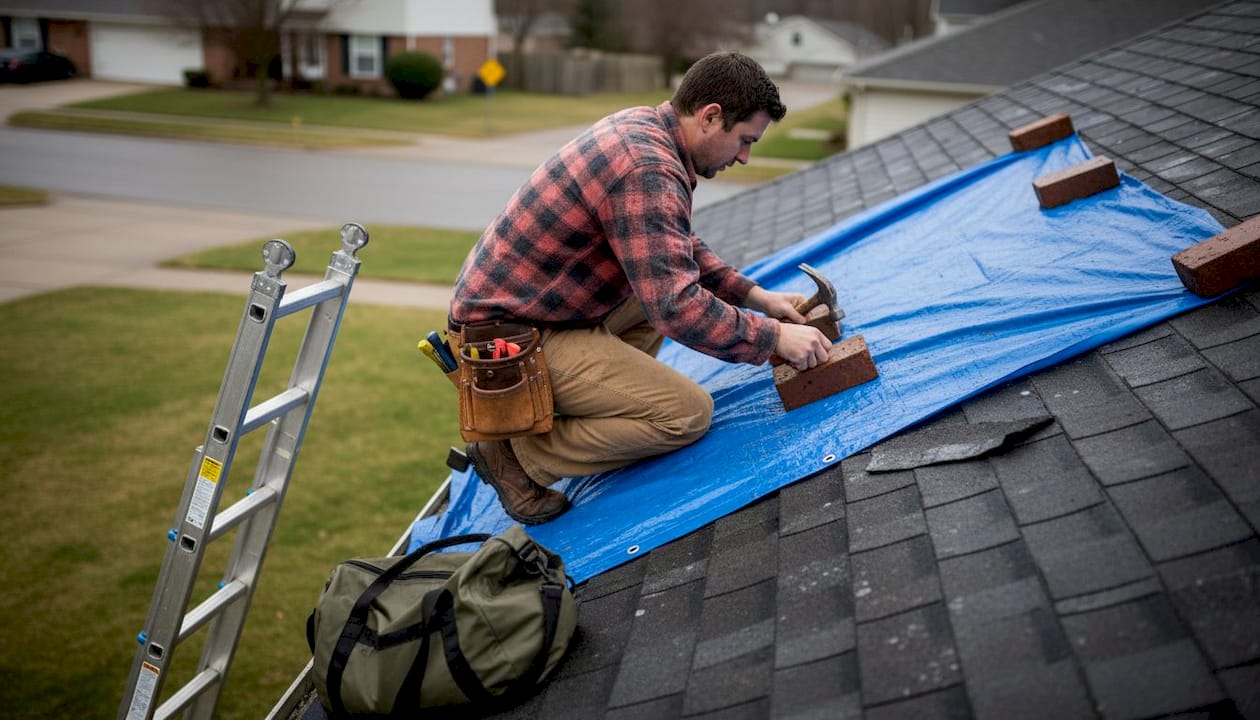
- Call a licensed roofer for emergency tarping. Professionally installed tarps are secured properly and will not trap moisture or shift in wind. Temporary roof repair steps done incorrectly can void manufacturer warranties and create new leak points.
- Clear your gutters and downspouts. Blocked gutters cause water to back up under the shingles. Remove leaves, branches, and debris carefully from the ground using a gutter tool if possible.
- Remove standing water indoors. If water entered your attic or living space, use fans and dehumidifiers immediately to prevent mold growth, which can begin within 24 to 48 hours.
- Seal any broken windows or gaps with plastic sheeting to keep rain out while you wait for repairs.
- Document every mitigation step. Take photos before, during, and after each action. Save all receipts for materials or emergency services.
Key fact: Most homeowner insurance policies require you to take reasonable steps to prevent further damage. Failing to act can give your insurer grounds to reduce or deny your claim.
For more Dallas emergency roof tips tailored to our local weather patterns, we have guidance ready for North Georgia homeowners.
Pro Tip: Save every receipt from tarps, fans, dehumidifiers, or any emergency labor. These mitigation costs are often reimbursable under your policy, but only if you have documentation to submit with your claim.
Initiate your insurance claim: What to know and do
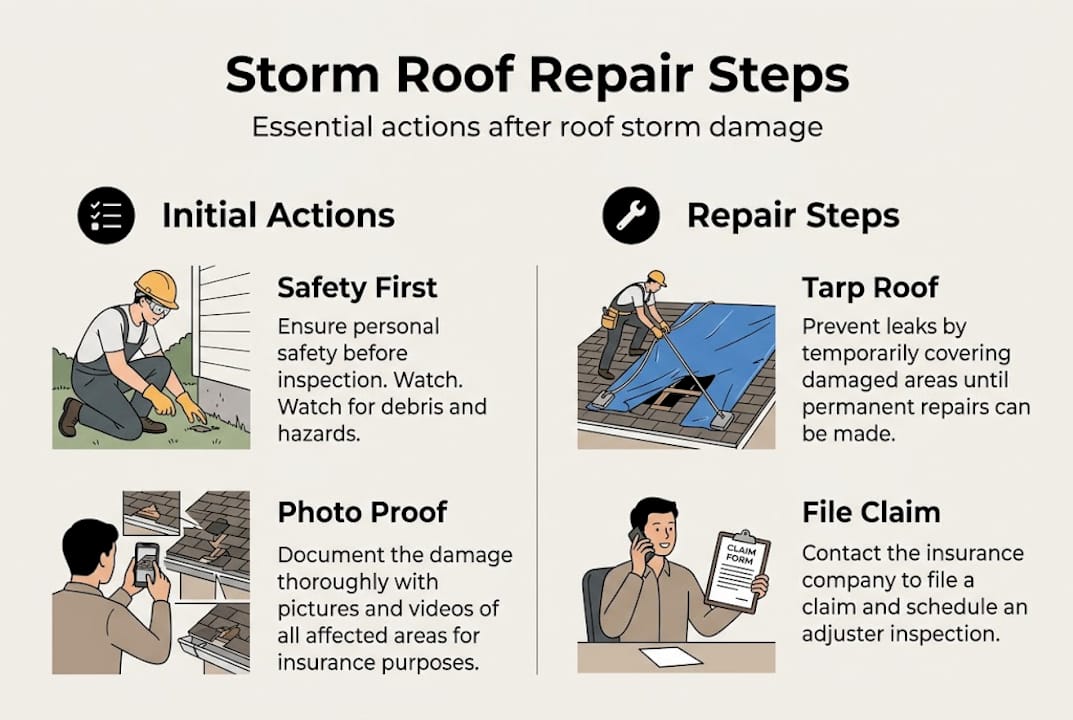
Once your home is secure, the next priority is working with your insurance to cover repairs. Do not wait. Contact your insurance company within 48 hours of the storm. Late filing can create complications and, in some cases, jeopardize your entire claim.
Here is how the process typically flows in Georgia:
- Call your insurer and report the damage. Get a claim number immediately.
- Submit your documentation: photos of damage, receipts for mitigation expenses, and any contractor inspection reports you have gathered.
- Schedule an adjuster visit. In Georgia, inspection timelines run 1 to 2 days for the initial inspection, with the adjuster typically arriving within 3 to 7 days after that.
- Be present when the adjuster arrives. Have your roofer there too. A contractor who understands insurance documentation and Xactimate scopes (the software adjusters use to price repairs) can ensure nothing gets missed.
- Review the settlement offer carefully before signing anything.
Understanding your policy type matters a lot here. There are two main types:
| Policy type | What it pays | Key difference |
|—|—|
| RCV (Replacement Cost Value) | Full cost to replace with new materials | Higher premium, better coverage |
| ACV (Actual Cash Value) | Depreciated value of damaged materials | Lower premium, more out of pocket |
As a general rule, file your claim promptly and review your policy for wind and hail deductibles, which are often separate from your standard deductible. Hail over 1 inch in diameter and wind speeds above 60 mph are the most common triggers for roof claims in North Georgia. Knowing this helps you communicate clearly with your adjuster.
For more detailed residential roofing insurance claim tips, our team is ready to walk you through the process step by step.
Hiring the right North GA storm damage roofing contractor
With your claim underway, who you hire to repair your roof will affect every step that follows. This decision carries real weight. A poor contractor can delay your repairs, create new problems, and even complicate your insurance payout.
Here is what to look for:
- Licensed and insured in Georgia. Ask for their license number and verify it. This is non-negotiable.
- Local references you can actually call. A contractor with verifiable work in your county is far more accountable than an out-of-state crew.
- GAF or NRCIA certification. These credentials indicate manufacturer-trained methods and code-compliant installation. Hiring certified local pros experienced in insurance work gives you a clear advantage.
- Insurance claim experience. Ask directly: have they worked with your insurer before? Can they help document the scope of work?
- A written, itemized estimate. Vague quotes lead to disputes. Demand specifics on materials, labor, and timeline.
Beware of door-to-door storm chasers. These are out-of-town crews that flood neighborhoods after major storms, offer low bids, and often disappear before warranty issues arise. Local firms with established reputations, like those with BBB accreditation and years of service in North Georgia, are far safer choices. Reputable storm damage contractors in Marietta and across the region offer 24/7 emergency response and hands-on insurance assistance.
For a full breakdown of Atlanta roofing contractor criteria and what to ask before signing, we have a detailed resource ready. You can also review the Marietta roof repair process to understand what a professional job looks like from start to finish.
Pro Tip: Get a written inspection from an independent expert before signing any contract. This protects you from contractors who may overstate damage or push unnecessary replacements.
Should you repair or replace? Making the right call
Understanding repair versus replacement helps you make informed, code-compliant decisions with your contractor. This is one of the most common questions we hear, and the answer depends on several factors.
As a baseline, spot repairs are appropriate for under 25% damage per IRC R908 guidelines, provided the existing materials are still structurally sound and compatible with new shingles. Full replacement becomes necessary when:
- Shingles are old, brittle, or from a discontinued product line
- Widespread damage affects multiple roof sections
- Code upgrades are required, such as adding drip edge or ice and water shield under Georgia’s 2026 building codes
- The shingle lift test fails, meaning shingles crack or break when gently lifted at the corner
| Scenario | Repair or replace | Key notes |
|---|---|---|
| Less than 25% damaged, newer shingles | Spot repair | Materials must match existing |
| Shingles over 15 years old, widespread damage | Full replacement | Insurance often supports this |
| Code upgrade required (drip edge, ice shield) | Replacement likely | Georgia code triggers apply |
| Cosmetic scuffing only, no leaks | Repair or claim cosmetic | Functional vs. cosmetic distinction matters |
| Active leaks, structural damage | Replacement | Safety and code compliance required |
Post-storm backlogs are real. After major weather events in North Georgia, repair delays of 10 to 14 days are common as contractors work through high demand. Plan ahead and get on the schedule early.
Never caulk storm damage as a fix. Caulk covers the symptom, not the cause. It traps moisture, accelerates rot, and will fail within months, often making the underlying problem worse.
For guidance on roof repair or replacement in Alpharetta and surrounding areas, our team can help you evaluate your specific situation with an honest, no-pressure inspection.
Why transparency and local expertise matter most in storm roof repair
We have seen it many times. A homeowner takes the lowest bid, the crew patches the visible damage, and six months later there is a new leak in the same spot. The real problem was never fixed. It was just covered.
Shortcuts like caulking over cracked flashing or skipping underlayment replacement do not show up immediately. They show up in winter, when ice dams form, or during the next heavy rain. By then, the contractor may be long gone, and your insurance window for that storm has closed.
The cheapest option is almost never the best option in storm repair. What actually protects your home is a contractor who is transparent about materials, honest about what needs replacing, and familiar with North Georgia’s specific weather patterns and code requirements. Local firms understand how our climate stresses roofing systems differently than contractors traveling from out of state.
Trust, communication, and documentation matter as much as the physical repair itself. A contractor who can clearly explain every line item, walk you through the insurance process, and provide expert roofing insights backed by local experience is the one worth hiring. We believe every homeowner deserves that level of service, not just those who know the right questions to ask.
Ready for expert help? Let Infinity Roofing handle your storm repairs
If you want peace of mind that every detail is handled by real local pros, here’s how Infinity Roofing can help.
At Infinity Roofing, we have been serving North Georgia homeowners since 2018 with licensed, insured teams ready to respond fast when storms hit. Our storm damage repair experts provide free inspections, same-day responses, and full insurance claim assistance from start to finish. We know how to document damage properly, work directly with adjusters, and make sure you receive the maximum coverage your policy allows.

We also offer complete gutter restoration help to address every part of your storm-damaged exterior. Whether you need emergency tarping today or a full roof replacement next week, our team is ready. Book your free storm damage inspection and let us handle the hard part.
Frequently asked questions
How soon should I call a roofer after storm damage?
Contact a professional within 1 to 2 days for an inspection. Georgia inspection timelines move quickly, and prompt action protects both your home and your insurance claim.
What are the most common signs of storm damage I can spot myself?
Look for missing or curled shingles, new water stains on ceilings, damaged gutters, and granules collecting in downspouts. A ground-level visual check for missing shingles, dents, or debris is your best starting point.
If I tarp my own roof, will insurance still cover repairs?
Insurance typically covers professional mitigation costs, but DIY tarping risks voiding manufacturer warranties or reducing your coverage. Use a certified contractor for any emergency tarping.
What does my roof insurance deductible usually cover?
Your deductible is the out-of-pocket amount you pay before coverage kicks in. Repair costs are reimbursed minus that deductible once your claim is approved.
Should I repair or replace if only part of my roof is damaged?
Spot repairs work well when less than 25% is damaged and materials match, but widespread damage or brittle older shingles typically require full replacement for lasting protection.