Picking the wrong commercial roof in North Georgia isn’t just a costly mistake. It can shut down your operations for days, invalidate your insurance claim, and leave your building exposed to the next storm season. With hail storms, heavy summer rain, and intense UV heat cycling through the region every year, the roofing system you choose needs to handle real punishment. This guide walks you through the key selection criteria, breaks down every major roofing type, and gives you a side-by-side comparison so you can make a confident, informed decision for your property.
Table of Contents
- Key criteria for selecting commercial roofing
- Understanding the main types of commercial roofing
- Commercial roofing comparison: Cost, durability, and best uses
- How to match roofing types with your building’s needs
- What most business owners overlook about commercial roofing
- Need a reliable commercial roof in North Georgia?
- Frequently asked questions
Key Takeaways
| Point | Details |
|---|---|
| Seams are critical | Most commercial roof leaks start at seams and edges, not in the main material. |
| Choose for durability | Metal and induction-welded single-ply roofs last longest in North Georgia’s weather. |
| Fit the roof to your needs | Pair roof type and features with your property’s function and exposure to storms. |
| Prioritize expert installation | Skilled installers and robust warranties are as important as the roofing material. |
Key criteria for selecting commercial roofing
Having previewed what’s at stake, let’s walk through the criteria every North Georgia property manager should use when evaluating roofing options. The region’s climate creates specific demands that go well beyond standard roofing recommendations you’d find in a generic national guide.
Durability against local weather is your starting point. North Georgia sees hail, windstorms, and prolonged heat that push roofing materials to their limits. A system that performs well in the Pacific Northwest may fail here within five years due to UV degradation alone.
Energy efficiency and insulation value matter more than many owners realize. A well-insulated commercial roof can reduce HVAC costs by 15 to 30 percent depending on the building size and occupancy. For restaurants, warehouses, and retail spaces running large climate control systems, this adds up fast.
Here are the core criteria to evaluate before you commit to any system:
- Slope and structure compatibility: Not every roofing system works on every roof pitch. Flat and low-slope roofs (under 2:12 pitch) require membrane or built-up systems, while higher slopes can support metal or modified bitumen options.
- Maintenance requirements: Some systems need biannual inspections and recoating every few years. Others are nearly maintenance-free for the first decade. Know your operational capacity before you choose.
- Upfront cost vs. life cycle cost: A budget membrane at $4 per square foot sounds appealing until you’re replacing it in 12 years. A premium metal roof at $10 per square foot may cost half as much over 40 years.
- Warranty and contractor expertise: Material warranties mean nothing if the installation is poor. Always verify that your contractor is certified by the manufacturer to install the specific system you’re buying.
- Seam and perimeter integrity: Seam and perimeter failures account for the majority of commercial roof leaks, which means where the roof meets edges, walls, and penetrations is where your real risk lives.
Pro Tip: When reviewing proposals, ask specifically about edge metal detailing, perimeter attachment methods, and seam welding or adhesion processes. Prioritize roofs with reinforced perimeters and minimal exposed seams. Our commercial roofing solutions page outlines what robust installation looks like in practice, and our commercial roofing checklist gives you a printable tool to use when comparing bids.
Understanding the main types of commercial roofing
With the selection criteria in mind, here are the main commercial roofing types you’ll encounter in North Georgia. Each system has a distinct performance profile, and understanding those profiles helps you filter out options that simply aren’t right for your building.
Single-ply membranes are the most widely installed commercial roofing systems in the Southeast today. There are three primary options:
- TPO (Thermoplastic Polyolefin): A white or light-colored membrane that reflects UV heat, making it especially useful in Georgia’s hot summers. Heat-welded seams make TPO very watertight when installed correctly. It’s cost-effective and widely available.
- PVC (Polyvinyl Chloride): Similar to TPO in appearance but with better chemical resistance, making it the preferred choice for restaurants or facilities that vent cooking grease through roof penetrations. PVC seams are also heat-welded and are generally considered more durable than TPO over time.
- EPDM (Ethylene Propylene Diene Monomer): A rubber membrane that’s been trusted in commercial roofing for decades. Standard EPDM uses adhesive seams, but fleece-backed EPDM offers enhanced hail resistance compared to standard EPDM, making it a smart upgrade for storm-prone areas of North Georgia.
Built-up roofing (BUR) consists of multiple layers of bitumen and reinforcing fabrics, often topped with gravel or a mineral cap sheet. It’s a proven, heavy-duty system with excellent waterproofing, though it’s heavier than modern membranes and less energy-efficient without added insulation.
Modified bitumen is an evolved version of BUR. It comes in rolls and is applied in one or two layers using heat (torch-applied) or cold adhesive methods. It handles foot traffic reasonably well and offers good flexibility in temperature extremes, though it requires periodic re-coating to maintain performance.
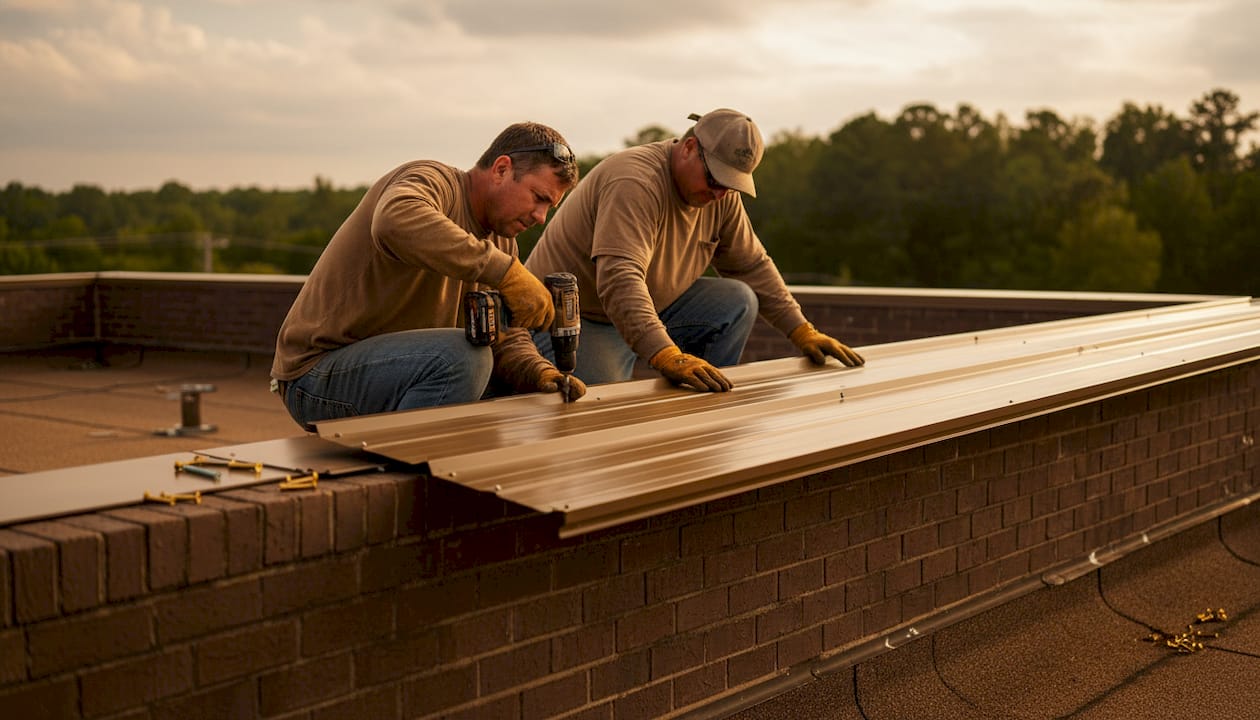
Metal roofing for commercial buildings typically uses standing-seam panels in steel, aluminum, or Galvalume. It’s one of the most durable options available, with lifespans often exceeding 40 years. Metal handles Georgia’s hail and wind events better than most membrane systems. It’s ideal for warehouses, manufacturing facilities, and any building with a moderate roof pitch.
Spray Polyurethane Foam (SPF) is a liquid-applied system that expands into a rigid, seamless foam layer across the entire roof surface. It offers outstanding insulation value and eliminates seams entirely, though it requires a protective elastomeric coating that must be refreshed every 5 to 10 years to maintain UV protection.
Check our roofing guides for in-depth breakdowns on each of these systems with installation photos and real project examples from North Georgia properties.
Commercial roofing comparison: Cost, durability, and best uses
Now that you know the options, let’s see how they perform side by side on what matters most for North Georgia businesses. The table below summarizes typical installed costs, expected lifespans, maintenance demands, and weather resistance ratings.
| Roofing type | Installed cost (per sq ft) | Life expectancy | Maintenance level | Storm/hail resistance |
|---|---|---|---|---|
| TPO single-ply | $4.50 to $7.00 | 20 to 30 years | Low | Good |
| PVC single-ply | $5.50 to $8.50 | 25 to 35 years | Low | Good |
| EPDM (fleece-backed) | $5.00 to $8.00 | 25 to 35 years | Low to medium | Very good |
| Built-up roofing (BUR) | $5.50 to $9.00 | 20 to 30 years | Medium | Good |
| Modified bitumen | $4.00 to $6.50 | 20 to 25 years | Medium | Moderate |
| Metal (standing seam) | $9.00 to $15.00 | 40 to 60 years | Low | Excellent |
| Spray polyurethane foam | $4.50 to $7.00 | 20+ years with recoating | Medium (recoating) | Good |
A few important callouts from this comparison:
- Flat and low-slope roofs are best served by TPO, PVC, EPDM, BUR, or SPF. These systems are specifically engineered for near-flat drainage profiles.
- Metal roofing dominates on roofs with a pitch of 2:12 or greater and is the top performer in severe weather longevity.
- Induction-welded single-ply systems use electromagnetic induction to attach the membrane from the top down, eliminating exposed fasteners. Induction-welded membrane roofs significantly reduce exposed fasteners, which directly enhances waterproofing integrity at every attachment point.
For businesses in storm-heavy zones like Paulding County, Cherokee County, and surrounding areas, our strong recommendation is metal or induction-welded single-ply membranes. The performance difference during a severe storm is not subtle. Review our roofing safety tips to understand how proper installation also protects your crew and tenants during and after extreme weather events.
How to match roofing types with your building’s needs
With the main systems compared, these steps will help you match the right type to your operational needs. Choosing based on price alone is one of the most common and expensive mistakes we see business owners make.
Follow this process to find the right fit:
- Measure and confirm your roof slope. Have a contractor confirm whether your roof is flat (under 1:12), low-slope (1:12 to 3:12), or steep-slope (above 3:12). This single factor eliminates roughly half the options immediately.
- Assess foot traffic and rooftop equipment. HVAC units, solar panels, and regular maintenance access require systems that can handle puncture and abrasion. Modified bitumen and fleece-backed EPDM handle foot traffic better than standard single-ply membranes.
- Identify your building’s use type. A restaurant needs PVC or TPO for chemical and grease resistance. A warehouse prioritizes impact resistance and insulation. An office building benefits most from a high-reflectivity TPO or SPF system for energy savings.
- Evaluate storm exposure. If your building sits in an open area without wind breaks, or in a historically hail-prone zone, upgrade to fleece-backed EPDM, induction-welded TPO, or a full metal system.
- Set a realistic total cost budget, not just an installation budget. Factor in maintenance, recoating (for SPF and modified bitumen), and expected lifespan when comparing quotes.
Pro Tip: For hail and storm resilience in North Georgia, fleece-backed EPDM or standing-seam metal are our top recommendations. The fleece backing in EPDM absorbs impact energy that would otherwise crack or puncture the membrane, and 80% of commercial leak issues trace back to seams and perimeters rather than material failures in the field.
“Most leaks come from seams and edges. Pay extra for better edge detailing. It’s the best money you’ll spend on any commercial roof.”
Use our detailed roofing checklist to walk through each of these steps with your contractor before signing any agreement. It covers slope assessment, material verification, warranty documentation, and installation quality markers in plain, practical language.
What most business owners overlook about commercial roofing
Here’s what the typical industry conversation misses, and what the smartest property owners in North Georgia ask about before they sign.
Most roofing discussions focus on material specs. TPO vs. EPDM. Metal vs. membrane. Energy efficiency ratings. It all matters, but in our experience since 2018, the number one factor in whether a commercial roof performs well or fails early isn’t the material at all. It’s the quality of seam and edge detailing during installation.
We’ve inspected roofs that used premium materials but were installed with sloppy seam welding, poorly formed drip edges, and inadequate flashing at penetrations. Those roofs leaked within three years. We’ve also seen budget TPO installed by a meticulous crew that has held up for over 15 years with just basic maintenance. The installer’s skill and attention to weatherproofing details specific to our region matter more than most people expect.
North Georgia presents specific challenges. We get freeze-thaw cycles in winter that expand and contract seams. We get hail in the spring that tests membrane flexibility. We get sustained UV heat in the summer that ages adhesives. A roofing crew that works primarily in Florida or South Georgia may not appreciate how those combined stresses interact. Always ask your contractor how long they’ve worked specifically in North Georgia, and ask for local references.
The second thing owners overlook is the value of a genuine workmanship warranty. Material warranties are standard. Workmanship warranties, covering installation defects and labor-related failures, are what protect you from the real risk. Ask every contractor for a written workmanship warranty with a minimum of 5 years, and make sure it’s backed by a company that will still be in business to honor it.
Finally, don’t neglect regular maintenance after installation. A $20,000 roof that receives annual inspections and minor repairs will outlast a $28,000 roof that’s never touched after the crew leaves. Schedule inspections every spring and fall, especially after major storm events. Review our storm damage repair advice to know exactly what to look for after any significant weather event before calling in a crew.
Need a reliable commercial roof in North Georgia?
At Infinity Roofing GA, we’ve been helping business owners and property managers across North Georgia protect their buildings since 2018. We understand the specific demands of our local climate, from hail season in Paulding County to summer UV stress across the Cherokee County corridor.
Whether you need help choosing the right system for a new build, repairing storm damage, or replacing an aging roof that’s reached the end of its life, our licensed and insured team is ready to help. We offer same-day responses and honest, detailed estimates with no pressure. Explore our storm damage repair services if you’ve recently experienced severe weather, or visit our local commercial roofing experts page to get a fast, accurate quote for your property. We’re your neighbors. We stand behind every roof we install.
Frequently asked questions
Which commercial roofing type lasts the longest in North Georgia?
Metal and induction-welded single-ply roofs typically offer the longest lifespan in North Georgia’s climate, with metal systems lasting 40 to 60 years. Induction-welded membranes also outperform standard systems by eliminating exposed fasteners that allow water intrusion over time.
What causes most commercial roof leaks?
The vast majority of leaks come from seams and perimeters rather than the roofing material itself. Seam and perimeter failures account for most commercial leaks, which is why edge detailing and seam quality are more important than material selection alone.
Is EPDM a good choice for North Georgia storms?
Standard EPDM performs well, but fleece-backed EPDM is the better choice for storm-prone areas. Fleece-backed EPDM provides significantly enhanced hail resistance compared to standard EPDM and is worth the modest cost upgrade.
What’s the best roof for a restaurant or high-traffic building?
PVC or induction-welded TPO are ideal for restaurants due to their chemical and grease resistance, while metal or induction-welded membranes suit high-traffic facilities. Induction-welded roofs eliminate exposed fasteners, which makes them especially durable under demanding use conditions.