Many homeowners facing an aging or storm-battered roof assume there’s only one option: tear it all off and start over. That assumption can cost thousands of dollars more than necessary. Roof restoration is a professional process that repairs, cleans, and protects your existing roof, extending its life without the disruption and expense of a full replacement. Here in North Georgia, where severe weather is a regular visitor, knowing the difference between restoration and replacement can be one of the smartest financial decisions you make for your home. This guide covers what roof restoration is, how the process works, how it compares to replacement, and how to choose the right professional for the job.
Table of Contents
- Understanding roof restoration: What it is and why it matters
- The roof restoration process step by step
- Roof restoration vs. roof replacement: Making the right choice
- How to choose a reliable roof restoration service in North Georgia
- The overlooked benefits of roof restoration in storm-prone Georgia
- Ready to restore your roof? Get local professional help
- Frequently asked questions
Key Takeaways
| Point | Details |
|---|---|
| Restoration saves money | Roof restoration is significantly more affordable and less disruptive than full roof replacement. |
| Adds years to roof life | A well-executed restoration can extend a roof’s usability by 10 to 15 years. |
| Crucial for storm areas | Regular restoration is key for homes in North Georgia due to frequent severe weather. |
| Choose licensed pros | Hiring licensed, local contractors protects you and ensures quality workmanship. |
Understanding roof restoration: What it is and why it matters
Roof restoration is not a patch job, and it is not a full tear-off. It sits in a smart middle ground. The process involves a thorough professional inspection, targeted minor repairs, deep cleaning, and the application of protective coatings that seal and strengthen your existing roof system. Unlike a repair, which addresses one specific problem area, restoration treats the entire roof surface. Unlike a replacement, it preserves your current structure and avoids the labor and material costs of starting from scratch.
Many homeowners confuse restoration with simply painting a roof or slapping on a sealant. In reality, it is a multi-stage professional service that requires skill, the right materials, and a detailed eye for damage. When done correctly, restoration can cost up to 60% less than a full roof replacement, making it a genuinely attractive option for budget-conscious homeowners.
Common signs your roof may be a good candidate for restoration:
- 🔍 Visible aging: curling, cracking, or missing shingles that are not widespread
- 💧 Minor leaks or water stains on interior ceilings
- 🌿 Moss, algae, or lichen growth on the roof surface
- 🌪️ Storm damage that is localized rather than roof-wide
- 📅 A roof between 10 and 20 years old with a structurally sound deck
The main goals of restoration are straightforward: extend the roof’s service life, restore its appearance, and create a stronger barrier against future weather damage. For North Georgia homeowners dealing with hail, high winds, and heavy rain every year, that last point is especially important. A professionally restored roof handles storm season better than one left to age without maintenance.
Pro Tip: If your area just experienced a major storm, check your roof for moss, granule loss in gutters, and soft spots before assuming you need a replacement. A quick look at our storm damaged roof repair guide can help you understand what you are actually dealing with.
Quick fact: Roof restoration is especially relevant in North Georgia’s storm-prone climate, where seasonal hail and wind events can wear down roofing materials faster than in milder regions.
The roof restoration process step by step
Knowing what to expect from a professional restoration keeps you informed and in control. The process is systematic, and each stage has a specific purpose. Here is how a quality restoration typically unfolds:
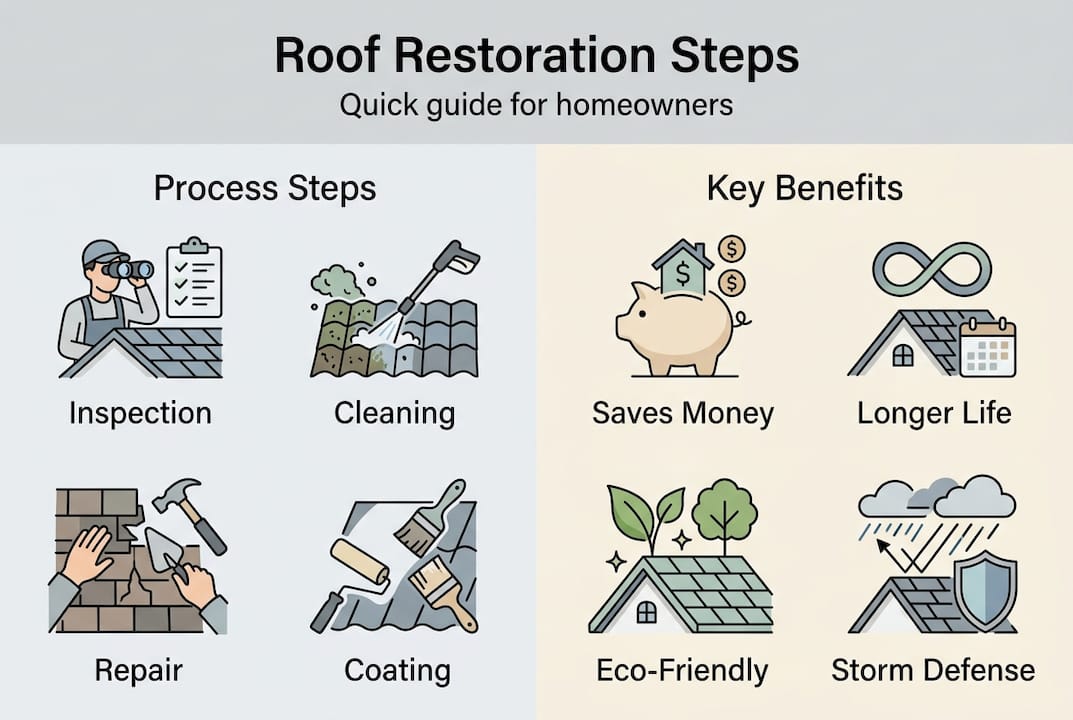
- Initial roof inspection — A licensed professional examines the entire roof for structural issues, damaged shingles, deteriorated flashing, and problem areas around vents, chimneys, and valleys. This step sets the scope for everything that follows.
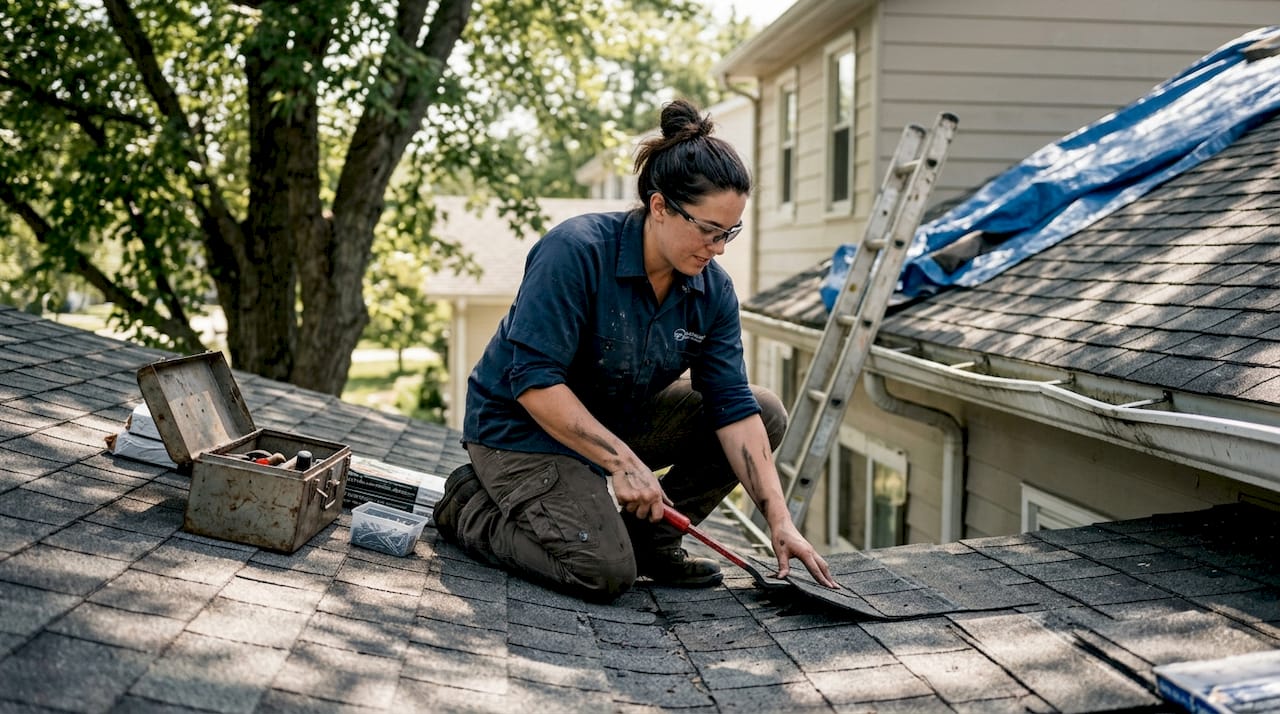
- Minor repairs — Loose or cracked shingles are replaced, flashing is resealed, and any small areas of decay or damage are addressed before cleaning begins. Skipping this step is a mistake that leads to coating failures down the road.
- Deep roof cleaning — The entire surface is cleaned to remove moss, algae, dirt, and debris. This is not a garden hose rinse. Professional roof cleaning services use low-pressure washing and specialized treatments that protect the shingles while eliminating biological growth that causes premature aging.
- Protective coating application — A high-quality roof coating is applied to the clean, repaired surface. The coating seals the roof, reflects UV rays, adds a waterproof layer, and can even reduce cooling costs by reflecting heat.
- Final inspection and documentation — A thorough walkthrough confirms the work meets quality standards. A typical roof restoration process includes inspection, repairs, cleaning, and protective coatings, all verified at completion.
Each of these stages adds real value. The cleaning prevents biological damage from continuing. The coating creates a sealed, weather-resistant surface. And the documentation gives you proof of work completed and a baseline for future maintenance.
Pro Tip: Always ask your contractor for before-and-after photos of your specific roof. Reputable professionals document their work, and those photos are useful if you ever need to file an insurance claim later.
Roof restoration vs. roof replacement: Making the right choice
This is the question most homeowners need answered. Both options have their place. The key is knowing which one fits your situation.
| Feature | Roof restoration | Roof replacement |
|---|---|---|
| Average cost | 40 to 60% less than replacement | Full material and labor cost |
| Time to complete | 1 to 3 days | 3 to 7 days or more |
| Disruption level | Low | High |
| Environmental impact | Minimal (no tear-off waste) | Significant (old materials to landfill) |
| Lifespan added | 10 to 15 years | 20 to 30 years (new roof) |
| Best for | Structurally sound, moderately aged roofs | Severely damaged or end-of-life roofs |
Restoration is not the right choice for every roof. If your decking (the wooden layer beneath the shingles) is rotted, if there is widespread structural failure, or if your roof has already been restored multiple times, replacement is the responsible path forward.
“When a roof has lost more than 25 percent of its functional integrity or the decking is compromised, restoration products cannot compensate for structural failure. In those cases, replacement is not just preferred, it is necessary.” — Roofing industry best practice guidance
For roofs that are moderately aged or have localized storm damage, restoration is genuinely the smarter financial move. A properly executed restoration can add 10 to 15 years to your roof’s life, which means you push a major capital expense further into the future while keeping your home protected right now.
The environmental case for restoration is also real. Roof tear-offs generate significant waste that ends up in landfills. Choosing restoration when it is viable is a practical and responsible decision.
How to choose a reliable roof restoration service in North Georgia
Not every roofing contractor offers true restoration services, and not every company that says they do will deliver quality results. Asking the right questions upfront protects you.
Questions to ask before hiring any roofing contractor:
- Are you licensed and insured in Georgia?
- Do you have experience specifically with roof restoration, not just replacement?
- Can you provide references from local North Georgia homeowners?
- What coatings and materials do you use, and are they manufacturer-approved?
- Do you offer a written warranty on both materials and labor?
- Will you provide a detailed written estimate before any work begins?
Using a licensed and insured contractor is non-negotiable. It protects you from liability if a worker is injured on your property, and it ensures the company is held to professional standards.
| Quality to look for | Why it matters |
|---|---|
| Local North Georgia experience | Familiarity with regional weather patterns and storm damage types |
| Valid Georgia license and insurance | Legal protection for you and your property |
| Written labor and material warranty | Accountability if work fails prematurely |
| Transparent, itemized quotes | No surprise charges after the job is done |
| Verifiable local references | Proof of real work in your community |
| Clear communication and fast response | A sign of how the company will treat you throughout the project |
We serve homeowners across the region, from our Atlanta roofing experts team to Marietta roofing pros and Smyrna roofers. Local service means faster response after storms, and it means we know the specific roofing challenges North Georgia weather creates.
Pro Tip: After a major storm, local roofing companies are typically able to respond significantly faster than large national chains. A local company has a direct stake in the community and knows what storm patterns to look for in your specific area.
The overlooked benefits of roof restoration in storm-prone Georgia
We work with North Georgia homeowners every season, and one pattern stands out clearly: most people underestimate how often and how hard storms actually hit their roofs. It is easy to forget about the roof until there is a visible problem, but by then the damage is often already compounding.
Restoration does more than save money upfront. A freshly restored and coated roof provides a reinforced barrier against the kind of wind-driven rain and hail that Georgia sees regularly from spring through fall. That physical protection also preserves your property’s value, which matters when the time comes to sell or refinance.
From a financial standpoint, homeowners who restore on a maintenance schedule often see lower long-term repair costs. Small issues get caught and fixed before they become big, expensive ones. Some insurance providers also look favorably on well-maintained roofs, which can influence your premiums over time.
The full picture on storm damage repair insights shows that prevention and timely restoration are almost always less expensive than reactive replacement. In our experience, the homeowners who treat their roofs proactively come out ahead every time. That is not just advice, it is what we see on the job week after week.
Ready to restore your roof? Get local professional help
If this guide has given you a clearer picture of what roof restoration involves, the next step is getting a professional set of eyes on your roof. The details matter, and a trained inspection can tell you quickly whether restoration is the right path or whether other work is needed.
At Infinity Roofing GA, we offer honest assessments, same-day responses, and quality restoration services backed by years of local experience in North Georgia. Our team also provides a detailed step-by-step guide for storm-damaged roofs, local gutter services to keep your drainage system working properly, and professional roof cleaning as a standalone service or as part of a full restoration. Get in touch today for a free estimate and let us help you protect your home the right way.
Frequently asked questions
How long does a roof restoration last?
A quality roof restoration can add 10 to 15 years to your roof’s lifespan when professionally completed using the right materials and techniques.
Is roof restoration worth it if my roof is very old?
Many older roofs still qualify for restoration if the underlying structure is sound. For severely damaged or structurally compromised roofs, restoration may not suffice and replacement becomes the better option.
Will my homeowner’s insurance cover roof restoration?
Insurance often covers restoration when the damage is storm-related. Review your specific policy details or speak directly with your insurance provider to understand what your coverage includes.
What is the most important benefit of roof restoration?
The biggest advantage is extending your roof’s life at a significantly lower cost. Restoration costs up to 60% less than a full replacement while still delivering meaningful protection and added years of service life.