A well-structured commercial roofing workflow is the integrated process that manages every stage of a roofing project from the first site assessment through final documentation, and it directly determines whether your project finishes on time, on budget, and with minimal disruption to your tenants or operations. Property managers and business owners who treat roofing as a series of disconnected tasks routinely face cost overruns, scheduling failures, and insurance claim denials. The solution is a repeatable, technology-supported process that connects inspection, planning, installation, and maintenance into one continuous system. Tools like CenterPoint Connect and OxMaint now make that level of integration achievable for properties of any size.
What are the core stages of the commercial roofing workflow?
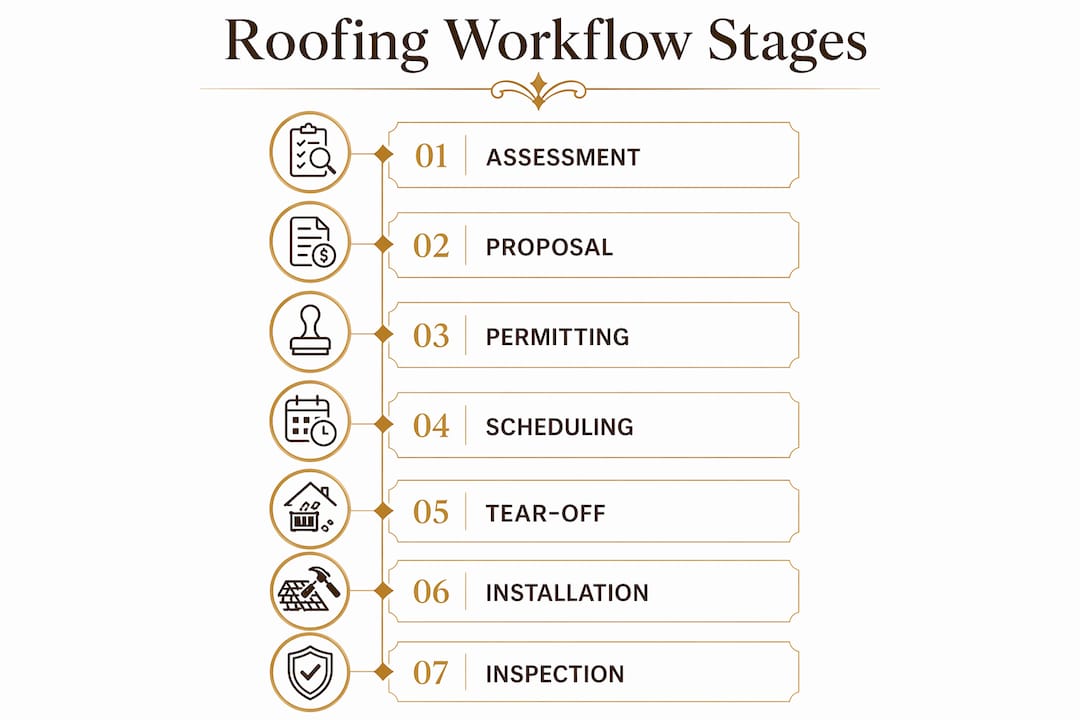
A professional commercial roof installation follows seven standardized stages, ranging from a few days to several weeks depending on scope and weather conditions. Understanding each stage helps you plan around your business calendar and avoid surprises.
-
Consultation and site assessment. A licensed contractor inspects the existing roof system, identifies damage, measures square footage, and documents current conditions with photos. This step sets the foundation for every decision that follows.
-
System selection and proposal. Based on the assessment, the contractor recommends a roofing system, whether TPO, EPDM, modified bitumen, or metal, and delivers a detailed written proposal with material specs and pricing.
-
Permitting and scheduling. Commercial roofing projects require building permits in most jurisdictions. Permit timelines vary by county, so factor two to four weeks into your schedule for North Georgia projects.
-
Tear-off and deck preparation. The existing roofing material is removed and the structural deck is inspected. This is the stage where hidden problems surface. Unexpected deck damage uncovered after tear-off significantly affects project cost and roof lifespan if not accounted for in your contract terms. Ask your contractor upfront how deck repairs are priced.
-
Installation. The new roofing system is installed according to manufacturer specifications. Sequence and weather windows matter here. Rain or extreme heat can delay adhesive curing and membrane bonding.
-
Post-install quality control inspection. A thorough QC walkthrough confirms seams, flashings, drains, and penetrations are correctly sealed. This step protects your warranty and catches errors before they become leaks.
-
Cleanup and documentation. The crew removes all debris, and the contractor delivers a complete project file including photos, material warranties, permit sign-offs, and inspection records.
Pro Tip: Request the full documentation package before you release final payment. Warranty compliance and future insurance claims both depend on having that paper trail.
Each stage has dependencies. Skipping or rushing the assessment phase, for example, produces inaccurate proposals. Skipping QC documentation leaves you without warranty evidence. The workflow only performs as designed when every stage receives proper attention.
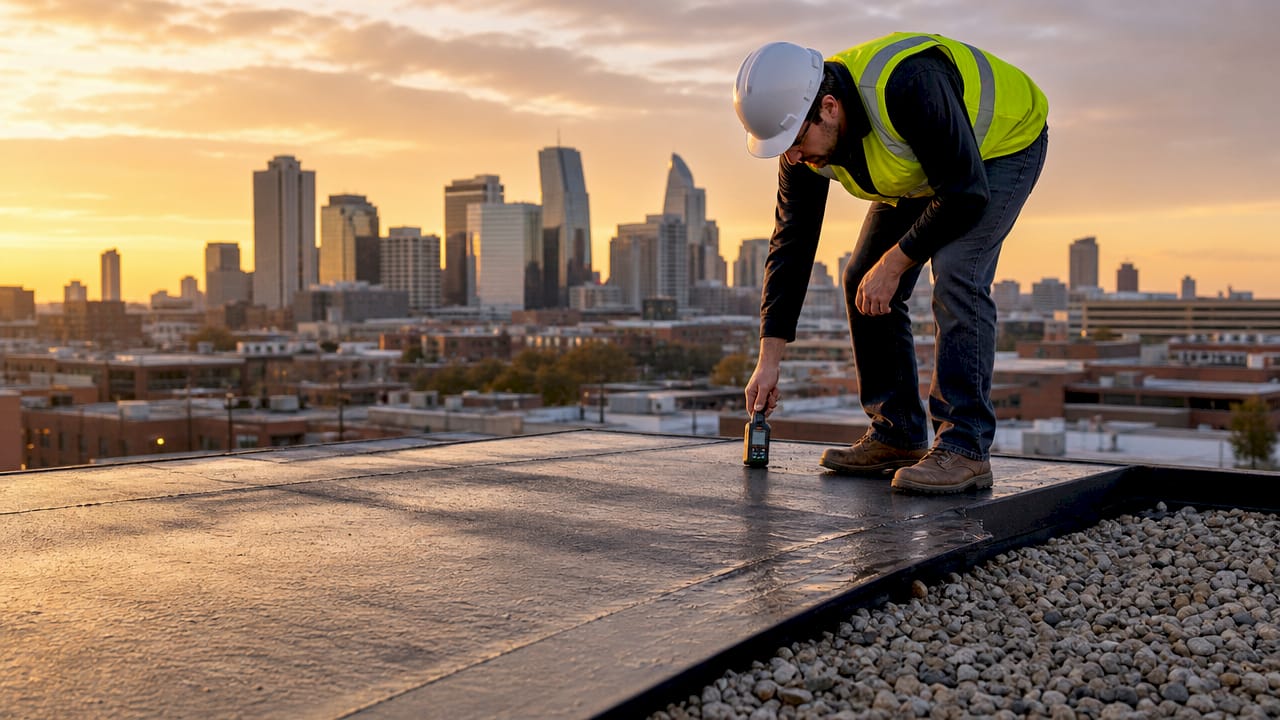
How does proactive maintenance improve workflow efficiency and costs?
Proactive commercial roof maintenance is the single highest-return investment you can make in your roofing program. The numbers make the case clearly.
Proactive maintenance costs approximately $0.14 per square foot annually, while deferred maintenance leads to replacement costs between $5 and $16 per square foot. That is a cost difference of 35 to 100 times, and it does not account for interior damage, business interruption, or tenant complaints. A $300 biannual inspection program can prevent damage events costing upward of $25,000. That return on investment is difficult to match with any other building maintenance strategy.
The industry standard for commercial roof maintenance includes:
- Spring inspection to identify damage caused by winter freeze-thaw cycles, ice damming, and debris accumulation
- Fall inspection to prepare the membrane, flashings, and drainage for cold weather stress
- Post-storm inspections triggered after hail, high winds, or any weather event that exceeds local severity thresholds
- Post-maintenance inspections after HVAC work, antenna installations, or any rooftop activity that involves foot traffic or penetrations
Two professional inspections per year can extend roof lifespan by 25 to 50 percent. That extension translates directly into deferred capital expenditure, which matters for any property budget.
Platforms like OxMaint automate inspection scheduling, track deficiencies over time, and generate compliance documentation automatically. This shifts your roof maintenance program from reactive repair to proactive asset management with measurable ROI and risk reduction. Most commercial roofs fail silently. Small maintenance issues can escalate into $40,000 of interior damage within six months if ignored, and insurance companies increasingly deny claims that lack documented inspection history.
Pro Tip: Keep a digital inspection log with date-stamped photos after every inspection. If you ever file an insurance claim, that documentation is the difference between approval and denial.
What digital tools and software optimize commercial roofing workflows?
The biggest source of delay in commercial roofing projects is not weather or material lead times. Most project delays stem from fragmented communication and inefficient transitions between inspection, estimating, and production teams. Digital tools solve this by creating a single source of record that every team member accesses in real time.
Roofing CRM platforms built for the inspection-to-contract process, such as CenterPoint Connect, address this directly. Here is what integrated software delivers:
- Faster proposals. Unifying inspection and estimating software can reduce workflow completion time by up to 80 percent. What previously took days of back-and-forth between field and office now takes hours.
- Real-time photo documentation. Field technicians capture and upload photos during inspection, and those images attach automatically to the project record. No lost notes, no missing photos.
- Automated work orders. Once a proposal is approved, production work orders generate from the same data set. This eliminates re-entry errors and keeps scope consistent from sale to installation.
- Proposal tracking. Managers can see exactly where each project stands in the approval process without calling anyone.
- Data continuity from inspection to production. Data silos between sales and production cause delays and errors. A single digital source of truth prevents lost details and costly mistakes.
Integrating inspection data directly into estimating and contract management software reduces turnaround from days to hours, increases bid acceptance rates, and ensures a clean handoff to production teams.
For property managers overseeing multiple buildings, asset management platforms like OxMaint add another layer. They track roof age, maintenance history, and condition scores across your entire portfolio, so you can prioritize capital spending based on data rather than guesswork. You can review the commercial roofing checklist Ir-ga developed for North Georgia properties to see how these tools map to real inspection criteria.
How do you schedule roofing projects to minimize business disruptions?
Scheduling is where roofing project management either protects your business or creates chaos. The goal is to complete the work without shutting down your operations, alarming your tenants, or creating safety hazards.
Phased scheduling, clear communication, and stakeholder involvement are the three factors most critical to minimizing disruptions during commercial roofing operations. Here is how they compare in practice:
| Approach | Disruptive workflow | Smooth workflow |
|---|---|---|
| Scheduling | Full building at once, no phasing | Phased sections, work around occupied areas |
| Tenant communication | No advance notice | Written notice 5 to 7 days before work begins |
| Noise management | No restrictions | Loud work scheduled during low-occupancy hours |
| Contingency planning | No budget for surprises | Deck repair allowance built into contract |
| Documentation | Verbal updates only | Written daily progress reports |
Phased scheduling means dividing the roof into sections and completing one section before moving to the next. This approach keeps noise and debris localized and allows building access to continue in unaffected areas. For retail or medical properties, this is not optional. It is the only acceptable approach.
Contingency planning deserves specific attention. Contracts should include clear processes and budgets for decking assessment and repairs discovered after tear-off. Structural deck damage is common in older commercial buildings, and discovering it mid-project without a pre-agreed response plan causes delays, cost disputes, and strained relationships. Address it in writing before work begins.
Pro Tip: Send a written notice to all tenants and building occupants at least five business days before roofing work starts. Include expected noise levels, access restrictions, and a direct contact number for questions. This one step eliminates the majority of tenant complaints.
Safety and compliance checkpoints also belong in your schedule. Permit inspections, hold points for deck approval, and manufacturer inspection requirements for warranty compliance all require planned pauses in the work sequence. Build those hold points into your timeline from day one.
Key takeaways
A well-executed commercial roofing workflow combines standardized project stages, proactive maintenance, and integrated digital tools to deliver projects on time, within budget, and with minimal disruption to your operations.
| Point | Details |
|---|---|
| Follow all seven workflow stages | Skipping assessment or QC documentation creates warranty gaps and insurance risks. |
| Invest in proactive maintenance | At $0.14 per square foot annually, maintenance costs far less than the $5 to $16 per square foot replacement rate. |
| Use integrated digital tools | CRM and asset management platforms reduce proposal turnaround by up to 80 percent and eliminate data silos. |
| Phase your project schedule | Phased scheduling and advance tenant communication prevent the majority of business disruptions. |
| Plan for deck contingencies | Include a written deck repair process and budget in every contract before work begins. |
What I’ve learned after years of watching roofing projects go sideways
The pattern I see most often is not a technical failure. It is a communication failure. A property manager hires a contractor, the contractor sends a crew, and nobody tells the tenants on the third floor that jackhammers will be running at 7 a.m. on Tuesday. The roofing work itself is fine. The relationship damage is real.
The second most common problem is treating the inspection as a formality rather than the foundation of the entire project. When inspection data is vague or incomplete, the estimate is inaccurate, the production team is unprepared, and the client is surprised by costs. Every problem I have seen in roofing project management traces back to either a weak inspection or a broken handoff between inspection and production.
Digital tools have genuinely changed this. When inspection photos, measurements, and deficiency notes feed directly into the estimating system, the proposal reflects reality. When the production team inherits that same data set, they walk onto the job knowing what they are dealing with. That continuity is what separates a smooth project from a stressful one.
My honest recommendation: before you sign any commercial roofing contract, ask the contractor how they transfer inspection data to the production crew. If the answer is a paper form or a verbal briefing, that is a risk factor worth taking seriously. The roof inspection process should produce a digital record that travels with the project from start to finish.
— Dan
Ready to put a better roofing process to work for your property?
At Ir-ga, we have managed commercial roofing projects across North Georgia since 2018, and we bring the same structured, documented process to every job. From the initial site assessment through final warranty paperwork, our team handles every stage with licensed, insured professionals and clear communication at every step.

Whether you are planning a full commercial roof replacement or dealing with storm damage that needs fast attention, Ir-ga delivers same-day responses and honest assessments you can act on. If a recent storm has affected your property, our storm damage repair team is ready to assess, document, and restore your roof with maximum insurance coverage. Contact us today for a free inspection and let us show you what a well-run roofing project looks like.
FAQ
What are the seven stages of a commercial roofing workflow?
The seven stages are consultation and site assessment, system selection and proposal, permitting and scheduling, tear-off and deck preparation, installation, post-install quality control inspection, and cleanup with documentation. Each stage has dependencies, so skipping or rushing any one of them creates problems downstream.
How often should a commercial roof be inspected?
Industry standards call for a minimum of two professional inspections per year, one in spring and one in fall. Additional inspections are recommended after severe weather events or any rooftop work such as HVAC installation.
What does proactive commercial roof maintenance cost compared to replacement?
Proactive maintenance runs approximately $0.14 per square foot annually. Deferred maintenance that leads to full replacement costs between $5 and $16 per square foot, making regular maintenance one of the highest-return investments in commercial property management.
How can digital tools improve roofing project management?
Roofing CRM platforms that connect inspection, estimating, and production data can reduce workflow completion time by up to 80 percent. They eliminate data silos, prevent lost inspection notes, and give property managers real-time visibility into project status.
How do you minimize business disruptions during a commercial roofing project?
Phased scheduling, advance written notice to tenants, noise restrictions during peak occupancy hours, and a pre-agreed contingency plan for deck repairs are the most effective strategies. Building these elements into the contract before work begins prevents the majority of disruptions.