Spotting storm damage is the process of identifying observable signs of impact from hail, wind, or debris on your roof, gutters, siding, and interior spaces. Every hour you delay that inspection after a storm, hidden water intrusion moves closer to becoming a mold problem, a structural repair, or a denied insurance claim. This guide walks you through how to spot storm damage using a ground-up inspection sequence, covering roofs, gutters, siding, windows, and interior spaces. You will need a pair of binoculars, a flashlight, a camera or smartphone, and a measuring tape. These four tools are the foundation of any credible 2026 storm damage inspection.
How to spot storm damage on your roof and gutters
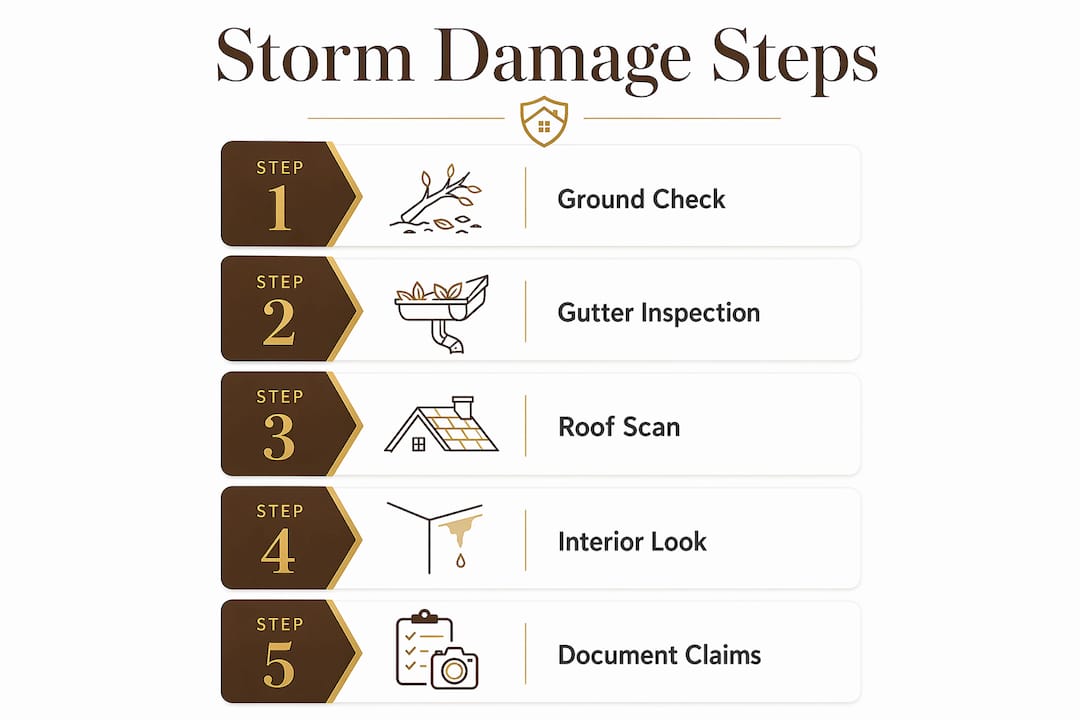
The roof and gutters are the first places to check after any significant storm, and a systematic inspection starts at ground level before you ever consider climbing a ladder. Stand back from your home and scan the roofline with binoculars. You are looking for specific, visible changes in the shingle surface, not just general wear.
What to look for on shingles
- Missing or lifted shingles. Wind peels shingles from the edges and ridges first. One missing shingle rarely travels alone. A single missing shingle often signals a systemic adhesive failure affecting neighboring shingles too.
- Curled or cracked shingles. Curling at the corners or cracking across the surface means the shingle has lost flexibility and is no longer sealing properly against water.
- Dark circular bruising or soft spots. Hail leaves bruise-like impressions on asphalt shingles. More critically, hail damage bruises shingles internally, fracturing the fiberglass mat beneath the surface and accelerating shingle failure even when the visible impact looks minor.
- Granule loss. Look for bare, shiny patches on shingles where the protective coating has been stripped away.
What to look for in gutters and downspouts
Excessive granule accumulation in gutters is a reliable red flag for shingle surface damage from wind or hail. Those granules look like coarse gray gravel collecting at the base of your downspouts. Their presence confirms that shingles above have lost meaningful protective coating. Beyond granules, check your gutters and downspouts for dents, which are direct hail impact markers, and for sagging sections that indicate the mounting hardware has been compromised. Dented vent caps and flashing lifted away from chimneys or skylights are additional exterior indicators that belong on your checklist.
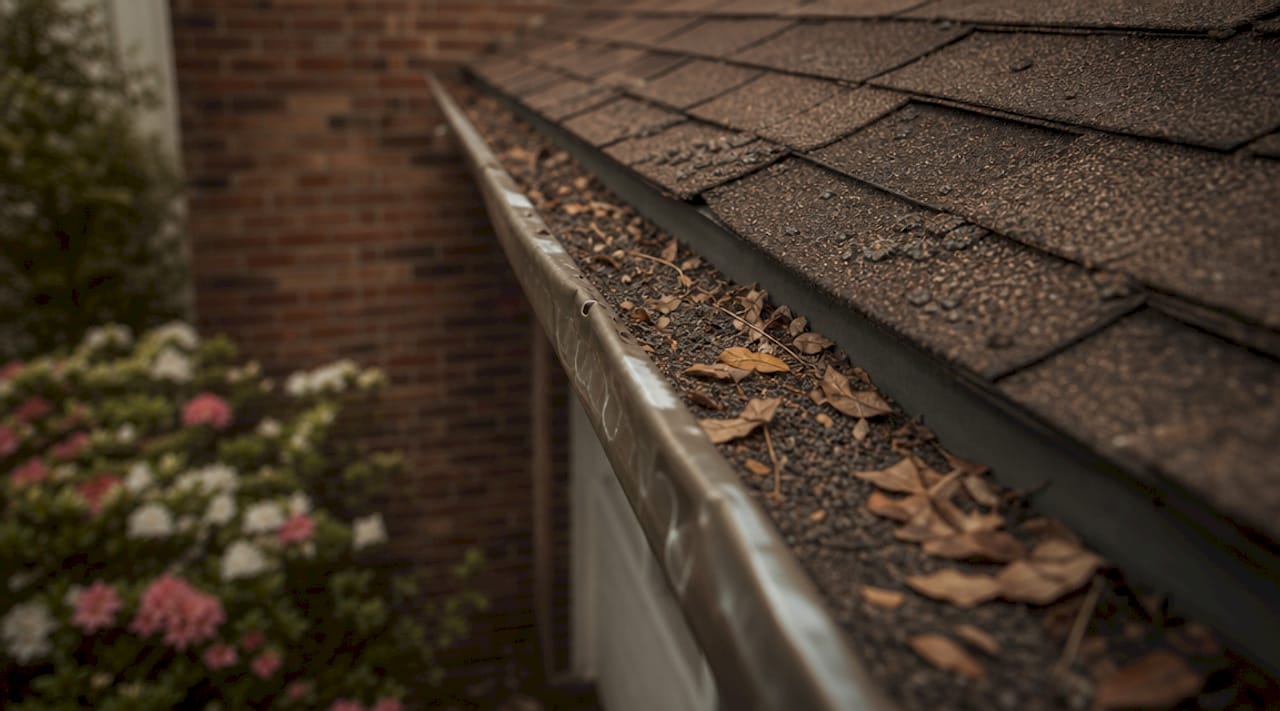
Pro Tip: Use binoculars from multiple angles around your home. Hail damage patterns often appear on one side of the roof facing the storm direction, so a single vantage point will miss them.
| Exterior sign | What it indicates |
|---|---|
| Missing or lifted shingles | Wind damage, possible systemic adhesive failure |
| Granules in gutters | Shingle coating loss from hail or wind impact |
| Dented gutters or vent caps | Direct hail impact on metal components |
| Lifted or loose flashing | Seal failure around chimneys and skylights |
| Shingle debris on the ground | Active shingle displacement from recent storm |
How to safely inspect interior spaces for storm damage
Interior inspection is where homeowners most often miss early warning signs. Early signs of water intrusion include dampness, musty odor, and small water stains that appear well before an obvious drip or leak develops. Mold can proliferate within 24 to 48 hours after a water breach, which means your interior inspection should happen the same day as your exterior walk-around.
Follow this sequence for a safe and thorough interior check:
- Check your attic first. Bring a flashlight and turn off the attic lights completely. Look for pinpricks of daylight coming through the roof deck. Any visible light means a gap in your shingles or underlayment that water will exploit.
- Inspect the attic decking for moisture. Run your hand along the plywood sheathing. Soft, spongy, or discolored wood means water has already entered. Dark staining on the rafters confirms an active or recent leak path.
- Move to ceilings and upper walls. Water stains on drywall appear as yellow or brown rings. Press gently on any stained area. Soft or bubbling drywall confirms active moisture behind the surface.
- Check closets and HVAC areas. These spots are frequently overlooked. Water follows the path of least resistance inside walls and often pools in closet corners or around air handler units before it reaches open living spaces.
- Note any musty odors. A musty smell in a room that did not have one before the storm is a strong indicator of hidden moisture, even if no visible staining is present yet.
Pro Tip: For emergency water damage response steps after you find interior moisture, the team at The Clean Genius provides a clear protocol for containing damage before a contractor arrives.
Before you enter any space, identify hazards like downed power lines or major structural sagging. A visibly bowed or dipping roofline means the structure may be compromised and requires professional evaluation before anyone goes inside.
What other exterior components should you check after a storm
Roof and gutter inspection covers the most critical areas, but a complete storm damage assessment extends to every exterior surface of your home. Garage doors and window seals are common weak points that are frequently overlooked. Damage to these areas compromises structural integrity and creates direct pathways for water intrusion.
Work through this exterior checklist after completing your roof scan:
- Windows and frames. Look for cracked glass, chipped frames, or broken seals. A fogged double-pane window after a storm means the seal has failed and the insulating gas has escaped.
- Siding. Check vinyl, wood, or fiber cement siding for dents, cracks, and loose panels. Hail leaves circular dents in vinyl that are easy to spot in raking light.
- Garage doors. Dents across horizontal panels are a direct sign of hail impact. A door that no longer seals at the bottom has likely been pushed out of alignment by wind pressure.
- Fences and outbuildings. Damaged fencing or a dented mailbox tells you the storm had enough force to impact hard surfaces at ground level.
- Air conditioning units. Dented fins on an outdoor AC condenser are one of the clearest indicators of hail severity. Collateral damage to AC units or mailboxes provides strong evidence that roofing was impacted too, even when the roof looks intact from the ground.
The relationship between collateral damage and roof damage is direct. If hail was hard enough to dent aluminum AC fins, it was hard enough to fracture fiberglass shingle mats. Use visible collateral damage as supporting evidence when you file your insurance claim.
How to document and assess storm damage for insurance claims
Thorough documentation is what separates a paid claim from a disputed one. Time-stamped photos, notes, and scale measurements improve insurance claim credibility, and including a measuring tape or common object for scale in your photos strengthens the documentation further.
Follow these steps to build a credible damage record:
- Record the storm event. Note the date, time, and type of storm. Check local weather service records for the official report of hail size or wind speed in your area. This data corroborates your claim.
- Photograph every damaged area from multiple angles. Shoot wide establishing shots to show location, then close-up shots to show detail. Place a measuring tape next to dents or missing shingles in at least one photo per damaged area.
- Video walk the exterior and interior. A continuous video walk-around provides context that still photos cannot. Narrate what you are seeing as you record.
- Write a written damage log. List each damaged component, its location on the property, and a brief description of the damage type. This log becomes the basis for your contractor’s scope of work and your adjuster’s review.
- Do not make permanent repairs before the adjuster visits. Temporary tarping or boarding is acceptable and necessary. Permanent repairs made before an adjuster documents the damage can void coverage for those areas.
Pro Tip: Review the full insurance claims process for roof repairs before you call your insurer. Knowing what adjusters look for helps you document the right details from the start.
A professional inspector adds credibility that self-documentation alone cannot provide. Professional inspectors perform ground-level scans to assess visible localized damage before using ladders, prioritizing safety while efficiently determining what requires closer examination.
Key takeaways
Identifying storm damage early and documenting it thoroughly is the single most effective way to protect your home and maximize your insurance coverage.
| Point | Details |
|---|---|
| Start at ground level | Use binoculars to scan shingles, gutters, and flashing before climbing anything. |
| Granules in gutters signal roof damage | Gravel-like granule buildup confirms shingle coating loss from hail or wind. |
| Interior inspection is time-sensitive | Mold can grow within 24 to 48 hours of water intrusion, so check attics and ceilings the same day. |
| Collateral damage confirms roof impact | Dented AC units or fences indicate storm force sufficient to damage shingles. |
| Document before permanent repairs | Time-stamped photos with scale measurements strengthen insurance claims significantly. |
What I have learned from years of storm damage inspections
After working with hundreds of North Georgia homeowners following hail and wind events, the pattern I see most often is this: the damage that costs the most money is the damage nobody noticed for six months. A homeowner walks the yard, sees no missing shingles, and assumes the roof is fine. What they missed were the soft spots on the shingle surface where the fiberglass mat fractured under hail impact. Those spots do not leak immediately. They fail gradually, and by the time water stains appear on the ceiling, the decking beneath has been saturated through multiple rain cycles.
The other misconception I run into regularly is that interior damage means the roof has a hole in it. That is rarely the case. Most water intrusion after a storm comes from lifted flashing, compromised shingle seals, or cracked caulking around penetrations. These are millimeter-scale gaps that are invisible from the ground and even difficult to spot on a roof surface without knowing what to feel for.
My honest advice: do your ground-level inspection, document everything you can see, and then call a licensed contractor for the roof surface itself. The step-by-step repair guide we put together at Ir-ga walks through exactly what that professional assessment covers. Safety comes first. No photo or insurance claim is worth a fall from a wet roof.
— Dan
Get expert storm damage help from Ir-ga
If your inspection has turned up signs of storm damage, or if you are not sure what you are looking at, Ir-ga is ready to help. We serve homeowners and businesses across North Georgia from our base in Dallas, GA, and we have been handling storm damage restoration and insurance claim support since 2018.

Our licensed and insured team performs thorough on-site inspections, documents damage for your insurer, and manages the claims process to maximize your coverage. We offer same-day responses and instant online estimates so you are never left waiting. Visit our storm damage repair page to schedule your inspection or get an estimate today. Fast, honest service from a team that knows North Georgia roofs.
FAQ
What are the first signs of storm damage to look for?
The first signs are missing or lifted shingles, granules collecting in gutters, and dents on metal components like gutters and vent caps. Check these areas from the ground with binoculars immediately after the storm passes.
How do I check for storm damage without going on the roof?
A ground-level inspection with binoculars covers most visible exterior signs, including shingle displacement, granule loss, and flashing issues. Interior attic checks with a flashlight reveal water intrusion without requiring roof access.
How soon after a storm should I inspect for damage?
Inspect within 24 hours of the storm. Mold can begin growing within 24 to 48 hours of water intrusion, and delayed documentation weakens insurance claims.
Does hail damage always look obvious on shingles?
No. Hail damage often bruises the fiberglass mat beneath the shingle surface without creating a visible hole. Press gently on suspected impact areas to feel for soft spots that indicate internal fracturing.
Can I file an insurance claim based on my own damage documentation?
Yes, but professional inspection documentation significantly strengthens your claim. Time-stamped photos with scale measurements are the minimum requirement, and a licensed contractor’s written assessment adds credibility that adjusters rely on.