Most homeowners think a dirty roof is just an eyesore. It’s not. Those dark streaks, green patches, and fuzzy growth you see spreading across your shingles are actively eating away at your roof’s structure, shortening its lifespan, and quietly pulling down your property value. Left unchecked, what starts as a cosmetic issue turns into a repair bill that can run thousands of dollars. In this article, we’ll walk you through what’s really causing those stains, why DIY cleaning often makes things worse, how professionals handle the job safely, and when calling in an expert is simply the smarter financial decision.
Table of Contents
- Why roofs get dirty—and why it matters
- Why DIY cleaning can be risky and expensive
- How professionals clean roofs safely and effectively
- When (and why) professional cleaning beats DIY every time
- A local perspective: What most homeowners overlook about roof cleaning
- Ready to protect your roof? Connect with trusted local experts
- Frequently asked questions
Key Takeaways
| Point | Details |
|---|---|
| Dirty roofs cause costly damage | Algae and moss trap moisture and destroy shingle layers, reducing roof life and curb appeal. |
| DIY cleaning risks safety and warranties | Improper techniques can result in injury, stripped shingles, and voided roof warranties. |
| Professional soft washing is safest | Low-pressure, industry-approved methods protect your roof and investment. |
| Hiring pros saves money long term | Professional cleaning extends shingle life and preserves your home’s value. |
Why roofs get dirty—and why it matters
If you’ve noticed black or greenish streaks on your roof, you’re likely looking at Gloeocapsa magma, a blue-green algae that feeds on the limestone filler in asphalt shingles. Moss, lichen, and leaf debris are also common culprits. North Georgia’s warm, humid climate creates ideal conditions for all of them to thrive. Our region gets consistent moisture, heavy tree canopy coverage, and seasonal humidity that keeps roofs damp long after rain has passed.
These aren’t just surface-level problems. Each of these organisms traps moisture against your shingles, which accelerates granule loss and promotes early aging. Granules are the small, sand-like particles on asphalt shingles that protect against UV rays and physical damage. Once they’re gone, shingles become brittle and vulnerable. Lichen is particularly aggressive because its root-like structures physically penetrate the shingle surface, making it extremely difficult to remove without professional help.
Here’s what’s actually happening to your roof when buildup goes untreated:
- Algae feeds on shingle material and spreads quickly in humid climates
- Moss holds moisture against the roof surface, promoting rot and shingle lifting
- Lichen bonds to shingles and can only be removed with proper chemical treatment
- Leaf debris creates damp pockets that accelerate mold and mildew growth
- Granule loss exposes the asphalt layer, leading to cracking and leaks
“The primary methodology for safe roof cleaning is soft washing: a low-pressure application (under 100 to 500 PSI) of sodium hypochlorite solutions that kill growth at the root without damaging shingles,” according to algae and mildew removal details from the National Roof Cleaning Authority.
Curb appeal matters too. Studies consistently show that a home’s exterior condition directly affects perceived value. A roof covered in dark stains or visible moss signals neglect to buyers and appraisers alike. If you’re thinking about selling or refinancing, a dirty roof can work against you before anyone even steps inside. Learning about professional roof cleaning methods is a smart first step toward protecting that value.
Why DIY cleaning can be risky and expensive
Understanding what’s lurking on your roof reveals why tackling the problem isn’t always a safe weekend project. Many homeowners assume a rented pressure washer and a Saturday afternoon is all it takes. That assumption can lead to serious consequences.
Here are the most common risks homeowners face when attempting DIY roof cleaning:
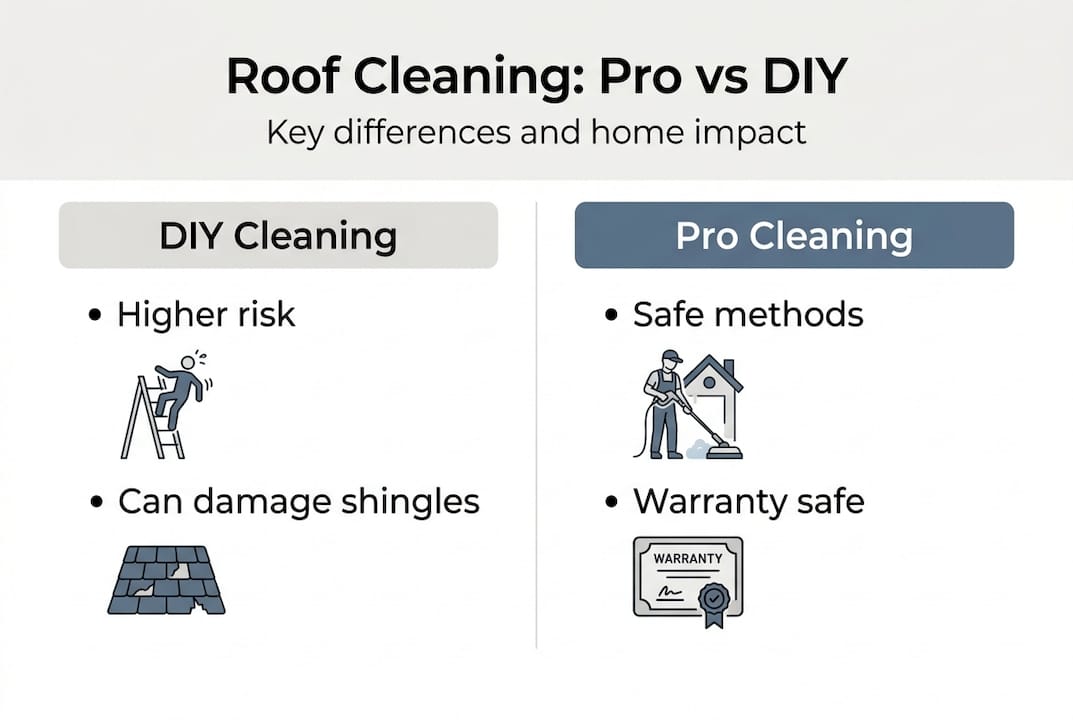
- Fall hazards. Roofs are slippery, especially when wet or covered in algae. Working at height without proper safety equipment is genuinely dangerous, and falls are a leading cause of serious injury at home.
- Granule damage. High-pressure water strips the protective granules right off your shingles. This shortens roof life significantly and can trigger early failure.
- Voided warranties. Most shingle manufacturers specify approved cleaning methods. Using the wrong technique or chemicals can void your warranty entirely, leaving you unprotected.
- Incomplete treatment. Without the right chemical solutions, you may remove surface staining but leave the root systems of algae and lichen intact. Regrowth happens fast.
- Chemical runoff. Improper chemical use can damage landscaping, stain siding, and create environmental compliance issues.
The DIY roof cleaning drawbacks are well documented. DIY cleaning is only considered appropriate for low-pitch, single-story homes with minor algae and even then, the risk of error is significant.
Pro Tip: If you’re tempted to rent a pressure washer for your roof, read your shingle warranty first. Most manufacturers explicitly prohibit high-pressure washing, and one mistake can cost you coverage on a $10,000 or more roof replacement.
For a broader look at what improper cleaning can lead to, our roof restoration guide covers the full picture of how roofs deteriorate when maintenance is skipped. You can also review pressure washing risks specific to exterior surfaces to understand where the line is between helpful and harmful.
How professionals clean roofs safely and effectively
If DIY can be dangerous and costly, how do professionals deliver better results and value? The answer comes down to method, equipment, and training.
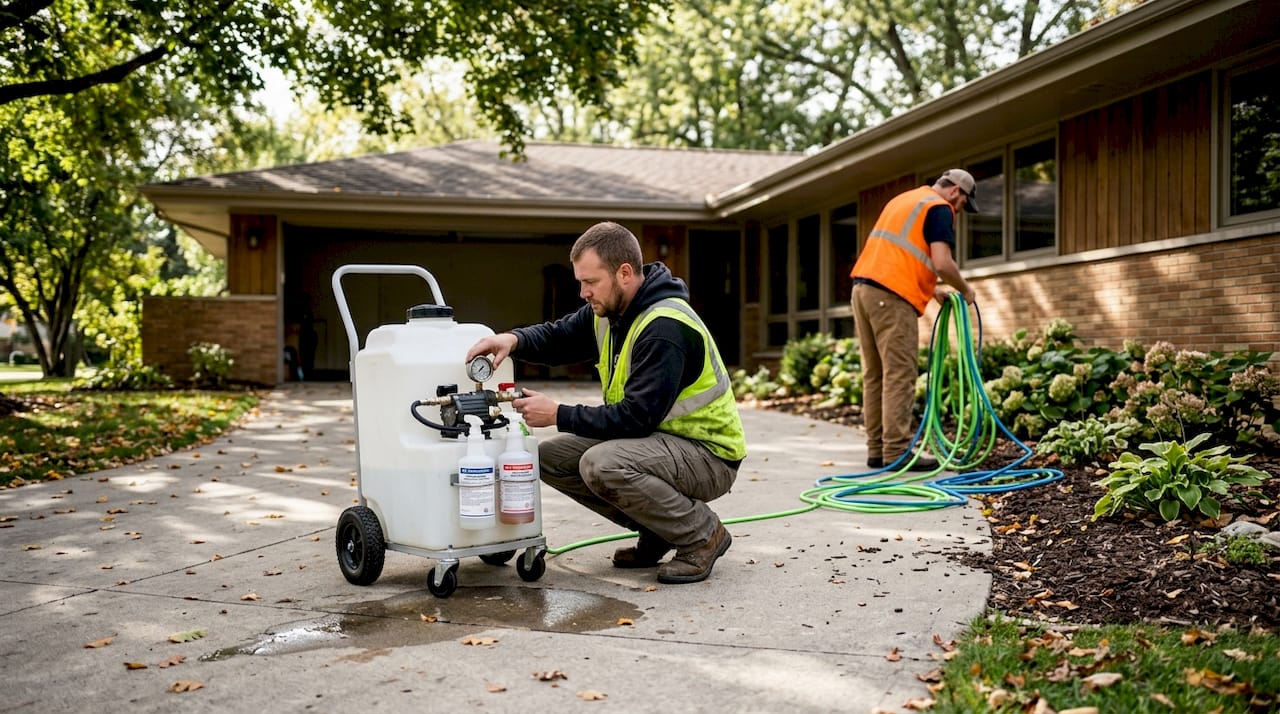
The gold standard in professional roof cleaning is soft washing. This technique uses low-pressure water combined with EPA-compliant chemical solutions, typically a diluted sodium hypochlorite mix, to kill algae, moss, and lichen at the root level. The pressure used is gentle enough to avoid shingle damage while the chemistry does the real work. Professionals also apply pre-treatments to protect your landscaping and use containment methods to manage chemical runoff responsibly.
| Cleaning method | Pressure used | Shingle safety | Warranty compliant | Effectiveness |
|---|---|---|---|---|
| Soft washing (pro) | Under 500 PSI | ✅ Safe | ✅ Yes | ⭐⭐⭐⭐⭐ |
| High-pressure washing | 1500 to 3000 PSI | ❌ Damages granules | ❌ Voids warranty | ⭐⭐ |
| DIY spray treatment | Varies | ⚠️ Risk of error | ⚠️ Depends | ⭐⭐⭐ |
| Eco-friendly options | Low | ✅ Generally safe | ✅ Usually | ⭐⭐⭐⭐ |
Professionals also follow ARMA (Asphalt Roofing Manufacturers Association) guidelines, which prohibit high-pressure washing above 500 PSI on asphalt shingles. Violating these guidelines strips granules, voids warranties, and accelerates shingle failure. Knowing that your contractor follows these standards is a key part of protecting your investment.
Safety protocols on the job include fall protection systems, proper chemical handling gear, and containment barriers for runoff. These aren’t extras. They’re standard practice for any reputable crew. You can explore our soft washing methods and compare them with general pressure washing details to see how different services are matched to different surfaces.
Pro Tip: Always ask your roof cleaning contractor whether they follow ARMA guidelines and carry liability insurance. If they can’t confirm both, keep looking.
For a side-by-side look at how methods stack up, roof cleaning method comparisons from the National Roof Cleaning Authority provide clear, unbiased guidance.
When (and why) professional cleaning beats DIY every time
Armed with a comparison of cleaning options, let’s clarify when a pro is absolutely worth the investment.
Certain roof situations make professional cleaning not just preferable but necessary. According to when to hire professionals, you should avoid DIY cleaning on steep pitches above 6:12, multi-story homes, roofs with severe moss or lichen, and any roof approaching the end of its service life. In all of these cases, professionals bring fall protection equipment, proper chemical containment, and the experience to get results without causing damage.
Here’s a quick look at typical return on investment from professional roof cleaning in North Georgia:
| Factor | Without cleaning | With professional cleaning |
|---|---|---|
| Average shingle lifespan | 15 to 18 years | 20 to 25 years |
| Curb appeal impact | Negative | Positive |
| Warranty status | At risk | Protected |
| Repair frequency | Higher | Lower |
| Resale value effect | Reduced | Maintained or improved |
The financial case is straightforward. A professional cleaning typically costs a fraction of even a minor roof repair, and it extends the life of your shingles by years. That’s real money saved.
Beyond the numbers, there are practical benefits that matter just as much:
- Pros handle chemical runoff in compliance with EPA and local guidelines
- Certified crews carry liability insurance, protecting you if something goes wrong
- Results last longer because growth is killed at the root, not just scrubbed off the surface
- Your shingle warranty stays intact
For homeowners in North Georgia, where algae and moss grow back faster than in drier climates, routine professional care is one of the most cost-effective maintenance decisions you can make. Explore local roof cleaning services to see what’s available in your area, or review our homeowner roof guide to understand how cleaning fits into a broader maintenance plan.
A local perspective: What most homeowners overlook about roof cleaning
After years of working on roofs across North Georgia, we’ve noticed a consistent pattern. Homeowners wait. They see the streaks forming, they notice the moss creeping toward the ridge, and they tell themselves they’ll deal with it next season. By the time they call us, the damage is often more advanced than it needed to be.
North Georgia’s climate is genuinely aggressive when it comes to roof health. The combination of heat, humidity, and tree coverage means algae can return within a year or two of improper treatment. We’ve seen roofs that looked fine from the street but had significant granule loss and shingle lifting underneath the surface growth. That’s the part most homeowners miss.
We also see the aftermath of DIY attempts gone wrong. Pressure-washed shingles that look clean but are structurally compromised. Spot treatments that removed visible staining but left lichen roots intact. These situations almost always cost more to fix than a professional cleaning would have cost in the first place.
Routine professional care, typically every two to four years, is genuinely one of the best ways to protect your home. Think of it as maintenance, not a luxury. Our local roof cleaning insights reflect what we see every day on North Georgia rooftops.
Ready to protect your roof? Connect with trusted local experts
If you’ve read this far, you already know that roof cleaning is about more than appearances. It’s about protecting a significant investment and avoiding preventable repair costs.
At Infinity Roofing GA, we’ve been serving North Georgia homeowners since 2018 with honest, high-quality exterior care. Our licensed and insured team uses proven soft washing methods that protect your shingles and keep your warranty intact. Whether you need a routine roof cleaning service, are considering a full roof restoration guide review, or are dealing with storm damage repair, we’re ready to help. Contact us today for a same-day response and a straightforward assessment of what your roof actually needs.
Frequently asked questions
How often should I have my roof professionally cleaned in North Georgia?
Most roofs benefit from professional cleaning every 2 to 4 years, depending on tree coverage and local algae growth. North Georgia’s humid climate often pushes toward the shorter end of that range, since soft washing solutions kill growth at the root but regrowth can still occur within a couple of years.
Is soft washing safe for my shingles and landscaping?
Yes. Professional soft washing uses low pressure and properly diluted solutions that kill algae and moss without harming shingles or plants. Reputable crews also pre-treat landscaping and use containment methods to protect your yard, as outlined in roof cleaning methods best practices.
Can pressure washing void my roof warranty?
Yes, it can. ARMA guidelines prohibit high-pressure washing above 500 PSI on asphalt shingles because it strips granules, voids warranties, and causes premature failure. Always confirm your contractor uses approved low-pressure methods.
What types of roofs should always be cleaned by professionals?
Steep pitches above 6:12, multi-story homes, and roofs with heavy moss or lichen growth should always be handled by professionals. According to professional cleaning guidelines, these situations require fall protection equipment and chemical containment that DIY methods simply cannot provide safely.