A storm rolls through North Georgia, and the next morning you’re staring at damaged shingles, water stains, or worse. The stress hits fast. Most homeowners don’t know whether to call their insurance company first, hire a roofer, or just start making repairs. Getting the sequence wrong can delay your payout or get your claim denied altogether. This guide walks you through every stage of the roof insurance claim process, from reviewing your policy to working with adjusters and roofers, so you can move forward with confidence and recover the full value your coverage allows.
Table of Contents
- Understanding your policy before disaster strikes
- Immediate steps after storm damage
- Navigating the insurance claim process: Step by step
- Working with roofers and adjusters: Inspections, estimates, and approvals
- What to do if your claim is delayed, reduced, or denied
- Why most homeowners miss out on full claim value—and how to avoid it
- Ready for repairs? Connect with trusted North Georgia pros
- Frequently asked questions
Key Takeaways
| Point | Details |
|---|---|
| Know your policy | Understanding your insurance coverage before a storm is crucial for smooth claims. |
| Act quickly | Document damage and notify your insurer as soon as possible to avoid delays or denials. |
| Partner with pros | Working with a reputable roofer can simplify inspections and maximize your claim value. |
| Persistence pays off | Don’t hesitate to appeal denials or underpayments to secure fair coverage for repairs. |
Understanding your policy before disaster strikes
Before you even begin the claims process, understanding your policy is a powerful first step. Most homeowners tuck their policy documents away and never look at them again. That’s a costly habit.
Common homeowner policies cover storm-related damage, but deductibles and exclusions vary widely from one plan to the next. Some policies cover full replacement cost. Others only pay the actual cash value, which factors in depreciation. Knowing which type you have before a storm hits puts you in a much stronger position when you file.
When reviewing your policy, focus on these key items:
- Deductible amount: This is what you pay out of pocket before insurance kicks in. Some policies have a separate, higher deductible specifically for wind or hail damage.
- Exclusions: Many policies exclude damage from lack of maintenance or pre-existing wear. Review this section carefully.
- Repair vs. replacement: Understand whether your policy pays for a full roof replacement or only spot repairs.
- Coverage limits: Confirm the maximum payout for your roof and whether it matches today’s material and labor costs.
- Claim filing deadlines: Most insurers require you to file within a set number of days after the damage occurs.
You can find your policy documents through your insurer’s online portal or by calling your agent directly. It’s also worth reviewing homeowners insurance details so you understand standard coverage terms before you speak with anyone.
For a deeper look at what restoration coverage typically includes, check out this overview of roof restoration coverage to compare your own policy terms.
Knowing what your policy covers before damage happens is one of the most valuable things you can do as a homeowner. Don’t wait for a storm to find out what you’re actually protected against.
Immediate steps after storm damage
Once you know what your policy covers, knowing how to act right after damage occurs is critical. Speed and accuracy in those first 24 to 48 hours can make or break your claim.
First, stay safe. Don’t climb onto your roof immediately after a storm. Assess from the ground and look for visible missing shingles, sagging areas, or debris impact. Prompt documentation and temporary repairs are critical for valid claims, and they need to happen quickly.
Here’s the order of action you should follow:
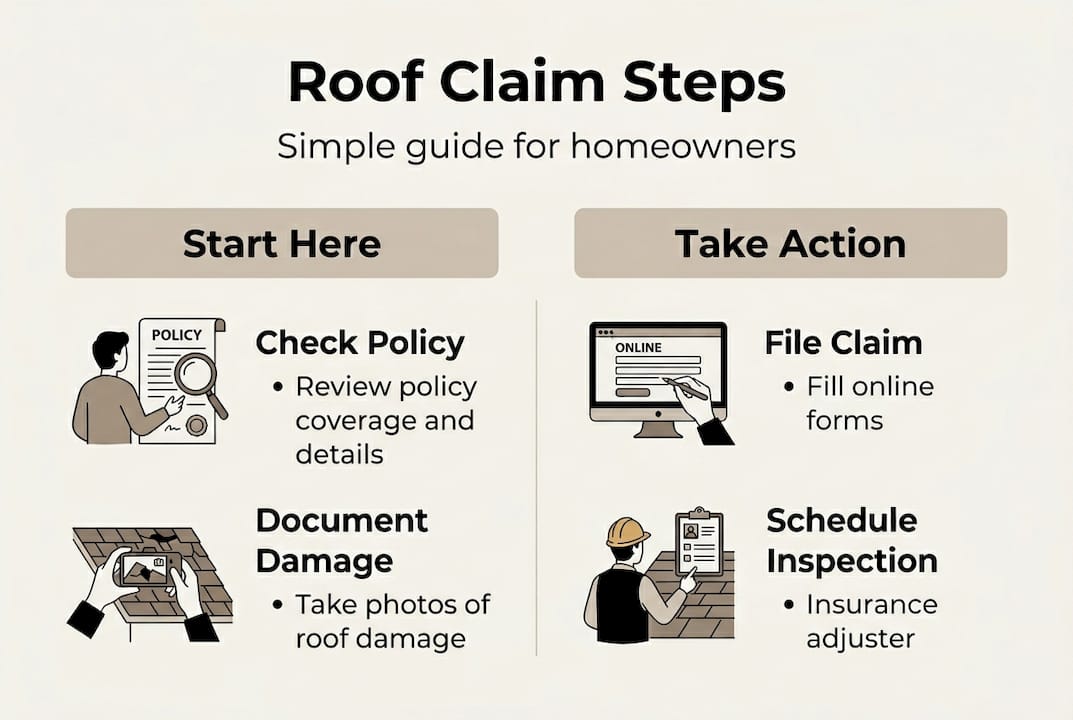
- Take photos and videos of all visible damage, both inside and outside. Capture the date and time if possible.
- Make temporary repairs to prevent further water intrusion. Use tarps, plywood, or sealant. Keep all receipts for these materials.
- Document everything in writing. Create a brief written record of what you observed and when.
- Contact your insurance company to report the damage and start the formal claims process.
- Schedule a professional inspection with a licensed roofing contractor who can identify damage that isn’t obvious to the untrained eye.
Pro Tip: Don’t throw away any damaged shingles, gutters, or roofing materials until your adjuster has completed their inspection. Physical evidence strengthens your claim significantly.
For guidance on documenting damage after a disaster, industry resources can help you build a complete record. Missing even one step in this process can give your insurer grounds to reduce or deny your payout. Refer to these damage assessment tips for a thorough walkthrough of what to look for after a storm.
Navigating the insurance claim process: Step by step
With the right documentation in hand, now you can focus on navigating the actual claim process. Knowing what comes next reduces anxiety and keeps things moving.
Here is the standard sequence from start to finish:
- Notify your insurer. Call or go online to report the damage. Provide photos and your written record.
- Schedule an adjuster inspection. Your insurer will send an adjuster to assess the damage firsthand.
- Get a contractor estimate. Have a licensed roofer inspect the damage before or during the adjuster visit.
- Review the adjuster’s report. Compare it with your contractor’s estimate for any gaps.
- Approval and payout. Once approved, your insurer releases funds, often minus your deductible.
- Complete repairs. Work with your contractor to schedule and finish the job.
Following the proper sequence streamlines approval and payout. Skipping steps or filing out of order is one of the most common reasons claims stall.
| Factor | Filing yourself | Working with a roofing company |
|---|---|---|
| Documentation support | You handle it all | Contractor helps compile evidence |
| Adjuster negotiation | You negotiate alone | Roofer advocates on your behalf |
| Estimate accuracy | May miss hidden damage | Professional assessment is thorough |
| Claim approval odds | Varies | Often higher with expert support |
| Time required | More hands-on effort | Streamlined with contractor guidance |
For additional official insurance advice, state-level consumer resources can clarify your rights during the process. Be sure to track all communication with your insurer in writing, including dates, names, and what was discussed.
Pro Tip: Keep a dedicated folder, physical or digital, with every email, letter, estimate, and photo related to your claim. This paper trail is your strongest tool if a dispute arises.
Visit our claims process tips for more insight on handling insurance-related challenges specific to North Georgia homeowners.
Working with roofers and adjusters: Inspections, estimates, and approvals
A crucial moment arrives when adjusters and roofers step into the picture. How these two professionals interact directly affects the outcome of your claim.
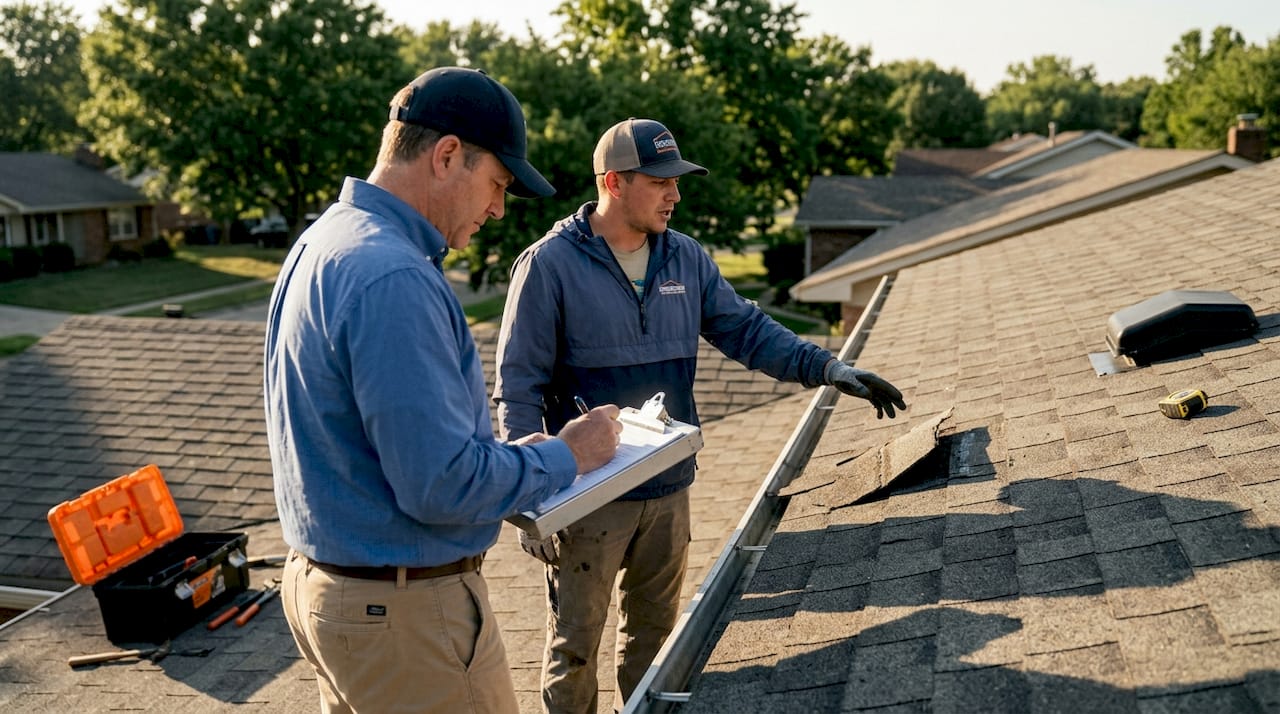
Insurance adjusters work for your insurance company. Their job is to assess the damage and determine how much the insurer will pay. Understanding the insurance adjuster’s role helps you know what to expect and how to prepare. They typically look for proof that the damage was sudden and storm-related, not the result of gradual wear.
Roofing companies can assist with inspection, estimate, and negotiating with adjusters on your behalf. A thorough contractor estimate often identifies damage the adjuster may overlook, which can significantly increase your approved payout.
| Stage | Adjuster timeline | Contractor response time |
|---|---|---|
| Initial contact | 3 to 7 business days | Same day to 48 hours |
| On-site inspection | 1 to 2 weeks after filing | Within days of contact |
| Report delivery | 1 to 2 weeks post-inspection | Estimate provided same visit |
When interviewing a roofer, ask these questions:
- Are you licensed and insured in Georgia?
- Do you have experience working with insurance claims?
- Will you be present during the adjuster inspection?
- Can you provide a detailed, itemized written estimate?
- What materials do you use, and are they up to current code?
For a complete inspection checklist that covers what to look for, our team has put together a practical guide. Pairing a trusted local roofer with a prepared homeowner gives you the best chance at a fair and full claim approval.
What to do if your claim is delayed, reduced, or denied
Not every claim goes smoothly. Here’s what to do when you hit a snag.
Delays, partial payouts, and outright denials happen more than most homeowners expect. Don’t assume the first answer is final. You have options.
If your claim stalls or the payout falls short, take these steps:
- Call your adjuster and ask for a detailed written explanation of the decision.
- Submit new evidence such as additional photos, your contractor’s written estimate, or weather records confirming the storm.
- Request a second inspection if you believe the initial assessment missed damage.
- File a formal appeal with your insurance company in writing, referencing your policy terms.
- Contact the Georgia Insurance Commissioner’s office if you believe your insurer is acting in bad faith.
Appealing or supplementing your claim can sometimes recover more funds for repairs, especially when you provide a detailed contractor estimate that documents overlooked damage.
For consumer escalation resources, the how to appeal a claim section of the National Association of Insurance Commissioners offers clear guidance on your rights.
Pro Tip: Maintain a repair estimate log from at least two different licensed contractors. This creates a documented range of repair costs that supports your appeal and is harder for insurers to dismiss.
Stay persistent and organized. Homeowners who follow up consistently and provide thorough documentation recover more, plain and simple.
Why most homeowners miss out on full claim value—and how to avoid it
Stepping back, we want to share something we’ve seen repeatedly while helping North Georgia homeowners through the claims process. Most people leave money on the table, not because they did anything wrong, but because they didn’t know to push further.
Relying solely on the insurance adjuster’s findings is the single biggest mistake we see. Adjusters are professionals, but they work for the insurer. They aren’t necessarily looking for every repair your roof needs. An independent estimate from a licensed contractor often reveals additional damage worth hundreds or even thousands of dollars in coverage.
Key oversights we see again and again:
- Missing receipts for temporary repairs made right after the storm
- Incomplete photo logs that don’t capture interior water damage or damage to flashing and gutters
- No follow-up after the initial claim submission, letting claims sit without action
Homeowners who speak up, ask questions, and provide thorough documentation consistently recover more from their claims. It’s not aggressive; it’s being informed.
Our experience with detailed restoration guidance shows that working with a reputable local roofer who understands the claims process can completely change the outcome. We advocate for your roof and your budget, so nothing important gets missed.
Ready for repairs? Connect with trusted North Georgia pros
If you’re ready to take the next step or need expert help, here’s where to find it.
At Infinity Roofing GA, we’ve been helping North Georgia homeowners navigate storm damage and insurance claims since 2018. We’re licensed, insured, and familiar with how local insurers operate across our region.

Whether you need a same-day estimate, help preparing for your adjuster visit, or a trusted crew to complete your repairs, our team is ready. Start with our storm repair guide to understand what to expect, or connect directly with our local storm repair experts for a free, no-obligation assessment. We also offer complementary gutter services to make sure your entire exterior is protected after a storm. Reach out today and let us take the stress off your plate.
Frequently asked questions
How long does the insurance claim process usually take for roof repairs?
The process typically takes 2 to 6 weeks from inspection to payout, though delays in scheduling or paperwork can extend that timeline.
Do I need to get multiple repair estimates for my roof claim?
Getting at least two estimates is strongly recommended because independent estimates identify repairs that adjusters may overlook, which can increase your approved claim amount.
Will my insurance cover the full cost of a new roof?
Policies may not cover the full cost due to depreciation schedules or specific exclusions, so reviewing your coverage type before filing is important.
What should I do if my insurance claim is denied or underpaid?
You can appeal and supplement your claim with additional documentation, contractor estimates, or a second inspection to challenge the insurer’s decision.