Most homeowners assume exterior cleaning is simply about making things look nicer. The truth runs deeper. Done right, exterior cleaning protects your home’s structure, preserves your warranties, prevents mold and rot, and can even raise your property’s market value. Done wrong, it can strip roof granules, crack siding, and void manufacturer warranties in a single afternoon. North Georgia’s humid climate, heavy pollen seasons, and frequent storms make proper exterior cleaning not just a nice-to-have, but a smart, necessary part of home maintenance. This guide walks you through everything you need to know to keep your home protected and looking its best.
Table of Contents
- Understanding exterior cleaning
- Main methods for exterior cleaning
- Safety, warranties, and avoiding damage
- Exterior cleaning tips for North Georgia homeowners
- Our take: What most guides miss about exterior cleaning
- Find trusted exterior cleaning and roofing help
- Frequently asked questions
Key Takeaways
| Point | Details |
|---|---|
| More than cleaning | Exterior cleaning preserves home value, prevents costly damage, and is not just about aesthetics. |
| Choose the right method | Soft washing for delicate surfaces, pressure washing for concrete—avoid high pressure on roofs. |
| Avoid costly mistakes | Improper cleaning can void warranties and cause mold, rot, or structural problems. |
| Local expertise matters | Professional exterior cleaning in North Georgia adapts to climate and materials for optimal results. |
| Prep and protect | Pre-treat, protect plants, and consult experts to maximize exterior cleaning benefits safely. |
Understanding exterior cleaning
Exterior cleaning is not a single service. It is a category of professional maintenance that covers everything from roof washing and house washing to driveway cleaning, gutter flushing, and deck treatment. Each surface on your home has different needs, and treating them all the same way is where most DIY attempts go wrong.
At its core, exterior cleaning serves two purposes. First, it improves curb appeal, which directly impacts your home’s perceived and actual market value. Second, it protects surfaces from biological growth like algae, mold, mildew, and lichen that can cause real structural damage over time if left unchecked.
Here is what exterior cleaning typically covers:
- Roof washing: Removes algae streaks, moss, and lichen that break down shingles
- House washing: Cleans siding, brick, stucco, and painted surfaces
- Driveway and walkway cleaning: Lifts oil stains, dirt, and organic growth from concrete or pavers
- Deck and fence cleaning: Prepares wood and composite surfaces to prevent rot
- Gutter cleaning: Clears debris to prevent water backup and fascia damage
Many homeowners underestimate how fast biological growth accelerates damage. Algae holds moisture against your shingles. Mold spreads from your roof to your siding and into wall cavities. What looks like a surface stain can be the early stage of rot. The pressure washing benefits for your home go well beyond appearances.
“A clean exterior is not cosmetic maintenance. It is structural defense.”
It is also worth noting that improper cleaning creates its own set of problems. High pressure risks stripping roof granules, cracking siding, etching mortar, and splintering wood. Choosing the right method for the right surface is not optional. It is essential.
Now that the importance of exterior cleaning is clear, let’s unpack the primary methods professionals use to clean your home’s exterior effectively.
Main methods for exterior cleaning
There are two primary cleaning methods used by professionals: pressure washing and soft washing. Knowing the difference can save you thousands in repair costs.
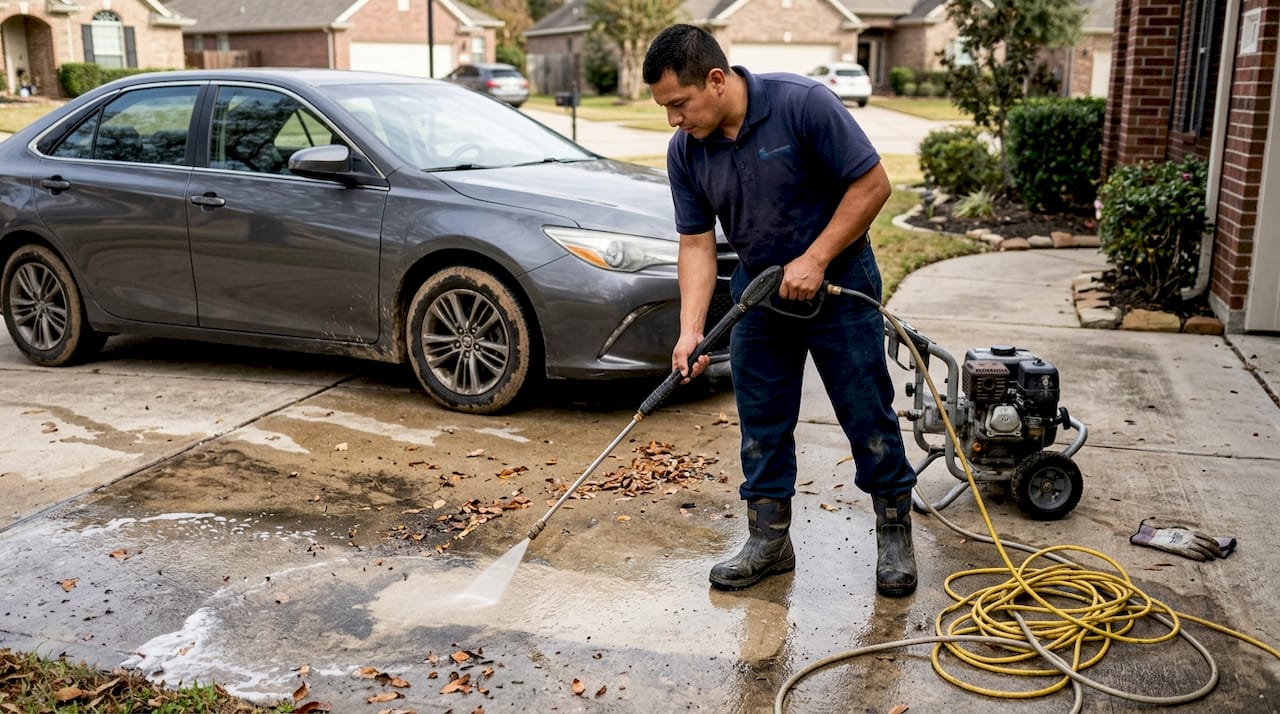
Pressure washing uses high-pressure water to remove dirt, grime, and stains from hard surfaces. It is powerful and fast, making it excellent for concrete driveways, brick patios, and sidewalks.
Soft washing uses low-pressure water combined with cleaning solutions to safely treat delicate surfaces. It kills mold, algae, and bacteria at the root rather than just blasting them off the surface temporarily.
Here is a quick side-by-side comparison:
| Feature | Pressure Washing | Soft Washing |
|---|---|---|
| Water pressure | High (1500-4000 PSI) | Low (under 500 PSI) |
| Best for | Concrete, brick, pavers | Roofs, siding, wood, stucco |
| Cleaning agents | Minimal | Biodegradable detergents |
| Risk of damage | Higher on soft surfaces | Very low |
| Long-lasting results | Moderate | Longer-lasting (kills growth) |
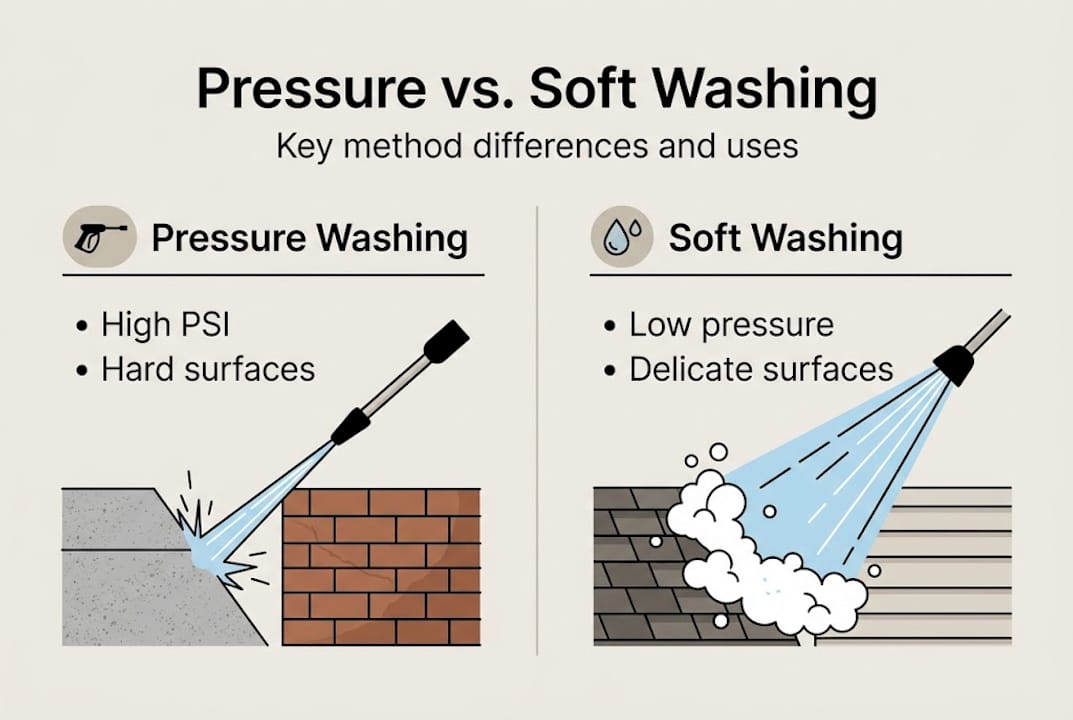
The smartest approach is to combine methods: soft washing for siding and roofs, pressure washing for concrete and hard surfaces. This protects delicate materials while still delivering a thorough clean across your entire property.
Here is a simple process professionals follow:
- Assess all surfaces to identify materials and growth types
- Apply pre-treatment solutions to loosen biofilm and organic growth
- Soft wash roofs and siding at low pressure with appropriate detergents
- Pressure wash driveways and patios at controlled high pressure
- Rinse all treated areas and check for missed spots or streaking
Surfaces that need special care include cedar shake roofs, painted wood siding, EIFS (stucco-style cladding), and older brick with aging mortar. These require the gentlest methods and sometimes specialty cleaning agents.
Pro Tip: If you are unsure which method your siding or roof needs, ask a professional to identify your surface material first. The wrong call can cause damage that costs far more than the cleaning itself. Check out how pressure washing for curb appeal works for different surface types, and consider consulting our roof cleaning services team for guidance specific to your home.
With the basics covered, you might wonder exactly how to select the right technique for your own property.
Safety, warranties, and avoiding damage
This is where many homeowners get into trouble. A powerful pressure washer feels like a solution for everything, but using it on the wrong surface can cause immediate and long-term harm.
High pressure risks voiding roof warranties and causing structural issues that go undetected until leaks or rot become expensive problems. Most shingle manufacturers specifically state in their warranty documentation that high-pressure washing will void coverage.
Here is a breakdown of risks by surface type:
| Surface | High-Pressure Risk | Recommended Method |
|---|---|---|
| Asphalt shingles | Granule loss, voided warranty | Soft wash only |
| Vinyl siding | Cracking, water intrusion | Low-pressure soft wash |
| Wood siding | Splintering, raised grain | Soft wash with wood-safe solution |
| Brick and mortar | Etching, mortar erosion | Controlled low-medium pressure |
| Concrete | Minimal if done correctly | Standard pressure washing |
Beyond warranties, there are practical safety concerns for your plants, pets, and the people doing the work. Strong cleaning chemicals can damage landscaping if not properly managed.
Safety best practices every homeowner should insist on:
- Pre-treat all areas before cleaning to reduce the need for high pressure
- Test a small area before treating an entire surface
- Cover or pre-soak plants and landscaping near the cleaning zone
- Keep pets and children indoors during the cleaning process
- Avoid cleaning in direct sun or freezing temperatures as this affects chemical performance
Pro Tip: Before hiring any exterior cleaning company in North Georgia, ask directly whether they use soft washing on your roof. If they say pressure washing is fine for shingles, consider that a warning sign. Read more about making smart choices in our professional roof cleaning advice, and visit our Georgia roof cleaning page to see how we protect your investment.
Addressing safety and warranty protection leads right into practical steps for North Georgia homeowners who want the best results while minimizing risks.
Exterior cleaning tips for North Georgia homeowners
North Georgia’s climate creates specific challenges. High humidity, heavy spring pollen, summer thunderstorms, and mild winters create ideal conditions for algae, mold, and mildew to grow fast on roofs, siding, and driveways. Cleaning once a year at minimum keeps these issues in check.
Studies show that clean home exteriors can increase a property’s value by up to 5 to 10 percent, a meaningful return on a relatively low investment in annual maintenance.
Here is how to evaluate a cleaning provider in North Georgia:
- Check for licensing and insurance before any work begins
- Ask for references from local homeowners, not just online reviews
- Confirm they use soft washing for roofs and siding, not just pressure washing
- Get a written estimate that itemizes surfaces and methods
- Verify they carry liability insurance to cover any accidental damage
Material-specific advice for this region: homes with Hardie board siding (a fiber cement product) need low-pressure washing with pH-neutral cleaners. Older brick homes need special attention to mortar joints, which can erode under high pressure. Cedar and pine wood surfaces should be cleaned and sealed as a combined service.
Before a cleaning appointment, prepare your property by:
- Closing all windows and doors tightly
- Moving outdoor furniture, pots, and decor away from the work area
- Notifying your cleaning team of any cracked siding, loose shingles, or problem areas
- Watering plants and shrubs in advance as a protective measure
Always pre-treat, test small areas, protect plants and pets, and avoid direct sun or cold when scheduling exterior cleaning. These precautions prevent the most common cleaning-related mishaps. For trusted local pressure washing that follows these best practices, or to explore your residential roofing options, we are ready to help.
After absorbing these practical tips, homeowners are well-equipped, but there is still a deeper perspective to consider when choosing cleaning methods for long-term satisfaction.
Our take: What most guides miss about exterior cleaning
Most articles about exterior cleaning treat it as a one-time task. We see it differently. After years of working with North Georgia homeowners, we know that exterior cleaning is a long-term strategy, not a one-and-done chore.
The biggest mistake homeowners make is applying a cookie-cutter approach. One method, one pressure setting, one chemical solution across every surface. Your home is not generic, and its cleaning plan should not be either. The expert nuances in cleaning between pressure risks and combined soft wash methods matter enormously for your home’s long-term health.
We also see homeowners chase the lowest price and end up with water damage, voided warranties, or surfaces that look worse than before. Price matters, but method and expertise matter more. A provider who knows your region’s climate, your home’s materials, and the right cleaning sequence will save you more money in the long run than one who just brings the biggest pressure washer.
Our advice is simple: consult a professional cleaning perspective before committing to any service. Ask questions. Expect clear answers. That is what we do for every homeowner we serve.
Find trusted exterior cleaning and roofing help
Now that you know how exterior cleaning works and what to look for, the next step is connecting with a team you can trust. At Infinity Roofing GA, we have served North Georgia homeowners since 2018 with honest, quality service across roofing, exterior cleaning, and storm damage restoration.

From gutter cleaning services that prevent water backup and fascia rot, to pressure washing experts who know exactly which method each surface needs, we handle it all. If a recent storm left your home with damage, our storm damage repair team can assess and restore your property quickly. We are licensed, insured, and committed to protecting your home’s value. Contact us today for a fast, free estimate.
Frequently asked questions
What surfaces can be cleaned with pressure washing?
Pressure washing is ideal for hard surfaces like concrete and brick, but should be avoided on roofs, siding, and wood. High pressure risks stripping roof granules, cracking siding, and splintering wood, so soft washing is the safer choice for those areas.
How often should I schedule exterior cleaning?
Most experts recommend annual exterior cleaning, but North Georgia’s humid climate and heavy pollen seasons may call for twice-yearly service to keep mold and algae from taking hold.
Is exterior cleaning safe for my roof warranty?
Exterior cleaning is safe when soft washing methods are used. High pressure risks voiding roof warranties and can cause structural issues, so always confirm your provider uses low-pressure methods on shingles.
What’s the best way to protect plants and landscaping during cleaning?
Cover sensitive plants, pre-soak landscaping before cleaning begins, and ensure your provider uses environmentally friendly detergents. Pre-treat, protect plants and pets, and avoid direct sun during service for best results.