When a storm rolls through Paulding, Cherokee, or Cobb County, the pressure to hire a roofer fast can lead to costly mistakes. The wrong contractor can void your manufacturer warranty, botch your insurance claim, or disappear after taking your deposit. North Georgia homeowners face this risk more often than most, given the region’s heavy exposure to hail storms, high winds, and severe spring weather. This guide walks you through every step of finding a qualified, trustworthy roofing contractor so you can protect your home, your finances, and your peace of mind.
Table of Contents
- Essential qualifications: Certifications and insurance
- Verifying reputation: Reviews, references, and local presence
- Comparing detailed estimates and contracts
- Spotting red flags and avoiding scams
- Our take: Why Georgia homeowners can’t rely on licensing alone
- Need help? Trusted roofing experts for your North Georgia home
- Frequently asked questions
Key Takeaways
| Point | Details |
|---|---|
| Certification matters most | Manufacturer certifications are more reliable indicators of quality than state licensing in Georgia. |
| Review volume over ratings | Trust contractors with lots of positive reviews and resolved BBB complaints before deciding. |
| Get multiple estimates | Always request at least three detailed written estimates to fairly assess quality and pricing. |
| Beware common scams | Avoid contractors pushing full upfront payment, skipping permits, or with poor insurance proof. |
| Insurance and warranties | Verifying contractor insurance and certified installation can protect your home and ensure warranty coverage. |
Essential qualifications: Certifications and insurance
Before you call a single contractor, you need to understand one important fact about Georgia: no state roofing license is required for roofers here. That means virtually anyone can show up at your door and legally call themselves a roofing contractor. This reality raises the bar for what you should be asking and verifying on your own.
Without a state license requirement, manufacturer certifications become your clearest signal of quality. Programs like GAF Master Elite place contractors in the top 2 to 3% of all roofers nationally. Earning this designation requires ongoing training, insurance verification, and periodic inspections. It also unlocks extended system warranties ranging from 25 to 50 years for your home. Other respected programs include Owens Corning Preferred Contractor and CertainTeed SELECT ShingleMaster, both of which carry similar requirements and benefits.
Beyond certifications, always request proof of two forms of insurance before work begins:
- General liability insurance covers damage to your property if the crew makes an error.
- Workers’ compensation insurance protects you financially if a worker is injured on your roof.
If a contractor cannot produce current certificates for both, walk away. Some contractors hold a General Contracting (GC) license in Georgia, which demonstrates a broader level of professionalism and business accountability. It is not required for roofing work, but it can serve as an added trust indicator when comparing candidates.
Pro Tip: Call the insurance company directly using the certificate number provided. Policies can lapse, and a contractor may show outdated documentation. A quick phone call takes two minutes and can save you thousands.
Here is a quick comparison of the most common certifications to look for:
| Certification | Provider | Requirement level | Warranty benefit |
|---|---|---|---|
| GAF Master Elite | GAF | Top 2 to 3% of contractors | Up to 50-year system warranty |
| Owens Corning Preferred | Owens Corning | Verified training and insurance | Extended labor and material warranty |
| CertainTeed SELECT ShingleMaster | CertainTeed | Technical testing and review | SureStart Plus extended warranty |
| General Contracting License | State of Georgia | State application and testing | Business accountability standard |
Choosing a contractor who holds licensed roofing repairs credentials and verified insurance is the single most important step you can take before any other evaluation begins.
Verifying reputation: Reviews, references, and local presence
Certifications confirm technical capability. Reputation confirms real-world behavior. These two things are not the same, and you need to verify both.
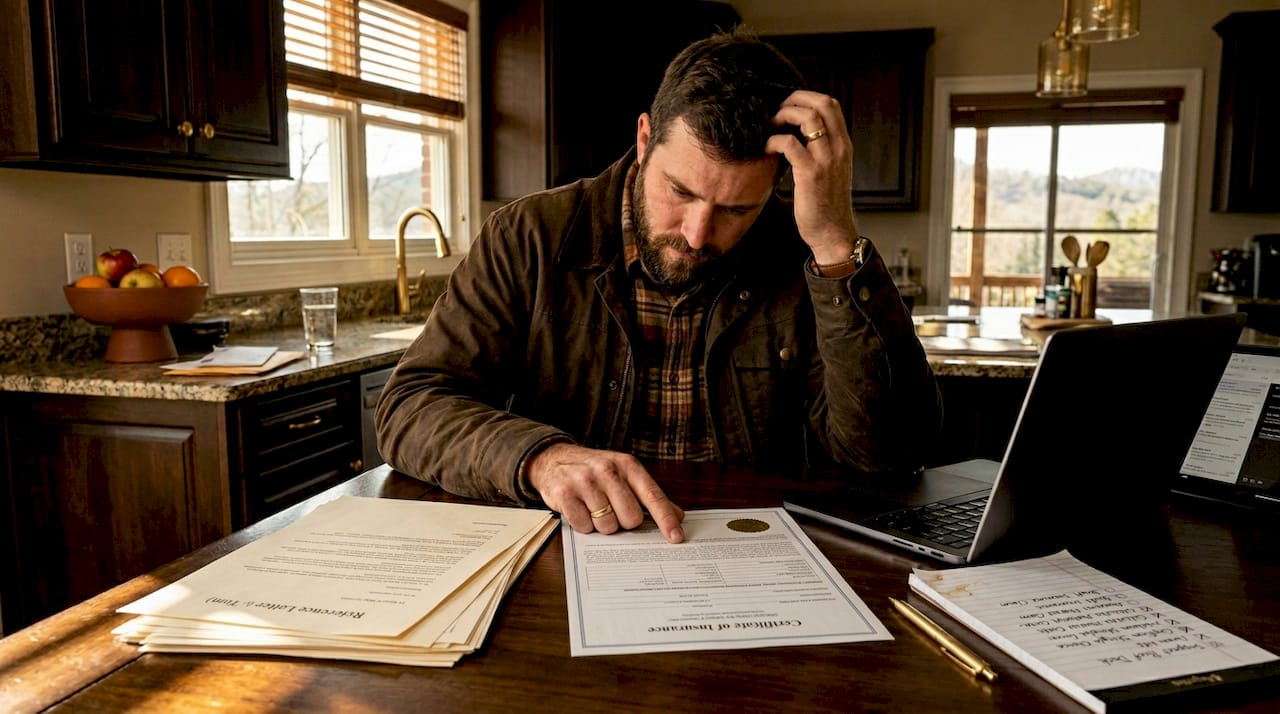
Start with Google reviews, but pay attention to volume rather than just the star rating. A contractor with 200 reviews at 4.6 stars is far more trustworthy than one with 10 reviews at 5.0 stars. According to a 2026 homeowner roofing survey, word-of-mouth remains the top method homeowners use to find contractors, cited by 74% of respondents. That statistic tells you something important: real neighbors talking to real neighbors still matters more than advertising.
Next, check the Better Business Bureau (BBB). Look specifically at the complaint history, not just the rating. A contractor with an A+ rating but five unresolved complaints tells a different story than the grade alone. Look for patterns in how complaints were handled and whether the contractor responded professionally.
“65% of homeowners prefer contractors who display transparent pricing online, and most expect a project to start within two weeks of hiring.” — Roofing Contractor survey, 2026
Local presence is another non-negotiable. Ask these questions directly:
- Do you have a physical office address in North Georgia?
- Can you provide references from three local jobs completed in the last six months?
- Do you have before-and-after photos of comparable projects in our area?
A contractor who has been operating in your county for years will have job sites nearby, satisfied neighbors you can call, and a reputation they have to protect. Out-of-state or transient contractors have far less accountability once the job is done.
When you check your find 5-star roofers options in the area, pay close attention to how recently the reviews were posted. A company with great reviews from 2019 but nothing recent may have experienced staff turnover, ownership changes, or quality decline.
Here is a practical reputation benchmarking table to guide your research:
| Source | What to look for | Warning signs |
|---|---|---|
| Google reviews | 50+ reviews, 4.5+ stars, recent activity | Few reviews, no owner responses |
| BBB | A or A+ rating, low complaint volume | Unresolved complaints, pattern of disputes |
| Local references | Same county, recent work, willing to talk | Vague contacts, reluctance to provide names |
| Social media | Active posts, project photos, engagement | Inactive pages, no local project examples |
Comparing detailed estimates and contracts
After you verify credentials and reputation, the next step is to gather and compare written estimates. Do not skip this step, even if you feel confident about a particular contractor. The estimating process reveals a lot about how a company does business.
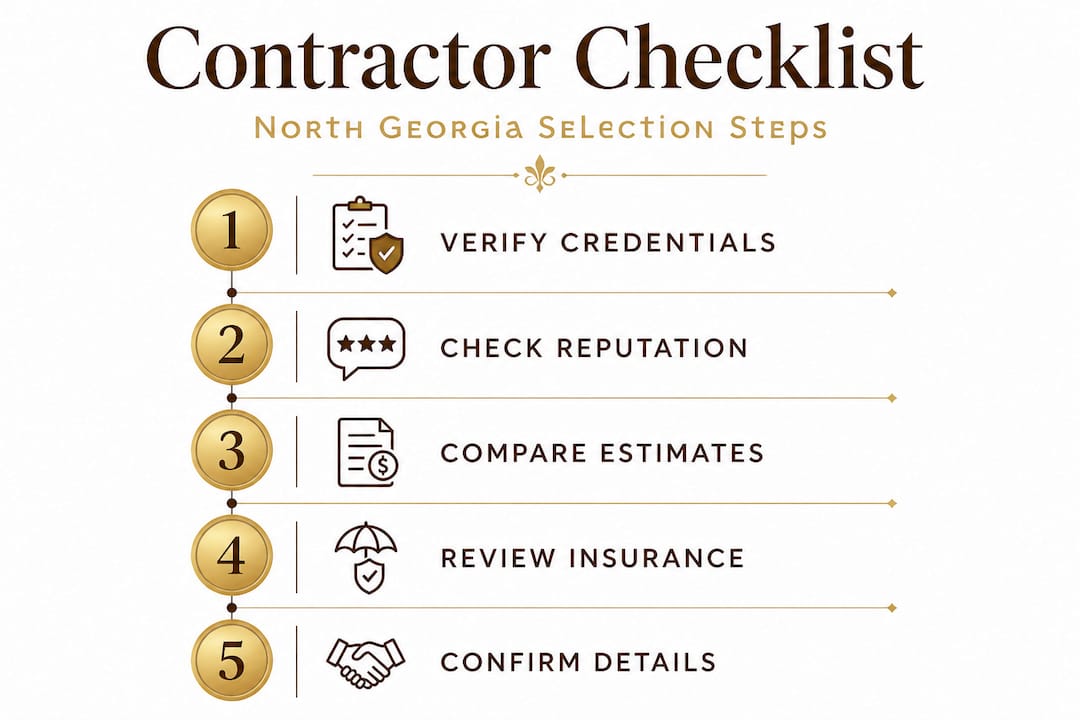
Always request at least three detailed written estimates before making a hiring decision. This is not about finding the cheapest price. It is about understanding what each contractor is actually promising to do. A low bid that excludes permits, debris removal, or flashing replacement is not a good deal.
Here is what every solid estimate and contract should include:
- Full scope of work — Specific materials, brand names, product lines, and installation method
- Timeline — Estimated start date, project duration, and milestone checkpoints
- Payment schedule — A reasonable deposit (typically 10 to 30%) with remaining payments tied to progress milestones
- Change order process — How unexpected findings like rotted decking are communicated and priced
- Cleanup and disposal — Who removes old shingles, nails, and debris from your yard and driveway
- Permit responsibilities — Who pulls the permit and who is responsible for inspections
- Safety compliance — Confirmation of OSHA-compliant fall protection practices on your roof
Certified installation is worth paying for because it preserves your manufacturer warranty. In fact, 81% of U.S. homeowners who completed roof replacements ranked quality workmanship as a top priority over price. That means most people, when they look back at the decision, wish they had prioritized quality from the start.
Pro Tip: Never pay the full project cost upfront. A reputable contractor does not need full payment before work begins. If a contractor insists on 100% payment before touching your roof, treat that as a serious red flag.
If you need a fast answer on cost, many trusted local contractors now offer same-day roof estimates so you are not waiting days just to compare options. You can also explore instant roof estimates online before you even make a phone call. These tools help you establish a baseline so you know if an in-person bid is in the right range. Once you decide to proceed, understanding the roof replacement benefits specific to North Georgia homes can help you make a more confident choice.
Spotting red flags and avoiding scams
Storm season in North Georgia also brings storm chasers. These are out-of-area contractors who drive through neighborhoods immediately after hail or wind damage, knocking on doors and offering fast, discounted repairs. Some are legitimate. Many are not. Knowing the warning signs can protect you from scams that cost homeowners thousands of dollars every year.
Here are the red flags to watch for:
- Unsolicited door-to-door visits right after a major storm, especially from out-of-state vehicles
- Demands for full upfront payment before any work is performed or materials are ordered
- Pressure tactics that push you to sign a contract immediately, without time to review or compare
- No verifiable physical address in Georgia, or only a PO box as a contact location
- Offering to waive your insurance deductible — this is illegal in Georgia and constitutes insurance fraud
- Cash-only payment requirements with no written contract or receipt
- No proof of insurance or reluctance to provide certificates
- Skipping permits to save time, which leaves you with code violations and potential issues when selling your home
“Waiving a homeowner’s deductible as an incentive for signing a contract is illegal in Georgia and can expose both the contractor and the homeowner to legal consequences.” — Georgia Consumer Protection Division
A trustworthy contractor welcomes your questions, encourages you to verify their credentials, and never pressures you to decide on the spot. If anything feels rushed or evasive, trust your instincts and keep looking.
Our take: Why Georgia homeowners can’t rely on licensing alone
Here is something most roofing articles won’t tell you directly: the absence of a state roofing license requirement in Georgia actually works in the scammer’s favor. When homeowners assume that a license protects them, they stop asking deeper questions. That assumption is costly.
We have been operating in North Georgia since 2018. In that time, we have seen homeowners handed certificates from “fully licensed” contractors who had no manufacturer certification, no workers’ comp, and reviews that vanished once a complaint was filed. The license they were referencing was a basic business registration. It means almost nothing on its own.
What actually separates reliable contractors from risky ones is a combination of three things. First, manufacturer certifications that require real training and ongoing compliance. Second, current insurance that you personally verify by calling the carrier. Third, a high volume of recent local reviews from real homeowners in your county.
According to Georgia’s Consumer Protection Division, no roofing license requirement makes certifications and insurance verification even more critical than licensing alone. Some contractors holding a GC license do offer an added layer of trust and business accountability. We respect that standard. But even a GC license without certifications, insurance, and a strong local reputation is not enough to earn your business.
We encourage every North Georgia homeowner to treat contractor selection the way you would treat hiring someone to watch your home. References matter. Credentials matter. History matters. Look for GA licensed roofers who also hold manufacturer certifications, and use resources that help you find finding top roofers with a proven track record in your specific area.
The homeowners who feel most confident after a roofing project are the ones who slowed down during the hiring process, even when they felt pressure to act fast. That discipline pays off every time.
Need help? Trusted roofing experts for your North Georgia home
You now know exactly what to look for in a roofing contractor. The next step is putting that knowledge to work with a trusted local team.
At Infinity Roofing GA, we have been serving North Georgia homeowners since 2018 with honest assessments, premium materials, and a 5-star track record. Whether you need compliant roofing repairs, help navigating a storm insurance claim, or a full replacement done right the first time, we are here to make the process simple and stress-free. Our team also handles storm repair specialists needs across the region and provides complete expert gutter services to protect your entire exterior. Contact us today for a same-day estimate and see why North Georgia homeowners trust us to protect their most valuable investment.
Frequently asked questions
Do Georgia roofing contractors need a state license?
Georgia does not require a state roofing license, so homeowners must prioritize certifications, insurance, and reviews when vetting any contractor they consider hiring.
How many contractor estimates should I get before selecting?
Always get at least three detailed written estimates so you can compare scope, materials, timelines, and payment structures side by side before committing.
What are the top signs a roofing contractor might be a scam?
Key red flags to watch include requesting full upfront payment, skipping permits, providing no proof of insurance, and pressuring you to sign a contract on the same day.
Does a certified installation affect my roof warranty?
Yes — using a certified contractor like a GAF Master Elite installer can unlock extended system warranties of 25 to 50 years, significantly protecting your long-term investment.
Are online reviews trustworthy for roofing contractors?
High review volume is a stronger reliability indicator than star rating alone; always combine Google reviews with a BBB check and direct references from local homeowners.