A small roof leak after a spring storm might look harmless. But that single damaged shingle or cracked flashing can silently trigger a chain reaction that destroys your attic insulation, rots your decking, and breeds mold inside your walls. Minor repairs costing $350 to $1,500 can escalate to $25,000 or more when homeowners wait too long. For North Georgia homeowners dealing with the region’s frequent storms, high humidity, and dense tree canopy, the window for acting fast is narrower than most people realize. This guide covers the real numbers, the local risks you need to know, and the practical steps to protect your home and your budget.
Table of Contents
- The real cost of delayed roof repairs
- Risks unique to North Georgia homeowners
- How to spot issues before they escalate
- Insurance pitfalls from delaying roof repairs
- Why most homeowners underestimate storm roof risk
- Let Infinity Roofing GA help you protect your home
- Frequently asked questions
Key Takeaways
| Point | Details |
|---|---|
| Delay costs escalate fast | Minor roof problems can multiply into massive repair bills if ignored even for a short time. |
| North Georgia faces extra risks | Unique factors like steep roofs, tree debris, and severe storms make timely repairs crucial in this region. |
| Insurance often punishes delay | Waiting to address roof issues can result in denied claims or reduced payouts from insurers. |
| Early detection saves money | Regular inspections and fast repairs help homeowners avoid the most expensive outcomes. |
The real cost of delayed roof repairs
Now that you know the stakes, let’s dig into exactly how repair delays spiral into major bills.
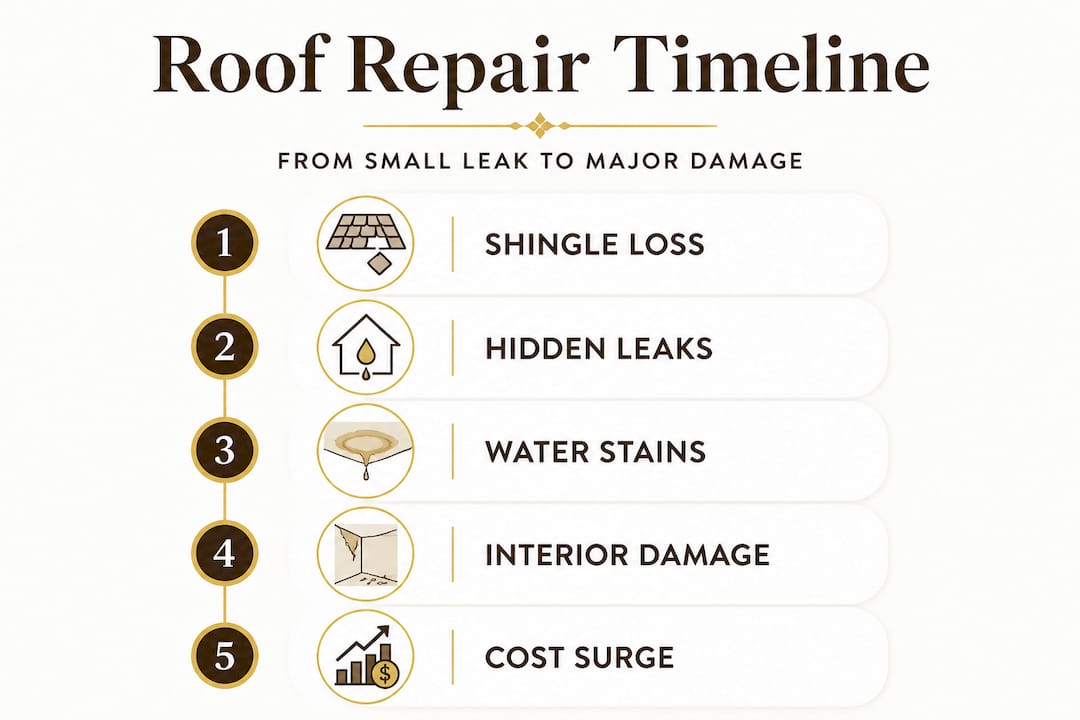
Most homeowners assume a slow drip or a couple of missing shingles can wait until the next paycheck or the next dry weekend. That assumption is expensive. Delayed repairs create 5x to 15x cost multipliers, turning a straightforward fix into a full-scale restoration project. Water does not wait. Once it enters through a compromised roof, it saturates insulation, soaks into wood decking, and starts feeding mold colonies within 24 to 48 hours.
Here is how that escalation typically unfolds:
| Initial issue | If fixed promptly | If delayed 30 to 90 days |
|---|---|---|
| Missing shingles (2 to 3) | $350 to $600 repair | $3,000 to $8,000 decking and interior repair |
| Cracked flashing | $200 to $500 repair | $2,500 to $6,000 water damage remediation |
| Small puncture leak | $400 to $800 repair | $5,000 to $15,000 including mold treatment |
| Damaged ridge cap | $500 to $900 repair | $4,000 to $12,000 structural rot and interior damage |
Mold remediation alone runs $1,500 to $9,000 depending on how far the growth spreads. Add structural rot repairs, ceiling replacement, and ruined personal belongings, and a $500 fix quickly becomes a financial crisis. Understanding roof repair vs. replacement costs helps you see where your situation falls on that spectrum.
“The longer water infiltration goes unaddressed, the more widespread the damage becomes. What starts as a localized shingle issue can compromise your entire roof deck, rafters, and even wall framing within a few months.”
Beyond the repair bill itself, delayed action creates two more serious problems:
- Insurance claim denials. Insurers expect homeowners to take reasonable steps to prevent further damage after a storm. If you wait and let water damage worsen, your claim may be partially or fully denied.
- Code violations. Structural rot and compromised decking can put your home out of compliance with local building codes, adding permit and correction costs on top of the repair tab.
Pro Tip: If you cannot get a licensed roofer on-site immediately after a storm, cover the damaged area with a heavy-duty tarp secured tightly at the edges. This one step can prevent thousands of dollars in secondary water damage while you wait for professional help. Check the step-by-step repair guide for safe tarping instructions.
Risks unique to North Georgia homeowners
Besides cost, unique local risks make acting promptly even more important for North Georgia homeowners.
North Georgia is not a typical roofing market. The combination of severe thunderstorms, high humidity, heavy tree canopy, and hilly terrain creates a set of hazards that homeowners in other parts of the country simply do not face at the same level. Understanding your specific exposure helps you respond smarter and faster.
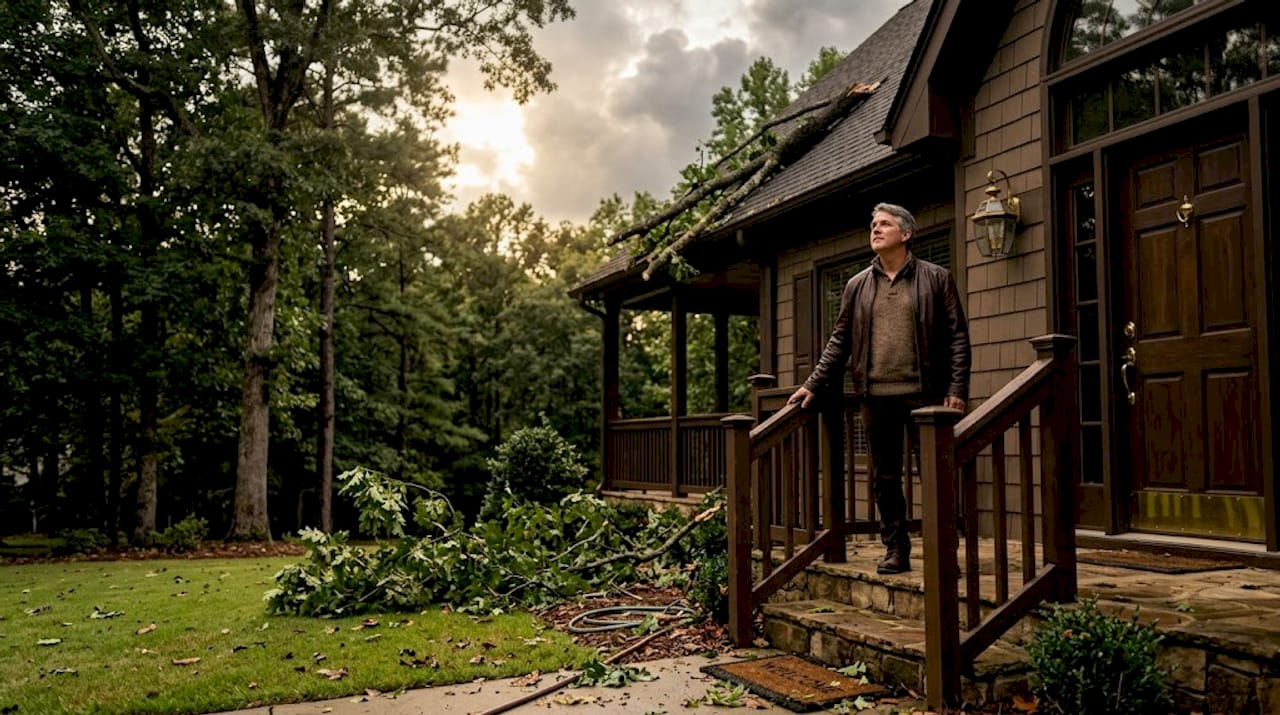
Here is a direct comparison of flat terrain versus mountain terrain roofing risks in our region:
| Risk factor | Flat or suburban terrain | Mountain or elevated terrain |
|---|---|---|
| Hail damage frequency | Moderate | High, concentrated impact |
| Tree debris exposure | Low to moderate | Very high |
| Water pooling risk | Higher on low-pitch roofs | Lower, but fast runoff causes edge damage |
| Wind uplift | Moderate | Severe, especially on steep pitches |
| Inspection accessibility | Easier | Dangerous, requires special equipment |
Key weather and structural risks specific to North Georgia include:
- Frequent severe thunderstorms from spring through fall, often delivering golf ball-sized hail that strips granules from shingles and fractures the asphalt layer
- Heavy tree canopy in Paulding, Cherokee, and Pickens counties that leads to impact damage, moss and algae growth, and debris buildup in valleys and gutters
- High summer humidity that accelerates mold growth once water enters the structure
- Rapid temperature swings in late winter and early spring that cause shingle cracking and flashing separation
- Mountain terrain in North Georgia where steep-pitch roofs fail faster after storms and post-storm tarping becomes risky on wet, angled surfaces
One of the most overlooked risks in our area involves insurance. Georgia insurers draw a clear line between sudden storm damage and gradual neglect. A claim filed after a storm is generally covered. A claim filed after water has been seeping in for months due to a known but unaddressed issue is often denied as neglect. Our Georgia roof insurance guide walks through exactly how to keep your claim on solid ground.
“Insurers in Georgia regularly deny claims where visible deterioration predates the storm event. Homeowners who delay addressing known damage risk losing coverage entirely for storm-related losses.”
Older roofs add another layer of risk. If your roof is 15 to 20 years old, individual repairs can sometimes void remaining manufacturer warranties, and the cost per repair often stops making financial sense when weighed against the lifespan you have left. In those cases, older roofs may be uneconomical to repair compared to a full replacement.
How to spot issues before they escalate
Knowing the local risks, let’s cover exactly how to catch roof problems early so you can prevent expensive surprises.
You do not need to be a roofing expert to catch warning signs early. A simple, consistent inspection routine can save you thousands of dollars and keeps your insurance coverage intact. Here is a practical checklist to follow after any major storm and at least twice a year (spring and fall):
Outside your home:
- Walk the perimeter and look for shingle fragments or granules on the ground around your downspouts
- Look up at the roofline for missing, lifted, or curling shingles
- Check gutters and downspouts for granule buildup, which signals shingle wear
- Inspect flashing around chimneys, skylights, and vents for gaps or rust
- Look for sagging sections or uneven roofline from a safe distance
- Check for moss or algae growth, which traps moisture and accelerates deterioration
Inside your home:
- Go into your attic with a flashlight and look for daylight coming through the decking
- Check insulation for wet spots, compression, or discoloration
- Look for dark stains on rafters or decking that indicate ongoing moisture intrusion
- Inspect ceiling corners and light fixtures on the top floor for water stains or bubbling paint
Subtle warning signs that homeowners commonly miss include:
- A musty smell in upstairs rooms or the attic
- Warped or bouncy decking when you walk near the roof edge (if accessible)
- Streaks or stains running down interior walls from the ceiling
- Granule-filled gutters after a storm even if you see no missing shingles
These subtle signals often mean damage costs are already multiplying beneath the surface. Catching them early is the difference between a quick repair and a major reconstruction job.
Why documentation matters: Every time you inspect your roof, take dated photos of both good and damaged areas. If you ever file an insurance claim, that photo record proves the damage was sudden and storm-related, not the result of long-term neglect. Follow the storm repair steps and record each one. If your claim does move forward, the insurance claim process becomes much smoother when you have solid documentation.
Pro Tip: After any storm producing hail larger than a dime, call a licensed roofer for a professional inspection even if your roof looks fine from the ground. Hail impact damage is often invisible from street level but significant enough to shorten roof life by years and trigger a valid insurance claim.
Insurance pitfalls from delaying roof repairs
Spotting trouble is vital, but many homeowners miss the insurance traps that come with procrastination.
Your homeowner’s insurance policy is designed to cover sudden, accidental damage. It is not designed to cover problems that built up over time because maintenance was deferred. That distinction matters enormously when storm season hits North Georgia and you need to file a claim.
Insurers deny claims for neglect rather than sudden storm damage. If an adjuster inspects your roof and finds signs of long-standing deterioration alongside recent storm damage, they have grounds to deny part or all of your claim. That can leave you fully responsible for repairs that should have been covered.
Steps to protect your claim right after a storm:
- Document within 24 hours. Take photos and video of all visible damage from the ground, including debris, missing shingles, and damaged gutters
- Tarp immediately. Cover any open areas to prevent further water entry, which demonstrates you took reasonable protective action
- Save all receipts. Any emergency materials or contractor invoices you collect start building your claim file
- Report promptly. Most policies require timely notification after a storm event. Waiting weeks can itself trigger a coverage dispute
- Request your policy’s “maintenance exclusion” language. Knowing exactly what your insurer considers neglect helps you present your claim accurately
- Work with a roofing contractor experienced in insurance restoration. They know how adjusters evaluate damage and can document the claim correctly from the start
“Filing a roof claim within days of a storm event, with proper documentation and temporary protective measures in place, significantly improves approval rates compared to claims filed weeks later without supporting evidence.”
Use our roof claim tips and detailed insurance guide to walk through this process confidently.
Pro Tip: Request a licensed contractor’s written inspection report before filing your claim. An independent professional assessment adds credibility to your filing and helps establish that the damage was storm-related, not pre-existing neglect.
Why most homeowners underestimate storm roof risk
We have worked with hundreds of North Georgia homeowners since 2018, and we consistently see the same pattern. A storm passes through. The homeowner checks the ceiling, sees no stains, and decides the roof is fine. A few months later, they discover mold in the attic or rotted decking, and they are shocked at the bill.
The psychology behind this is well documented. People tend to avoid acting on risks they cannot clearly see, a pattern called optimism bias. If the ceiling is dry and the house looks normal, the assumption is that everything is okay. Roofs make this bias worse because the actual damage happens above where you live and out of sight.
There is also a false economy belief that waiting saves money. Many homeowners think holding off on a $600 repair until things get worse is a practical financial decision. The data says the opposite. Letting a known leak sit for three months does not save the repair cost. It multiplies it by five to fifteen times.
Here is our honest take: a small leak after a storm is never a minor problem. It is a timer counting down to a much larger expense. The homeowners who come out ahead financially are the ones who treat post-storm roof checks with the same urgency they give a furnace breakdown in January. You would not let your heat stay broken for three months. Your roof deserves the same urgency.
Make it routine. After every significant storm, inspect inside and outside, take photos, and call for a professional check if anything looks off. That habit alone can keep your roof performing well and your insurance coverage solid for years.
Let Infinity Roofing GA help you protect your home
If you want peace of mind during storm season and beyond, here is how to act on the guidance above.
At Infinity Roofing GA, we have been helping North Georgia homeowners protect their homes since 2018. We are licensed, insured, and local. We know the specific storm patterns, insurance requirements, and roofing conditions across Paulding, Cherokee, Cobb, and the surrounding counties. Whether you need to repair your storm-damaged roof quickly or compare repair and replacement options for an aging roof, we give you honest answers and fast service.

We offer same-day responses, instant online estimates, and full insurance claim management. Our team handles the documentation, adjuster coordination, and repair work so you can focus on your family. When you need to find a licensed roofing contractor you can trust, we are ready to help. Contact us today and get your roof inspected before the next storm rolls through.
Frequently asked questions
What happens if I wait to fix a roof leak after a storm?
Delaying repairs can cause costs to multiply by five to fifteen times, since small problems quickly escalate to severe water damage, mold growth, and structural rot that costs tens of thousands of dollars to fix.
Can my home insurance deny a roof repair claim if I delay fixing damage?
Yes, insurers frequently deny claims linked to neglect or gradual deterioration. Only damage from a sudden storm event is typically covered, so acting fast and documenting promptly is essential.
How do I know if my roof needs immediate repair?
Look for water stains on ceilings, missing or curling shingles, granules collecting in gutters, damp spots in the attic, or visible debris impact after a storm. Any of these signs means you should call a licensed roofer right away.
Is it ever better to replace my roof instead of repairing it?
If your roof is over 15 to 20 years old, repairs may void remaining warranties or cost more than the remaining useful lifespan justifies. In those cases, a full replacement is often the smarter and more cost-effective choice.