A bad storm rolls through North Georgia, and by morning your roof is missing shingles, your attic is wet, and your mind is racing. What do you do first? Who do you call? What happens if you start cleaning up before the adjuster arrives? These are exactly the questions that can make or break your insurance claim. Getting the roof insurance claims process right from the start means faster approval, fuller coverage, and less stress during an already difficult time. This guide walks you through every critical step.
Table of Contents
- What to do first after storm roof damage
- Required documentation and evidence for a successful claim
- Step-by-step: Filing your roof insurance claim
- Avoiding common mistakes and pitfalls
- The truth about roof insurance claims most homeowners overlook
- Next steps: Professional help for roof claims and repairs
- Frequently asked questions
Key Takeaways
| Point | Details |
|---|---|
| Document before repairs | Take clear, comprehensive damage photos and notes before making any repairs to your roof. |
| Temporary fixes only | Use tarps or boarding for emergencies, but wait for insurance inspection before full repairs. |
| Provide strong evidence | Organize all photos, receipts, and communications for the adjuster to keep the claim moving smoothly. |
| Avoid common mistakes | Don’t discard damaged materials or start reconstruction before insurer approval, as this could risk your claim. |
| Local help matters | Expert North Georgia roofing contractors can speed up repairs and claims with compliant documentation. |
What to do first after storm roof damage
Safety comes before everything else. Before you even step outside to look at your roof, make sure the storm has fully passed and there are no downed power lines, standing water near electrical panels, or structural issues that could make the property dangerous. A damaged roof can also mean weakened rafters or ceiling joists, so be cautious inside the home too.
Once you confirm the area is safe, your next priority is stopping any active damage from getting worse. If rain is still entering through a hole or missing shingles, a temporary tarp or board can prevent interior water damage from spreading. This kind of short-term fix is called mitigation, and it is not only allowed but expected by insurers. However, storm claim basics for North Georgia make clear that you should never proceed with full repairs before your insurer has had a chance to inspect.
Georgia guidance on storm claims emphasizes three things: contact your insurer promptly, document everything before making repairs, and perform only emergency temporary repairs to prevent further damage (mitigation). Full repairs made before an inspection can complicate your claim or reduce your payout.
Once you have stabilized the situation, start documenting immediately. Take clear photos and videos from multiple angles, both from ground level and any safe vantage points. Capture wide shots showing the overall roof condition, close-ups of specific damage points, and interior shots showing any water stains, wet insulation, or damaged ceilings.
Then, call your insurance provider to open a claim. Do not wait a week to see if the damage “seems worth it.” Delays in reporting can be used to question whether the damage actually came from the storm.
Pro Tip: Start a storm damage incident diary the moment you notice the damage. Write down the date and time the storm hit, what you observed, every phone call or email you send to your insurer, and the name of every person you speak with. This record becomes a valuable timeline if your claim is ever disputed.
Here is a quick checklist for your immediate actions:
- ✅ Confirm the home is safe to enter
- ✅ Make only temporary repairs to prevent further damage
- ✅ Photograph and video all visible damage before touching anything
- ✅ Contact your insurance company to open a claim
- ✅ Begin your storm damage incident diary
- ✅ Save all receipts for any emergency materials purchased
Required documentation and evidence for a successful claim
Documentation is where most homeowners lose ground. Even a legitimate, fully covered claim can get delayed or underpaid if the supporting evidence is incomplete. Adjusters are looking for specific proof, and it is your job to provide it clearly and completely.
Core documents you need to gather:
- 📷 Photos and videos taken immediately after the storm
- 📋 Your homeowners insurance policy (declarations page and coverage details)
- 🗒️ Your storm damage incident diary
- 🧾 Receipts for emergency materials like tarps, plywood, or temporary patching
- 📁 Prior roof inspection records or past repair invoices (shows pre-storm condition)
- 📅 A written timeline of events from the storm through your claim filing
Here is a quick reference table to help you organize your evidence:
| Document type | Purpose | Where to store it |
|---|---|---|
| Photos and videos | Prove the scope of damage | Cloud folder or USB drive |
| Insurance policy | Confirm coverage terms | Digital copy plus printed |
| Storm diary | Establish timeline | Notebook or notes app |
| Repair receipts | Document mitigation costs | Folder with your policy |
| Prior inspection records | Show pre-storm condition | Same folder as policy |
| Contractor estimates | Support repair cost claims | Add as received |
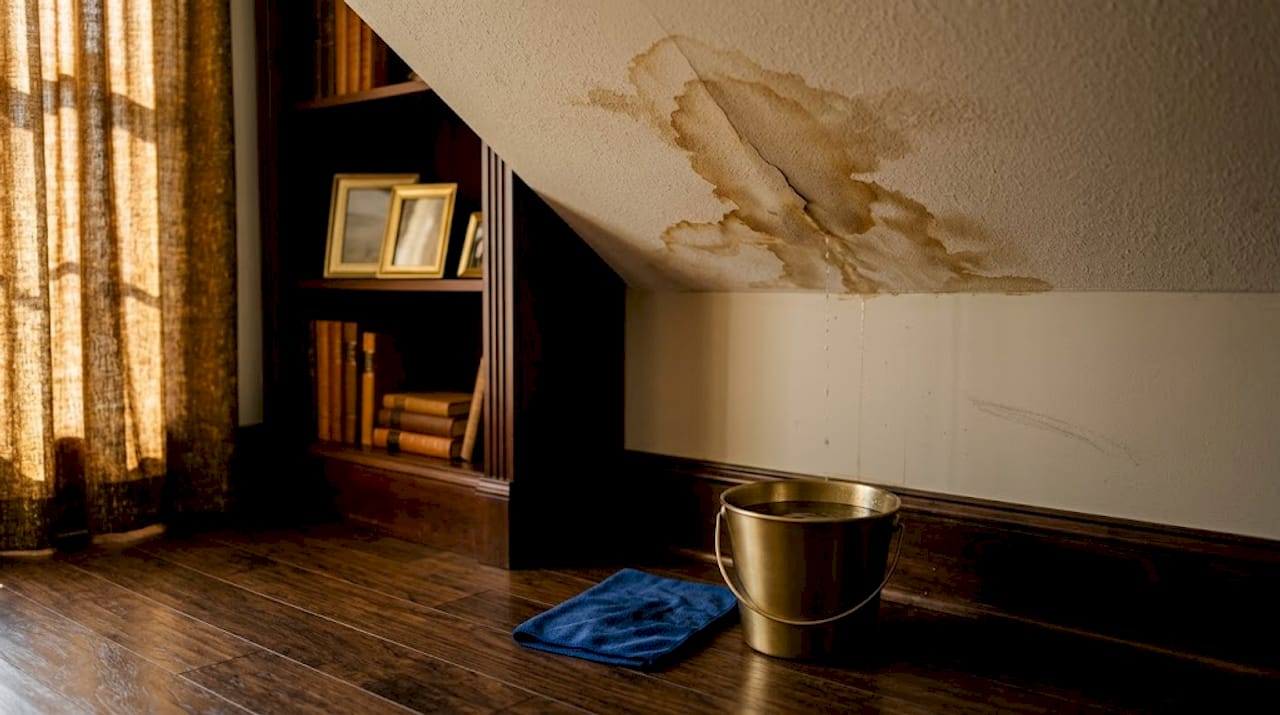
One area that deserves extra attention is water intrusion. Water damage and freezing are among the most frequently cited contributors to homeowners insurance claims across the United States. Nearly 30% of all homeowners claims involve water damage or freezing, and much of that traces back to roof failures. This means your adjuster will be looking closely for signs of water entry, so photograph any wet insulation, water stains on ceilings, mold beginnings, or damp drywall without delay.
Also review your Georgia roof insurance rules so you understand what your policy actually covers. Some policies use Actual Cash Value (ACV), which accounts for depreciation, while others use Replacement Cost Value (RCV), which pays for a full replacement at current prices. Knowing your policy type before the adjuster arrives helps you evaluate whether the settlement offer is fair.
Important: Do not alter, repair, or discard any damaged materials until the adjuster has officially inspected your property. Even small decisions, like pulling off hanging shingles or clearing debris from the roof, can eliminate evidence that supports your claim.
Stat spotlight: Nearly 30% of homeowners claims involve water damage or freezing. Documenting water intrusion early and thoroughly can significantly impact your claim outcome.
Step-by-step: Filing your roof insurance claim
With your documentation organized and your claim opened, here is the formal process you will move through:
-
Contact your insurer with full documentation. Call or log into your insurer’s portal and submit your initial claim with all photos, videos, and your written incident summary. The earlier you submit, the sooner your adjuster is assigned.
-
Schedule the adjuster inspection. Your insurer will send a claims adjuster to evaluate the damage in person. Make sure all damaged areas are accessible and clearly visible. Walk through the damage with the adjuster and point out every issue you documented, including interior water damage.
-
Review the initial settlement estimate. After the inspection, your insurer will provide a settlement offer. Review it carefully against your policy coverage and your contractor’s independent estimate. If the numbers seem low, you have the right to request a re-inspection or dispute the figure.
-
Get an independent assessment from a licensed roofing contractor. A professional roofing contractor can inspect the damage and provide their own written estimate. This gives you an informed comparison against the insurer’s number and helps you identify any damage the adjuster may have missed.
-
Approve the scope of work and materials. Once you and your insurer agree on the settlement, your contractor can finalize the repair or replacement plan using quality, approved materials.
-
Schedule repairs and track payment windows. Understand your policy’s payment timeline. Some insurers release a partial payment immediately, with the remainder paid after work is completed. Know those windows so you can plan the work accordingly.
Here is a comparison of what to expect with different coverage types:
| Factor | Actual cash value (ACV) | Replacement cost value (RCV) |
|---|---|---|
| Payout basis | Depreciated value of old roof | Full cost of new equivalent roof |
| Out-of-pocket costs | Higher due to depreciation | Lower, closer to full coverage |
| Typical premium | Lower monthly cost | Higher monthly cost |
| Best for | Older roofs, tight budgets | Newer roofs, full protection |
North Georgia roof replacement steps can help you understand what a full replacement process looks like once your claim is approved. If you are weighing whether your roof needs a full replacement or targeted repairs, comparing your options for repair vs. replace roof is a smart next step.
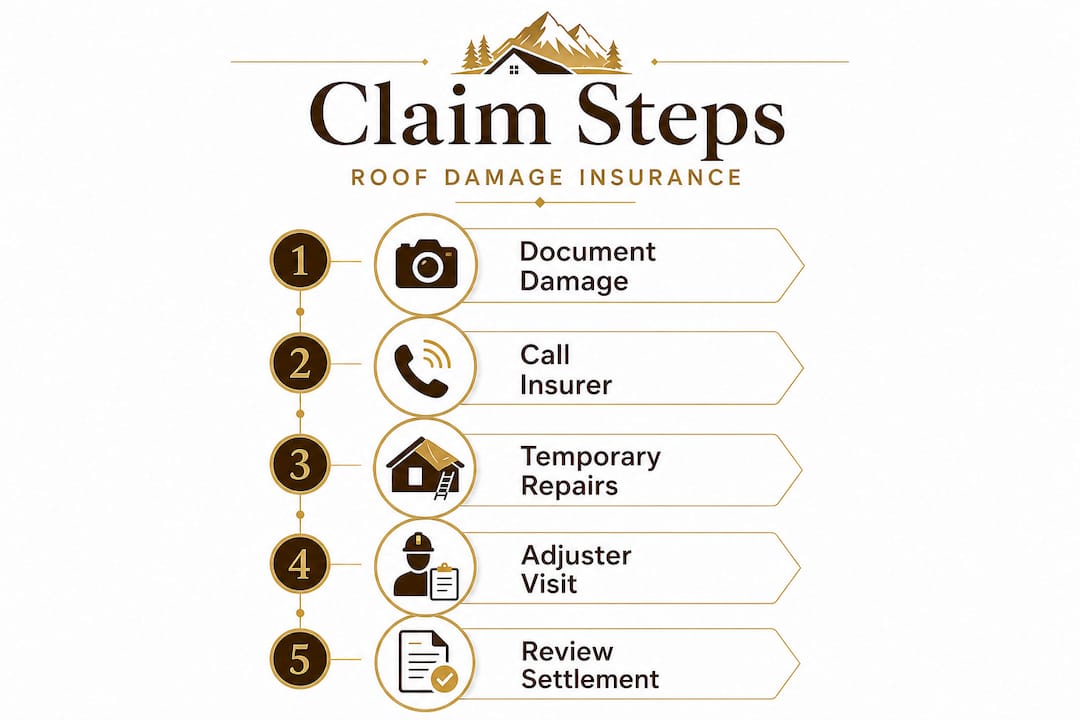
Georgia guidance also emphasizes that mitigation must stay within the limits of temporary emergency repairs until your insurer confirms what additional work can proceed without complicating the claim.
Pro Tip: Before authorizing any work beyond temporary patching, ask your insurer in writing whether that work has been approved. A simple email confirmation can protect you from later disputes about what was pre-authorized.
Avoiding common mistakes and pitfalls
Even homeowners who do everything else right can stumble at this stage. The mistakes below are the most common ones we see in North Georgia after major storms, and they are all avoidable.
Common pitfalls to avoid:
- ❌ Starting non-emergency repairs before inspection. If you replace missing shingles before the adjuster arrives, you eliminate the evidence they need to assess the damage accurately.
- ❌ Throwing away damaged materials. Keep torn shingles, damaged gutters, and any debris in a designated area. Your adjuster may need to see the physical materials.
- ❌ Hiring unlicensed contractors. Work performed by unlicensed or uninsured contractors can void portions of your claim or create liability issues if a worker is injured on your property. Always verify that your contractor is licensed and insured before signing anything.
- ❌ Accepting the first estimate without review. The initial offer from your insurer may not reflect the full scope of damage. An independent contractor estimate gives you a baseline for negotiation.
- ❌ Communicating only by phone. Verbal conversations leave no record. Follow up every call with an email summarizing what was discussed and agreed.
Before you hire anyone: Verify their license and insurance directly. Ask for their Georgia contractor license number and proof of general liability and workers’ compensation coverage. Selecting a roofing contractor carefully is one of the most protective decisions you can make during a claim.
Georgia guidance consistently reinforces that homeowners who follow proper documentation steps and limit pre-inspection repairs have significantly smoother claim outcomes than those who move too quickly.
Pro Tip: After every phone call with your insurer, send a short email that reads: “Following up on our call today, my understanding is…” This creates a written record that protects you if there is ever a disagreement about what was said.
The truth about roof insurance claims most homeowners overlook
Here is something we have learned after years of working with North Georgia homeowners on storm recovery. Most people believe the hardest part of a roof insurance claim is the paperwork. It is not. The hardest part is patience combined with consistency throughout the entire process.
We see it repeatedly. A homeowner does a great job documenting the initial damage, files the claim promptly, and then loses momentum. They accept a low estimate because they are tired and just want the roof fixed. They miss the window to dispute a settlement. They hire a contractor based on price alone and end up with work that does not meet code or insurer standards.
The adjusters who evaluate your claim are working from the evidence in front of them. They are not trying to give you less than you deserve, but they are also not going to look harder for damage than what you show them. Your documentation, your photos, your written diary, and your contractor’s independent estimate are the inputs that shape the outcome. Strong inputs lead to strong settlements.
Choosing local, insured roofing professionals over the cheapest available option is one of the highest-value decisions you can make. A qualified contractor who knows Georgia insurance processes can identify damage that homeowners miss, write detailed scopes of work that match insurer language, and communicate directly with adjusters when needed. That expertise often moves claims through faster and more completely.
Your advocacy matters at every stage. The first call matters. The adjuster walkthrough matters. The review of the settlement estimate matters. Stay engaged, keep records, and do not hesitate to ask questions or push back if something does not seem right. That is your right, and it often makes a real difference.
Next steps: Professional help for roof claims and repairs
Dealing with a storm-damaged roof is stressful enough without trying to navigate the insurance claim process alone. At Infinity Roofing GA, we have been helping North Georgia homeowners recover from storm damage since 2018, and we know exactly how to support your claim from start to finish.

Our team handles storm damage repair services across Dallas, GA and the surrounding counties, and we specialize in insurance restoration with a track record of high claim approvals. We are licensed, insured, and ready to walk you through every step, from the initial inspection to the final repair. Whether you need help understanding your settlement offer or you are ready to schedule work, we make the process straightforward and stress-free. Review our detailed roof claim step-by-step guide or get started on roof replacement help today. We respond same-day and provide honest, fair estimates with no pressure.
Frequently asked questions
Should I make emergency repairs before my insurer inspects my roof?
Only make temporary repairs to prevent further damage, and keep all evidence untouched for the insurance adjuster. Full repairs before inspection can complicate your claim or reduce your settlement.
What if water damage spreads before my claim is processed?
Document all damage immediately, make temporary repairs to stop the spread, and notify your insurer right away. Water damage and freezing are among the most common claim types, and prompt reporting protects your coverage.
Do I need to keep damaged roofing materials?
Yes, keep all damaged materials in place or stored safely until your insurance adjuster has completed their inspection. Discarding materials before the adjuster sees them can weaken your claim significantly.
How common are roof-related water damage claims?
Nearly 30% of homeowners insurance claims involve water damage or freezing, much of it tied directly to roof failures from storms.