Most homeowners picture shingles when they think about their roof. That makes sense. Shingles are what you see. But understanding what is a shingle roof means understanding more than the top layer. A shingle roof is a complete system of layered components working together to keep water out, protect your home’s structure, and hold up against wind, heat, and cold. Miss one part of that system and even brand-new shingles can fail. This guide covers everything you need to know about shingle roofing materials, types, installation, and maintenance so you can make smarter decisions as a homeowner.
Table of Contents
- Key takeaways
- What is a shingle roof system?
- Types of roofing shingles
- Benefits and challenges of shingle roofs
- Installation best practices
- My take on roofing systems vs. just shingles
- Ready to protect your shingle roof?
- FAQ
Key takeaways
| Point | Details |
|---|---|
| Shingles are one layer | A shingle roof is a multi-layer system; the underlayment is the true waterproof barrier. |
| Multiple shingle types available | Three-tab, architectural, metal, and composite shingles each offer different costs and durability levels. |
| Individual shingles are repairable | You can replace damaged shingles without tearing off the entire roof in most cases. |
| Installation quality matters most | Improper installation voids warranties and causes premature leaks regardless of shingle quality. |
| Regular maintenance extends roof life | Annual inspections and prompt minor repairs can add years to any shingle roof’s lifespan. |
What is a shingle roof system?
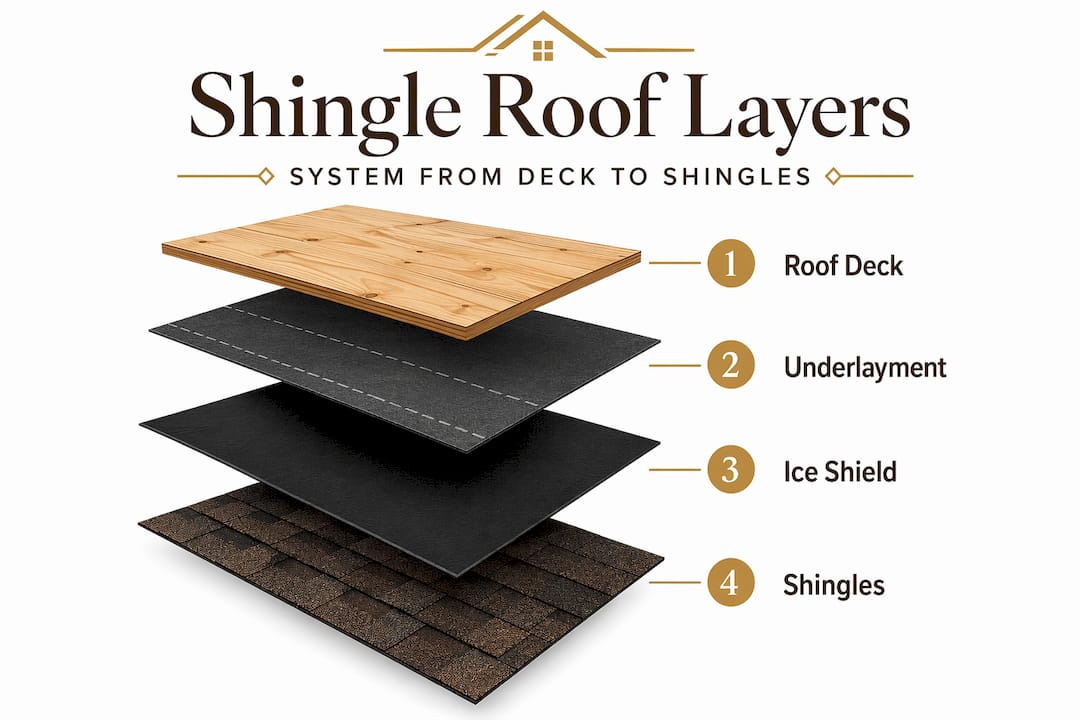
When someone asks what is a shingle roof, the honest answer starts below the shingles. A shingle roof is a layered system built on top of your home’s framing, and each component serves a specific function in keeping moisture out.
| Component | Function |
|---|---|
| Roof deck | Structural base, usually plywood or OSB, that supports all other layers |
| Underlayment | Secondary waterproof barrier between deck and shingles |
| Ice and water shield | Self-adhering membrane protecting eaves and valleys from ice dam backup |
| Starter course | First row of shingles or strips along eaves to seal edges |
| Shingles | Outer weather-shedding layer visible from the ground |
| Ridge cap | Specially shaped shingles sealing the peak of the roof |
The roof deck is your foundation. It needs to be solid, dry, and free of soft spots before anything else goes on top. On top of the deck comes the underlayment, which is the layer most homeowners never think about. The underlayment acts as a secondary barrier, meaning it keeps water out even if shingles crack, shift, or blow off in a storm. That distinction matters. Shingles shed water. The underlayment stops it.
Building codes require two layers of underlayment for roof slopes between 2:12 and 4:12, and a single layer for slopes above 4:12. Steeper roofs naturally drain faster, so one layer is sufficient. Low-slope roofs hold water longer and need extra protection. Synthetic underlayment is increasingly preferred over traditional felt because synthetic material resists wind uplift and maintains its integrity better in harsh weather.
Pro Tip: If you are buying a home and having a roof inspection done, ask the inspector specifically about underlayment condition. Shingles can look fine from a distance while the underlayment underneath is failing.
Types of roofing shingles
Choosing shingle roofing materials is one of the biggest decisions you will make for your home. The options are not all equal in price, durability, or appearance.
Three-tab asphalt shingles
Three-tab shingles are the traditional, flat shingle most people recognize. They have three tabs cut into each strip, which creates a uniform, repetitive look. They are the most affordable option upfront, but they are thinner and less wind-resistant than architectural shingles. Most are rated to withstand winds up to 60 mph, which falls short for storm-prone areas.
Architectural (dimensional) shingles
Architectural shingles are thicker and layered to create a textured, three-dimensional appearance. They are currently the most popular choice in the United States. Architectural shingles are more durable and visually appealing than three-tab options, with wind ratings often reaching 110 to 130 mph. Their added weight also improves impact resistance, which is a real concern for homeowners in hail-prone regions like North Georgia.
Metal shingles
Metal shingles are manufactured to mimic the look of traditional asphalt or even wood shakes, but they carry the longevity of metal roofing. They resist fire, impact, and rot. The trade-off is a higher upfront cost, though they frequently outlast asphalt shingles by decades.
Composite and synthetic shingles
Composite shingles are made from a blend of materials, such as rubber, plastic, and fiberglass, designed to replicate the look of slate or cedar shake. They carry the visual appeal of premium materials without the weight or maintenance. Higher-end asphalt and composite shingles can convincingly mimic cedar or slate while remaining easier to maintain and more budget-friendly.
Here is a quick comparison of the most common shingle types:
| Shingle type | Average lifespan | Cost range (per sq ft) | Best for |
|---|---|---|---|
| Three-tab asphalt | 15 to 20 years | $1.00 to $2.00 | Budget-conscious projects |
| Architectural asphalt | 25 to 30 years | $2.00 to $4.50 | Most homeowners, storm areas |
| Metal shingles | 40 to 70 years | $5.00 to $12.00 | Long-term value, fire resistance |
| Composite/synthetic | 30 to 50 years | $3.00 to $7.00 | Premium aesthetics, durability |
Key things to weigh when choosing your shingle type:
- Budget: Three-tab costs less upfront but may need replacing sooner.
- Local climate: North Georgia homeowners face strong storms, UV exposure, and occasional hail, making architectural or Class 4 impact-rated shingles a smart choice.
- Aesthetic goals: Composite and metal options offer curb appeal upgrades without the cost of real slate or wood.
- Repairability: Asphalt shingles of the same line can usually be matched for spot repairs. Composite and metal repairs may require ordering specific products.
Benefits and challenges of shingle roofs
Shingle roofs are the most common roofing choice in the U.S., and for good reason. They offer a combination of affordability, availability, and performance that other roofing types struggle to match all at once.
The biggest practical benefit is repairability. Asphalt shingles can be repaired independently without replacing the full roof. A roofer can manually separate sealed shingles, replace the damaged ones, and re-seal the area. That keeps costs down after storms and extends roof life significantly compared to systems that require full-section replacements.
Cost-effectiveness is another clear advantage. A new asphalt shingle roof is typically far less expensive than tile, slate, or metal alternatives. Materials are widely available and local contractors are familiar with installation, which keeps labor costs competitive. Asphalt shingles are also lightweight, which means most homes do not require structural reinforcement to support them.
That said, shingle roofs do have real vulnerabilities:
- Hail damage: Standard asphalt shingles can crack or bruise under hail impact. Upgrading to Class 4 impact-rated shingles with rubberized polymers significantly reduces this risk.
- Wind uplift: Shingles can lift and peel in high winds if they are not properly nailed or if the starter course is incorrectly installed.
- Ice dams: In colder climates, ice builds at the eave edges and forces water underneath shingles. Poor underlayment makes this much worse.
- UV degradation: Over time, the sun breaks down asphalt shingles, causing granule loss and brittleness. This accelerates in southern states with high sun exposure.
Pro Tip: Walk around your home after every major storm and look at your gutters. Excessive granule buildup in gutters is one of the clearest signs your shingles are aging and may need professional inspection soon.
The shingles act as the weather-shedding layer, but the underlayment is what keeps water from entering if shingles are compromised. Many homeowners only call a roofer when water is already dripping inside. By that point, the underlayment has often been failing for months.
Installation best practices
Proper installation is the single biggest factor separating a roof that lasts 30 years from one that starts causing problems in 10. Knowing how to install shingles correctly is not just about laying them flat. Every step matters.
- Inspect and prepare the roof deck. Any soft spots, rot, or damaged decking must be replaced before new materials go down. Shingles installed over a compromised deck will not hold fasteners properly.
- Install ice and water shield at eaves and valleys. Ice and water shield must extend at least 24 inches inside the exterior wall line. In areas where January temperatures average below 25°F, this is a code requirement, not just a recommendation.
- Lay underlayment with correct overlaps. Overlaps must be at least 2 inches horizontally and 4 inches at seams, per ASTM and IRC code standards. Failing to meet these minimums leaves the deck exposed.
- Install the starter course along the eave edge. This seals the bottom edge of the first full shingle course and prevents wind from getting under the leading edge.
- Nail each shingle in the correct nailing zone. Nails placed too high or too low on a shingle create a weak point. Most manufacturers specify a nailing strip zone, and missing it can void the product warranty.
- Use appropriate fasteners for local conditions. In high-wind zones, longer nails and six nails per shingle instead of four provide significantly better wind resistance.
- Cap the ridge properly. Ridge cap shingles seal the peak and must be installed with the correct overlap and fastener placement for both performance and appearance.
Counterfeit roofing materials are a real problem, particularly after major storms when demand spikes. Always verify that materials carry legitimate manufacturer markings and ask for documentation. Installing substandard materials can void both product and labor warranties.
My take on roofing systems vs. just shingles
I have worked with hundreds of homeowners across North Georgia, and the same misconception comes up again and again. People think they have a “shingle problem” when what they actually have is a system problem.
In my experience, the underlayment is responsible for more roof failures than damaged shingles. I have seen roofs where the shingles looked acceptable from the street but the underlayment was so degraded that water was entering the attic with every heavy rain. No amount of shingle replacement would have fixed that. The right call was addressing the full system.
What I have also learned is that homeowners who understand roof repair vs. replacement decisions save real money. A few bad shingles after a hailstorm does not always mean you need a full replacement. But a failed starter course, saturated deck boards, or deteriorated underlayment likely does. Knowing the difference lets you have an honest conversation with your contractor instead of just trusting whatever estimate lands in your lap.
My strongest advice is this: treat your roof as the layered system it actually is. Schedule a professional inspection every year or after any significant storm. Catch the small things early. The cost of proactive maintenance is a fraction of emergency repairs or a full replacement triggered by years of neglect.
— Dan
Ready to protect your shingle roof?
If this article gave you a clearer picture of how your roof works, the next step is knowing what to do when something goes wrong. At Ir-ga, we have been helping North Georgia homeowners with honest, licensed roofing services since 2018. Whether you are dealing with storm damage, aging shingles, or just want a professional set of eyes on your roof before a problem starts, we make it straightforward.

Check out our storm roof repair guide for a step-by-step look at what the repair process involves. If you are weighing whether to repair or replace, our detailed repair vs. replacement resource will help you make a confident call. And if you want a licensed contractor handling your next project, our licensed roofing contractors page explains exactly what code-compliant, insured service looks like.
FAQ
What is a shingle roof made of?
A shingle roof is a layered system including a structural deck, underlayment, ice and water shield at vulnerable areas, and shingles on top as the outer weather-shedding layer.
What is asphalt shingle roofing?
Asphalt shingle roofing uses shingles made from a fiberglass or organic mat coated with asphalt and topped with granules. It is the most common residential roofing type in the United States due to its cost, availability, and repairability.
How long does a shingle roof last?
Three-tab asphalt shingles typically last 15 to 20 years, while architectural shingles last 25 to 30 years or more with proper installation and maintenance. Synthetic and metal shingles can exceed 40 years.
Can you repair individual shingles without replacing the whole roof?
Yes. Individual asphalt shingles can be repaired without a full roof replacement, making spot repairs after storm damage a practical and cost-effective option for most homeowners.
What is the difference between shingle roof types?
The main differences between shingle roof types come down to material, cost, and lifespan. Three-tab shingles are the most affordable but least durable, architectural shingles offer better performance and appearance, and metal or composite shingles deliver the longest lifespan at a higher upfront cost.