Roof cleaning myths cost homeowners real money every year. Some people rely on rain to do the job. Others grab a pressure washer and go to town. A few skip cleaning entirely because the roof “looks fine.” Each of these approaches can cut years off a roof’s lifespan, void manufacturer warranties, and turn a $400 maintenance call into a $15,000 replacement. If you manage a property or own a home, the roof cleaning facts in this article will change how you think about your most important structural asset.
Table of Contents
- Key takeaways
- 1. Rain naturally cleans your roof, so no maintenance is needed
- 2. Pressure washing is the best and safest way to clean roofs
- 3. You should only clean when moss or algae are visible
- 4. Roof cleaning is a waste of money
- 5. Bleach is a safe and universal solution for every roof
- 6. DIY roof cleaning is just as effective as hiring a professional
- My honest take on why these myths persist
- Protect your home with professional roof cleaning services
- FAQ
Key takeaways
| Point | Details |
|---|---|
| Rain does not clean your roof | Biological growth like algae and moss spreads despite rain and actively deteriorates shingles over time. |
| Pressure washing damages shingles | Washing above 1,200 PSI strips granules, shortens roof life, and voids most manufacturer warranties. |
| Waiting for visible signs is too late | Algae feeds on shingle limestone filler and can reduce lifespan by 5 to 10 years before you notice it. |
| Cleaning saves money long-term | Professional soft washing costs $300 to $600 versus roof replacement costs that run $8,000 to $25,000. |
| Bleach concentration and substrate matter | A one-size-fits-all bleach approach can damage roof materials and corrode adjacent metal fixtures. |
1. Rain naturally cleans your roof, so no maintenance is needed
This is one of the most common roof maintenance misconceptions we hear from homeowners, and it makes intuitive sense on the surface. Rain falls, water runs off, debris washes away. Clean roof, right?
Wrong. Rain alone cannot remove biological organisms like algae, moss, and lichen. These organisms attach themselves to shingle surfaces and root into the granules. They do not get washed off in a storm. In fact, the moisture from rain actually feeds them and accelerates their spread.
Here is what actually happens when biological growth goes unchecked:
- Algae, specifically Gloeocapsa magma, feeds on the limestone filler in asphalt shingles and degrades them from within
- Moss physically lifts shingle edges, creating gaps where water can push underneath
- Lichen bonds so tightly to surface granules that removing it by hand tears the shingle apart
- Accumulated debris traps moisture against the roof deck, accelerating rot and deterioration
Pro Tip: If you see dark streaking on your roof (typically running in vertical lines from ridge to eave), that is algae already established. Rain has been hitting that roof for months and has not stopped it.
The truth about roof cleaning facts starts here. Your roof needs more than weather to stay healthy. It needs periodic physical and chemical maintenance to remove organisms that rain cannot touch.
2. Pressure washing is the best and safest way to clean roofs
This is the roof cleaning myth that causes the most direct, measurable damage. Pressure washing feels productive. You can see the grime lifting off. But for most residential roofs, especially those with asphalt shingles, it is one of the worst roof cleaning techniques you can use.
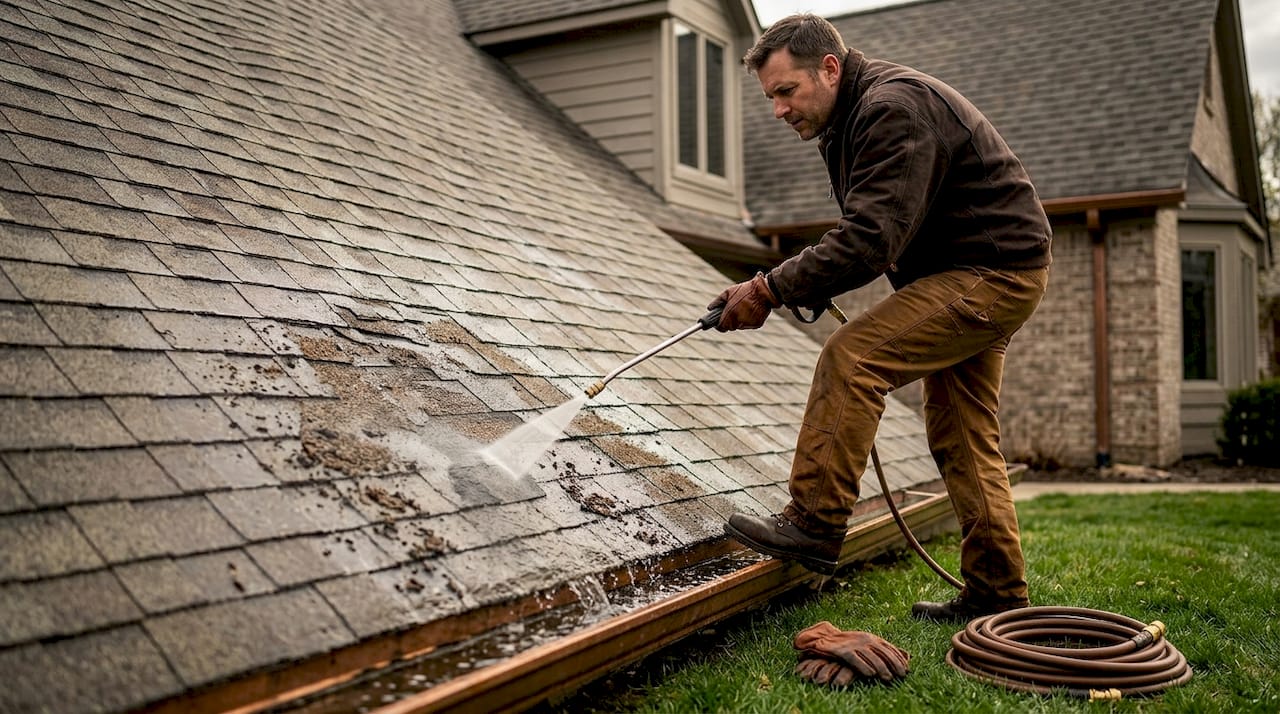
Pressure above 1,200 to 1,500 PSI causes accelerated granule loss on standard asphalt shingles. Those granules are not decorative. They protect the asphalt layer from UV degradation and add structural integrity to each shingle. Strip them prematurely and you expose raw asphalt to sun, heat, and rain.
Here is how the two methods compare directly:
| Method | PSI Range | Warranty Impact | Effectiveness on Algae | Risk to Shingles |
|---|---|---|---|---|
| Pressure washing | 1,500–3,000 PSI | Voids most warranties | Blasts surface only; roots remain | High granule loss |
| Soft washing | Under 100 PSI | Warranty compliant | Kills organisms at root level | Minimal to none |
Manufacturer warranties explicitly warn against pressure washing above 1,500 PSI and against the use of unsafe chemical concentrations. If you hire a contractor who uses a pressure washer on your asphalt roof and damage occurs, your warranty claim will be denied.
The right approach is soft washing. Soft washing uses low-pressure application with properly diluted sodium hypochlorite applied at under 100 PSI with a 15 to 20 minute dwell time. This kills organisms without stripping granules or voiding warranties. It is the method aligned with ARMA (Asphalt Roofing Manufacturers Association) guidelines.
Pro Tip: Before hiring any roof cleaner, ask two questions: What PSI do you use? What chemical concentration? If they cannot answer both confidently, look elsewhere.
For a detailed breakdown of this method, the soft wash roof cleaning guide from Ir-ga walks through the process step by step.
3. You should only clean when moss or algae are visible
Waiting for visible biological growth before scheduling a cleaning is like waiting to brush your teeth until you have a cavity. By the time you can clearly see moss or black algae streaks, the damage is already well underway.
Gloeocapsa magma algae begins feeding on the limestone filler in asphalt shingles long before it becomes visible as dark streaking. Left untreated, it can reduce shingle lifespan by 5 to 10 years. That timeline starts from first colonization, not from the day you spot streaks.
Several things are happening to your roof before you notice anything from the ground:
- Spores land and begin establishing colonies within weeks of favorable conditions (humidity, shade, debris)
- Algae colonies darken the roof surface, absorbing more heat and increasing attic temperatures
- Moss establishes shallow root systems into granules before it forms the thick green mats visible from the street
- Lichen, the hardest to remove organism, adheres so strongly that waiting until it is visible means significant shingle surface damage is already locked in
Annual or biennial professional inspections catch early-stage growth before it reaches a point of visible damage. If your roof has significant tree coverage or sits in a humid climate (like much of North Georgia), annual cleaning schedules are worth serious consideration. Waiting to clean until organisms are clearly visible greatly increases the risk of costly repairs or premature replacement.
4. Roof cleaning is a waste of money
This myth about roof care usually comes from a short-term perspective on costs. Paying $300 to $600 for a professional soft wash feels like an optional expense. Paying $8,000 to $25,000 for a full roof repair or replacement does not.
Professional soft washing at that price range versus a full replacement is not even a close comparison. Regular cleaning is one of the highest-return maintenance activities a homeowner can perform. The benefits go beyond just avoiding replacement costs:
- Warranty protection: Many manufacturers require documented maintenance to honor warranty claims. Skipping cleaning can disqualify you from coverage when you need it most.
- Energy efficiency: Dark algae stains absorb solar heat and raise attic temperatures, increasing cooling costs in summer months. Cleaning restores the reflective surface.
- Curb appeal and home value: A clean roof improves the appearance of your entire property. Real estate agents consistently note that roof condition affects buyer perception and offer pricing.
- Avoiding compounding damage: Moss lifting shingles leads to water infiltration. Water infiltration leads to deck rot. Deck rot leads to interior damage. One deferred cleaning can cascade into a multi-system repair.
Routine cleaning is not a luxury. It is part of responsible property ownership. Framing it as “unnecessary” is one of the most expensive common roof cleaning errors a homeowner can make.
5. Bleach is a safe and universal solution for every roof
Bleach has a legitimate role in roof cleaning. But the idea that any bleach product at any concentration works safely on any roof is a dangerous oversimplification.
Sodium hypochlorite concentration above 6% increases the risk of granule stripping on asphalt shingles and causes oxidation on metal components like copper gutters and aluminum flashing. Apply a solution that is too strong and you trade an algae problem for a material degradation problem.
The risks vary by roof type and surrounding materials:
- Asphalt shingles require diluted sodium hypochlorite (typically 3% to 8%) at low pressure with appropriate dwell time to kill organisms without surface damage
- Metal roofs need pH-neutral or specially formulated cleaners because bleach can accelerate surface corrosion
- Wood shake and cedar roofs respond poorly to high bleach concentrations and require oxygen-based cleaners or specialty products
- Copper gutters and downspouts adjacent to treated areas can turn black from bleach runoff if precautions are not taken
Chemical safety in roof cleaning depends heavily on matching the product and concentration to the specific substrate. This is not a one-size approach. It also involves environmental considerations. Runoff from roof cleaning chemicals can affect landscaping, storm drains, and nearby water sources. Licensed professionals use surfactants, neutralizing agents, and targeted application to manage these risks properly.
Pro Tip: Never let a contractor apply undiluted bleach directly to asphalt shingles. Ask specifically what concentration they use and how they protect surrounding plantings and metal components.
6. DIY roof cleaning is just as effective as hiring a professional
There is a lot of do-it-yourself roof cleaning content online, and some of it is reasonably accurate. But there is a meaningful gap between reading about soft washing and executing it correctly on a two-story sloped roof.
Professionals bring calibrated equipment, proper chemical ratios, and experience recognizing early signs of structural or surface damage that homeowners typically miss. According to a roofing contractor selection guide for North Georgia homeowners, licensed contractors also carry liability insurance that covers any incidental damage during cleaning. An amateur applying the wrong concentration from a ladder carries all that risk personally.
The physical safety dimension matters too. Falls from residential roofs are a leading cause of home maintenance injuries. A licensed crew has harness systems, proper footwear, and team protocols that a solo homeowner simply does not.
My honest take on why these myths persist
I have seen the same roof cleaning misconceptions repeat across hundreds of consultations over the years. Homeowners do not believe these myths because they are careless. They believe them because the myths feel logical, or they heard them from a trusted source who was working from outdated information.
The pressure washing myth is a perfect example. A decade ago, pressure washing was far more commonly recommended. The industry’s understanding of shingle chemistry and soft washing technology has moved significantly since then. But the older advice is still floating around in forums, in YouTube videos, and from well-meaning neighbors.
My real concern is warranty exposure. Most homeowners have no idea that improper cleaning voids warranty coverage until they file a claim after a storm and get denied. That is a brutal way to learn a lesson that should have been part of the purchase conversation.
What I have learned is that the homeowners who maintain their roofs best are the ones who ask questions before hiring anyone. They ask about PSI. They ask about chemical concentrations. They ask whether the contractor is licensed and insured. That skepticism, pointed at the right details, is what separates a protected investment from an expensive mistake.
My advice: treat your roof like you treat your HVAC system. Schedule maintenance before problems appear, not after. The cost difference between proactive and reactive is not even close.
— Dan
Protect your home with professional roof cleaning services

At Ir-ga, we see the results of roof cleaning myths every week in North Georgia. Roofs that were pressure washed by well-intentioned DIYers with granule loss across every plane. Properties where moss went unaddressed for years because the roof “looked okay.” Homeowners who lost warranty coverage on shingles that were less than five years old.
Our licensed and insured team uses soft wash methods that align with manufacturer guidelines, protect your warranty, and remove biological growth at the root rather than blasting the surface. If your roof has existing damage from improper cleaning or deferred maintenance, our team can also assess what storm or wear damage needs attention before the next season hits. We serve homeowners and property managers across Dallas, Marietta, Kennesaw, and throughout North Georgia. Get your free estimate today.
FAQ
Does rain clean algae and moss off roofs?
No. Rain cannot remove biological organisms like algae and moss. Moisture from rain actually feeds these organisms and promotes their spread.
What PSI is safe for cleaning asphalt shingles?
Safe pressure for asphalt shingles is under 100 PSI, using the soft wash method. Pressure above 1,200 to 1,500 PSI causes granule loss and voids most manufacturer warranties.
How often should I have my roof professionally cleaned?
Most residential roofs benefit from cleaning every one to two years. Homes in humid climates or with significant tree coverage, like many in North Georgia, may need annual attention to prevent early-stage biological growth from taking hold.
Can improper roof cleaning void my warranty?
Yes. Warranty terms explicitly exclude damage caused by pressure washing above 1,500 PSI and improper chemical treatments. Always confirm your contractor uses manufacturer-approved methods before work begins.
Is bleach safe to use on all roof types?
No. Bleach concentration and application method must match the specific roof substrate. High concentrations above 6% risk granule stripping on asphalt shingles and corrosion of adjacent metal components like gutters and flashing.