Most homeowners asking what is architectural shingle are expecting a simple answer about tile shapes. What they get instead should genuinely surprise them. Architectural shingles are not just a style upgrade. They are a fundamentally different roofing product built from multiple fused layers of asphalt-coated fiberglass, engineered to outperform standard shingles in durability, wind resistance, and lifespan. Understanding the difference between architectural shingles and traditional options is one of the most practical decisions you can make before any roof installation or replacement.
Table of Contents
- Key takeaways
- What architectural shingles actually are
- Key benefits of choosing architectural shingles
- Architectural shingle vs three-tab: side-by-side
- Installation and maintenance for a long-lasting roof
- How to decide if architectural shingles are right for you
- My honest take after years of roofing work
- Ready to upgrade your roof with Ir-ga?
- FAQ
Key takeaways
| Point | Details |
|---|---|
| Multi-layer construction | Architectural shingles are laminated from multiple asphalt layers, making them significantly heavier and more rigid than 3-tab shingles. |
| Superior wind resistance | These shingles are rated to withstand winds of 110 to 130 mph, far beyond the 60 to 70 mph rating of standard 3-tab shingles. |
| Longer lifespan | Architectural shingles typically last 25 to 30 or more years, while 3-tab shingles average just 15 to 20 years. |
| Higher upfront cost, better return | They cost more initially but save money over time through fewer replacements and potential insurance savings. |
| Installation quality matters | Even premium shingles fail prematurely if nailing patterns and ventilation are not done correctly by a licensed contractor. |
What architectural shingles actually are
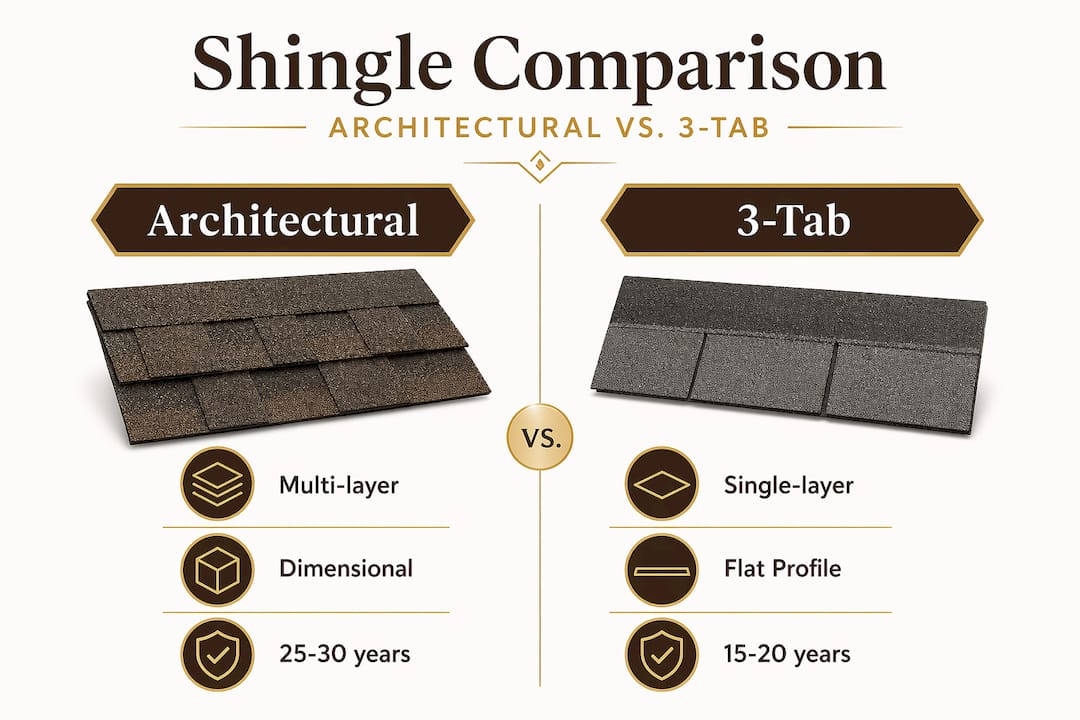
An architectural shingle, also called a dimensional shingle or laminated shingle, is made by fusing multiple layers of asphalt-coated fiberglass together into a single thick product. That layering is what separates them from traditional 3-tab shingles, which are cut from a single flat sheet of asphalt material.
The result is a shingle that is roughly 50% heavier than a standard 3-tab. That added weight is not a drawback. It directly contributes to wind resistance, structural rigidity, and the ability to hold a watertight seal under weather stress. The lamination process gives architectural shingles a rigid surface that flat shingles simply cannot match.
Here is what architectural shingles are made of and how they are constructed:
- Base mat: A fiberglass mat forms the core, providing tensile strength without adding excessive weight.
- Asphalt coating: Both sides of the mat are saturated with asphalt, which provides waterproofing and flexibility.
- Granule layer: Ceramic or mineral granules are embedded on the exposed surface to protect against UV rays and add color.
- Adhesive strip: A factory-applied sealant strip bonds each shingle to the one below it once heat activates it after installation.
- Second laminated layer: An additional strip of asphalt material is bonded to the base shingle, creating the dimensional look and added thickness.
Pro Tip: When shopping for shingles, you may hear the terms “dimensional,” “laminated,” and “architectural” used interchangeably. They all refer to the same product. The three names simply reflect different ways the industry describes the same multi-layer construction.
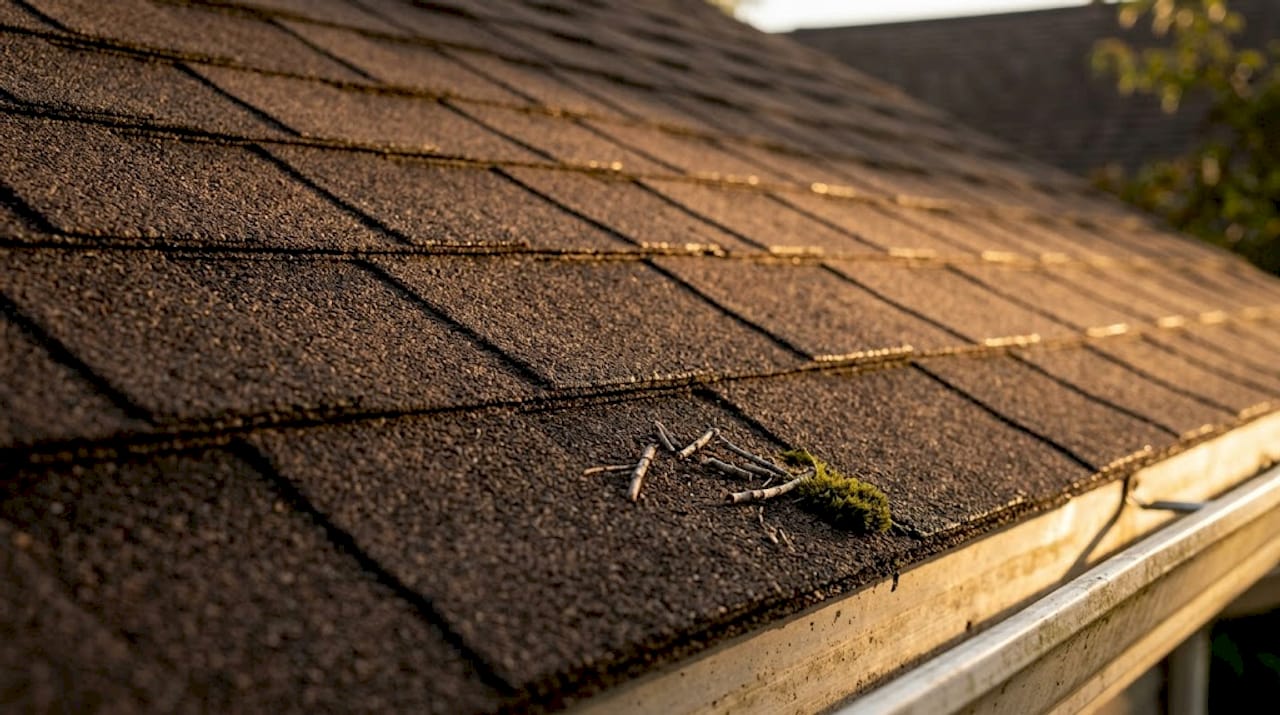
Visually, architectural shingles mimic the look of natural slate or wood shakes. The layered tabs create shadows and depth across the roof surface, giving the home a high-end appearance that flat 3-tab shingles cannot replicate.
Key benefits of choosing architectural shingles
The architectural shingle benefits go well beyond appearance. Homeowners often think the dimensional look is the main selling point. The real value is structural.
Durability that lasts decades. Architectural shingles last 25 to 30 years, with premium product lines rated for 40 to 50 years. Compare that to the 15 to 20 year lifespan of 3-tab shingles, and the math becomes straightforward. Fewer replacements over your ownership period means lower lifetime roof costs.
Wind resistance built into the product. The heavier, thicker laminated design gives architectural shingles wind resistance of 110 to 130 mph or higher. In North Georgia, where severe storms are a seasonal reality, that rating is not a marketing claim. It is the difference between a roof that holds and one that does not.
Impact resistance that protects against hail. Some premium architectural shingles achieve Class 4 impact resistance ratings, the highest available. That level of protection reduces repair frequency after hail events and can lower your homeowner’s insurance premium in hail-prone areas.
Resistance to common failure modes. Architectural shingles resist curling, cracking, and granule loss better than their single-layer counterparts, thanks to thicker build and stronger adhesives. They maintain their watertight seal and appearance significantly longer under repeated weather stress.
Here is a quick summary of the top architectural shingle benefits:
- Longer lifespan with less maintenance over time
- Superior wind and impact protection
- Enhanced curb appeal that increases resale value
- Better granule retention and resistance to UV degradation
- Class 4 impact ratings available in premium product lines
If you are thinking about roofing upgrades for your home, architectural shingles are consistently among the highest-value improvements you can make.
Architectural shingle vs three-tab: side-by-side
The architectural shingle vs three-tab comparison comes up in nearly every roofing conversation. Here is the honest breakdown.
| Feature | Architectural Shingles | 3-Tab Shingles |
|---|---|---|
| Construction | Multi-layer laminated | Single flat layer |
| Weight | Approx. 50% heavier | Lighter |
| Lifespan | 25 to 30+ years | 15 to 20 years |
| Wind resistance | 110 to 130+ mph | 60 to 70 mph |
| Impact resistance | Up to Class 4 available | Limited |
| Visual depth | Dimensional, shadow effect | Flat, uniform appearance |
| Cost | Higher upfront | Lower upfront |
| Best for | Long-term owners, storm-prone areas | Secondary structures, short-term |
The cost of architectural shingles is typically 20 to 40 percent higher than 3-tab per square foot installed. That gap narrows quickly when you factor in the replacement frequency difference and the added structural protection.
Architectural shingles are a superior long-term investment for homeowners planning to stay 7 to 10 or more years. 3-tab shingles remain a practical option for detached garages, storage buildings, or rental properties where the ownership timeline is short and budget constraints are real.
Pro Tip: If you are unsure which product your current roof has, look at the shingle tabs. 3-tab shingles have three uniformly sized cutouts along the bottom edge, giving a flat, repetitive appearance. Architectural shingles have varied tab sizes and visible depth from the ground.
One factor homeowners sometimes overlook is structural load. Architectural shingles add significant weight compared to 3-tab shingles. Before upgrading an older home, have a contractor evaluate whether your roof deck and framing can handle the added load without reinforcement. This is a one-time assessment worth doing before any purchase decision.
Installation and maintenance for a long-lasting roof
Knowing what architectural shingles are is only half the equation. How they are installed and maintained determines whether you get 15 years or 40 years of performance out of them.
Getting installation right
- Use a licensed contractor. Architectural shingle warranties are voided by improper installation. A licensed roofing contractor understands manufacturer specifications and local building codes.
- Follow correct nailing patterns. Fastening patterns are critical to maintaining wind warranty coverage. In high-wind zones, the number and exact placement of nails per shingle are manufacturer-specified requirements, not suggestions.
- Inspect the roof deck first. Any soft spots, rot, or damaged decking must be repaired before shingles go down. Installing over damaged decking wastes money and shortens roof life.
- Check attic ventilation before installation. Architectural shingles trap more heat than 3-tab shingles. Inadequate attic ventilation accelerates deterioration from below and can completely negate the expected 30 to 50 year lifespan.
- Confirm starter strip and underlayment are correct. These layers work with architectural shingles to create a watertight system. Skipping or substituting them compromises the entire roof.
Keeping your roof in shape after installation
- Schedule a professional inspection every two to three years, and after any major storm.
- Advertised lifespans do not mean maintenance-free. Localized damage becomes critical if left unaddressed, especially after the 10 to 15 year mark.
- Clear debris from valleys and gutters regularly. Trapped moisture accelerates granule loss.
- Address missing or lifted shingles quickly. One compromised shingle creates a water entry point that damages decking and insulation.
- Look for dark streaks (algae) or moss growth. These hold moisture against the shingle surface and speed up degradation. Quality roof maintenance practices make a measurable difference in long-term shingle performance.
Pro Tip: After any hailstorm, have a licensed contractor walk your roof before you file an insurance claim. Document everything with photos. What looks like surface-level granule loss can sometimes mask deeper impact damage that is covered under your policy.
How to decide if architectural shingles are right for you
The right roofing product depends on your specific situation. Here are the honest factors to weigh:
- How long do you plan to stay in the home? If the answer is 7 or more years, architectural shingles pay for themselves in avoided replacement costs and reduced maintenance.
- What is your local climate like? In storm-prone regions like North Georgia, the wind and impact resistance ratings of architectural shingles are not optional upgrades. They are practical protection.
- What is your budget? The cost of architectural shingles is higher upfront, but the lifetime cost is typically lower. If you are tight on budget right now, get honest quotes for both options and compare the 20-year total cost, not just today’s price.
- Do you care about curb appeal? If you are planning to sell within a few years, the visual upgrade from architectural shingles can improve perceived home value and buyer interest.
- Is the structure a primary residence? For a detached storage shed or outbuilding, 3-tab shingles are fine. For your home, the durability gap is too significant to ignore.
For help thinking through repair vs. replacement decisions specific to your home, talking to a licensed contractor is the most reliable next step.
My honest take after years of roofing work
I have watched homeowners spend thousands on premium architectural shingles only to see the roof fail in 12 years. Every single time, the problem was not the product. It was the installation. The nailing was off. The ventilation was ignored. The deck had soft spots nobody addressed before laying the new material.
In my experience, installation quality matters as much as product quality. A mid-grade architectural shingle installed correctly by a knowledgeable crew will outlast a premium shingle installed carelessly. That is not a knock on materials. It is a reality I have seen play out repeatedly.
What I tell homeowners is this: the shingle is only one part of a system. Underlayment, ventilation, decking condition, nailing pattern, starter strips. They all work together. When one piece is wrong, the whole system underperforms.
The other misconception I run into constantly is that a 30-year shingle means a 30-year warranty on everything. It does not. Most warranties require documented professional installation, regular maintenance, and proper ventilation to stay valid. Read the fine print before you assume coverage.
My take is simple. Buy quality architectural shingles. Hire a licensed crew that follows manufacturer specs. Get your roof inspected every few years. Do that, and you will genuinely get 30 or more years of solid performance.
— Dan
Ready to upgrade your roof with Ir-ga?
If you are considering architectural shingles for your home in North Georgia, Ir-ga is ready to help you make the right call. As a licensed and insured roofing company serving Dallas, GA and surrounding communities since 2018, we handle everything from full roof replacement guidance to storm damage assessments and insurance claim support.

We use premium materials and follow manufacturer-specified installation standards on every project. Whether you need an honest assessment of your current roof, a full replacement quote, or help after a storm, our team responds fast and handles the details so you do not have to. For homeowners dealing with damage right now, our storm damage repair process walks you through every step with zero guesswork. Reach out today for a same-day response and a no-pressure quote from your local roofing experts.
FAQ
What is an architectural shingle made of?
An architectural shingle is made from multiple layers of asphalt-coated fiberglass bonded together, topped with ceramic granules for UV protection. The laminated construction makes them significantly thicker and heavier than traditional 3-tab shingles.
How long do architectural shingles last?
Architectural shingles typically last 25 to 30 years under normal conditions, with premium product lines rated for 40 to 50 years. Actual lifespan depends on installation quality, ventilation, climate, and how consistently the roof is maintained.
Are architectural shingles worth the extra cost?
Yes, for most homeowners. The higher upfront cost of architectural shingles is offset by their longer lifespan, superior wind and impact resistance, and lower long-term replacement frequency compared to 3-tab shingles.
What is the difference between architectural and 3-tab shingles?
Architectural shingles are multi-layer, heavier, and rated for 110 to 130 mph winds. 3-tab shingles are single-layer, lighter, and rated for only 60 to 70 mph winds. Architectural shingles also last significantly longer and have a dimensional appearance compared to the flat look of 3-tab products.
Can I install architectural shingles over existing shingles?
Some jurisdictions allow one layer of new shingles over existing material, but most roofing professionals recommend a full tear-off first. Installing over old shingles can hide deck damage, add excessive weight, and void manufacturer warranties.