Most homeowners have used the terms “pressure washing” and “power washing” interchangeably. They are not the same thing, and mixing them up can lead to real damage on your siding, deck, or driveway. Understanding what is pressure washing, how it actually works, and which surfaces it can safely handle gives you a serious advantage when planning any exterior cleaning project. This guide covers everything from machine specs and nozzle types to safety practices, surface compatibility, and when to call a professional instead of renting a machine yourself.
Table of Contents
- Key Takeaways
- What is pressure washing and how it works
- Pressure washing vs power washing
- How to pressure wash safely and effectively
- Benefits of regular pressure washing for homeowners
- My honest take on pressure washing mistakes
- Get professional pressure washing results for your property
- FAQ
Key Takeaways
| Point | Details |
|---|---|
| PSI and GPM both matter | Cleaning power depends on pressure and flow working together, not PSI alone. |
| Pressure washing uses cold water | Unlike power washing, there is no heated water involved, making it safer for most home surfaces. |
| Surface type determines technique | Concrete tolerates high PSI; wood siding and painted surfaces need lower pressure and wider nozzles. |
| Regular cleaning protects property | Removing mold, mildew, and grime extends surface life and prevents costly repairs down the road. |
| Soft washing fills the gap | Delicate materials like roof shingles and older wood benefit from low-pressure chemical cleaning instead. |
What is pressure washing and how it works
Pressure washing is the process of using a motorized pump to force water through a narrow nozzle at high speed, producing a concentrated stream powerful enough to blast away dirt, mold, algae, and staining from hard surfaces. No heat is involved. The cleaning power comes entirely from water pressure and volume.
Two numbers define every pressure washer: PSI and GPM. PSI stands for pounds per square inch and measures how intensely the water hits a surface. GPM stands for gallons per minute and measures how much water flows through at any given time. PSI penetrates dirt while GPM delivers the rinsing power needed to carry loosened debris away. You need both specs working well together. A machine with high PSI but low GPM will loosen grime but leave it sitting on the surface.
Cleaning professionals and equipment guides often reference Cleaning Units, calculated by multiplying PSI by GPM. A higher combined cleaning unit score means the machine works faster and more thoroughly, which matters especially when you are cleaning a large driveway, commercial parking lot, or multi-story building exterior.
Here is how the two main pressure washer types compare for typical home and property use:
| Washer Type | Typical PSI Range | Typical GPM Range | Best For |
|---|---|---|---|
| Electric | 1,300 to 2,700 | 1.1 to 2.3 | Decks, siding, fences, vehicles |
| Gas | 2,500 to 4,000+ | 2.0 to 4.0 | Driveways, concrete, commercial jobs |
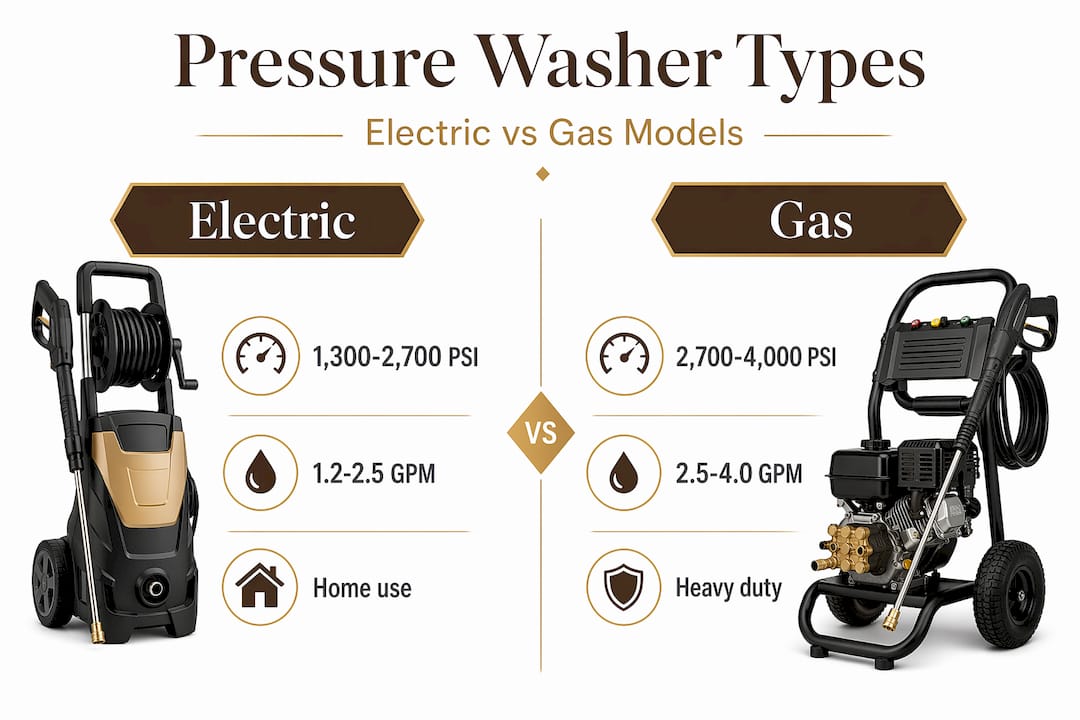
Electric models at 1,300 to 2,000 PSI are generally the right choice for most residential cleaning. They provide enough power to clean effectively without the risk of gouging wood or stripping paint. Gas machines are built for tougher jobs, larger surface areas, and commercial work where time and scale demand more output.
Pro Tip: When renting or buying a pressure washer, always check the GPM spec alongside the PSI. A machine rated at 2,000 PSI but only 1.5 GPM may underperform compared to a 1,800 PSI machine at 2.1 GPM.
Pressure washing vs power washing
This is the most common point of confusion, and it genuinely matters for how you plan your project.
Pressure washing uses cold, unheated water forced through the system at high pressure. Power washing does the same thing but adds a heating element that warms the water to produce hot water or steam. That heat difference sounds minor. It is not.
Here is how the two methods break down when applied to real property cleaning situations:
- Pressure washing works well for decks, patios, fences, driveways, sidewalks, and most exterior siding. It is widely available for DIY use and is safe for most hard surfaces when used with proper technique.
- Power washing excels at removing grease, oil stains, heavy moss buildup, and deeply embedded grime. The heat makes it significantly more effective on commercial surfaces like parking garages, loading docks, and industrial floors. This is why it is the backbone of what is commercial pressure washing in professional property maintenance contexts.
- Risk profile differs significantly. Power washing is riskier for soft surfaces like wood decking, painted siding, and older masonry because the combination of heat and pressure is more aggressive. Pressure washing, while still capable of causing damage at wrong settings, gives you more room for error on residential exteriors.
- Equipment availability favors pressure washing for homeowners. Gas and electric pressure washers are sold and rented almost everywhere. Power washing equipment is largely found in professional service fleets.
- Cost generally runs higher for power washing services, which reflects the specialized equipment and expertise required to use it safely.
For the average North Georgia homeowner dealing with a grimy driveway or mold-covered deck, pressure washing is almost always the right starting point. Power washing makes sense when you have a professional handling the work and the surface genuinely demands it.
How to pressure wash safely and effectively
Pressure washing for home cleaning is straightforward when you follow the right sequence. Skipping steps or using the wrong settings is where most homeowners run into trouble.
- Inspect the equipment. Check hoses, connections, and the nozzle for cracks or blockages before starting. A damaged hose at high pressure is a safety hazard.
- Prepare the area. Remove or cover outdoor furniture, potted plants, and any items you do not want soaked or damaged. Close all windows and doors.
- Select the right nozzle. Nozzles are color-coded by spray angle. Red (0 degrees) is the most concentrated and most dangerous; use it only on tough concrete stains and never near wood or siding. Yellow (15 degrees) works for concrete and masonry. Green (25 degrees) is the most versatile for general home cleaning. White (40 degrees) suits delicate surfaces like painted wood and vinyl siding. Black (soap nozzle) applies detergent at low pressure.
- Set correct PSI for the surface. Concrete handles 3,000 PSI. Brick and masonry work well around 2,500 to 3,000 PSI. Wood siding and fences stay safe at 1,200 to 1,500 PSI. Painted surfaces and vinyl stay safest at 1,000 to 1,500 PSI.
- Apply detergent first when needed. Use a soap nozzle to apply the cleaning agent and allow dwell time of two to five minutes. This loosens biological growth and embedded grime before you ever use high-pressure water.
- Maintain the right distance and angle. Stay at least 12 inches from the surface, farther on wood. Hold the wand at a 45-degree angle to push debris away rather than driving water into gaps.
- Work in sections using consistent strokes. Move the wand in smooth, overlapping passes to avoid streaking. Rinse from top to bottom so dirty water flows away from cleaned areas.
- Rinse detergent thoroughly. Switch to a wider-angle nozzle for the final rinse and work from top to bottom across the entire surface.
Pressure above 2,000 PSI on vinyl siding or wood can strip paint, dent wood, and drive water behind the surface. Water trapped behind siding creates mold problems that are far more expensive than the original cleaning job.
For delicate surfaces like older wood, painted trim, and certain siding materials, soft washing uses low pressure combined with biodegradable cleaning solutions to remove biological growth safely. It is an excellent alternative when high-pressure water poses too much risk. Learn more about how this approach applies to roofing in this homeowner’s soft wash guide.
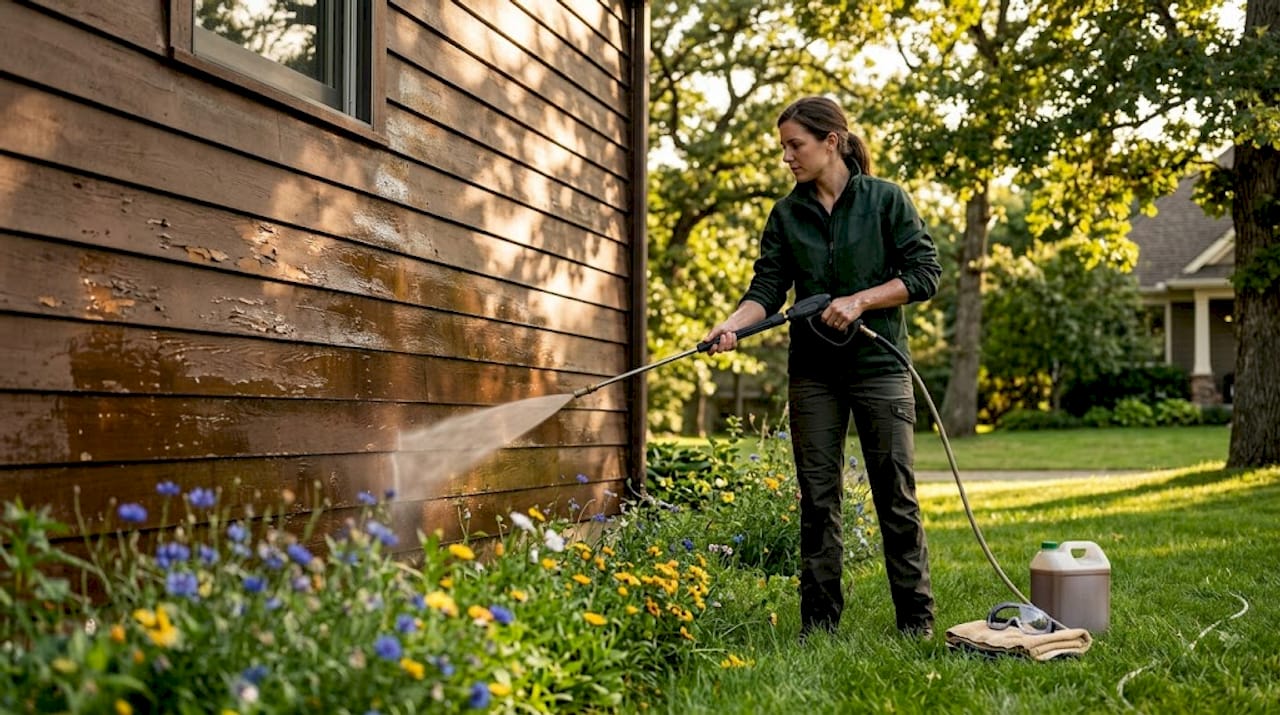
Pro Tip: Always test a small, inconspicuous area first when working on painted surfaces, older wood, or any surface you are unsure about. Thirty seconds of testing can prevent a costly repair.
Benefits of regular pressure washing for homeowners
Knowing what surfaces can be pressure washed and doing it on a consistent schedule pays off in multiple ways. Regular pressure washing removes mold, mildew, and grime that, if left unchecked, actively degrade your siding, decking, and concrete over time.
Here is what consistent exterior cleaning does for your property:
- Boosts curb appeal immediately. A clean exterior changes how your property looks at first glance. For property managers, this affects tenant retention and attracts prospective renters or buyers. For homeowners, it is one of the fastest visual upgrades available without renovation.
- Prevents surface degradation. Mold, algae, and mildew are not just cosmetic problems. They hold moisture against surfaces and accelerate deterioration of wood fibers, concrete sealers, and paint bonds. Cleaning them off regularly extends the usable life of those surfaces by years.
- Protects your health. Mold spores and algae on exterior surfaces can migrate indoors, particularly around windows and doors. Keeping exterior surfaces clean reduces that risk for your household.
- Saves time and money versus manual scrubbing. What takes hours of physical scrubbing can be completed in a fraction of the time with a pressure washer. That efficiency makes it worthwhile to clean more frequently rather than letting buildup accumulate.
- Supports property value. A well-maintained exterior is a signal to appraisers, buyers, and neighbors. Learn more about the curb appeal impact of professional cleaning on home value.
- Complements other maintenance. Pressure washing before painting, staining, or sealing gives those products a clean, solid surface to bond to. Skipping this step is one reason paint jobs and deck stains fail prematurely.
Most experts recommend pressure washing your home’s exterior once per year. Driveways and walkways benefit from twice-yearly cleaning, especially in areas with heavy tree cover or humidity. Properties with significant shade tend to grow algae and mildew faster and may need more frequent attention.
Knowing when improper pressure washing causes damage requiring repairs is just as valuable as knowing the benefits. The two go hand in hand.
My honest take on pressure washing mistakes
I have seen homeowners rent the biggest gas machine available, crank it to full pressure, and attack their vinyl siding in an afternoon. The siding looks cleaner. Two months later, there is a mold problem inside the wall cavity because water got forced through a seam. The fix cost three times what a professional cleaning would have.
The biggest misconception I run into is that PSI is the only number that matters. It is not. Using high PSI without enough GPM means you loosen the dirt but lack the water volume to flush it away. You end up with a surface that looks clean when wet and reveals streaks and residue once it dries. Matching pressure and flow for the task at hand is the actual skill.
My advice: use an electric machine at moderate settings for most residential cleaning. Save the gas-powered high-pressure work for concrete and hardscaping. And whenever a surface gives you pause, whether it is older painted wood, a delicate roof material, or ornate trim, go the soft washing route. It works better and protects what you are trying to clean.
Professional help is not admitting defeat. It is recognizing that some jobs carry real risk of damage, and the cost of a professional service is almost always less than the cost of fixing a mistake.
— Dan
Get professional pressure washing results for your property
If you are considering tackling a tough cleaning project or want to protect a significant investment like your siding, driveway, or roof, working with experienced professionals makes a real difference.

At Ir-ga, our team has provided licensed, insured exterior cleaning services across North Georgia since 2018. We match the right pressure, technique, and cleaning agents to each surface, so you get results without risk of damage. Whether you need a full exterior pressure washing service or have questions about the best approach for your property, we are ready to help. We also offer professional roof cleaning for surfaces that require careful low-pressure or soft wash treatment. Contact us today for a same-day response and honest estimate.
FAQ
What is pressure washing used for on homes?
Pressure washing cleans exterior surfaces including driveways, sidewalks, decks, fences, and siding by using high-pressure water to remove dirt, mold, algae, and staining. It is one of the most effective tools for routine exterior home maintenance.
How is pressure washing different from power washing?
Pressure washing uses cold water at high pressure; power washing adds heat or steam to the process. The heat in power washing makes it more aggressive and better suited to commercial grease and oil stains, while pressure washing is generally safer for typical residential surfaces.
What PSI is safe for pressure washing house siding?
For most siding materials, a PSI between 1,500 and 2,000 is considered safe. Lower PSI settings combined with wider nozzle angles are recommended for painted wood and vinyl to avoid stripping paint or forcing water behind the surface.
How often should you pressure wash your home’s exterior?
Most homes benefit from a full exterior wash once per year. Driveways and high-traffic areas may need cleaning twice yearly, especially in humid climates or heavily shaded properties where mold and algae grow faster.
Is soft washing better than pressure washing for some surfaces?
Yes. Soft washing uses low pressure combined with cleaning solutions and is the preferred method for delicate surfaces like roof shingles, older painted wood, and certain siding types where high-pressure water would cause damage or force moisture into wall cavities.