Most homeowners look at a roof and see shingles. That’s reasonable. Shingles are the most visible part of any roofing system. But treating them as purely decorative is one of the most costly misunderstandings in home ownership. The real role of roof shingles goes far beyond appearance. They are your home’s first line of defense against rain, wind, UV rays, and temperature swings. Understanding how they work, what types exist, and how to maintain them properly can save you thousands of dollars and years of headaches.
Table of Contents
- Key takeaways
- The role of roof shingles in your roofing system
- Types of roof shingles and how construction affects performance
- Benefits of quality shingles and proper installation
- Common misconceptions about roof shingles
- My honest take on roof shingles after years in the field
- Ready to protect your roof the right way?
- FAQ
Key takeaways
| Point | Details |
|---|---|
| Shingles are a system component | Shingles work alongside underlayment and decking to form a complete, layered weather barrier. |
| Material type affects lifespan | Architectural shingles outlast three-tab options and offer better wind and impact resistance. |
| Granule loss is an early warning | Visible granule loss in gutters signals accelerated aging before visible damage appears. |
| Ventilation matters as much as materials | Poor attic ventilation causes thermal degradation that shortens shingle lifespan significantly. |
| Repairs beat replacement in many cases | Localized damage can often be fixed without a full replacement, saving cost and disruption. |
The role of roof shingles in your roofing system
Shingles do not work alone. That is the single most important concept to grasp. Your roof is a layered system: structural decking at the base, a layer of underlayment above it, and shingles on top. Each layer has a specific job, and the system only performs when all three work together.
The primary job of shingles is water shedding. They are installed in overlapping rows from the bottom of the roof upward, which allows rain to flow down and off the roof without penetrating the layers beneath. Think of it like fish scales. Each shingle covers the seams of the one below it, directing water away from vulnerable joints.
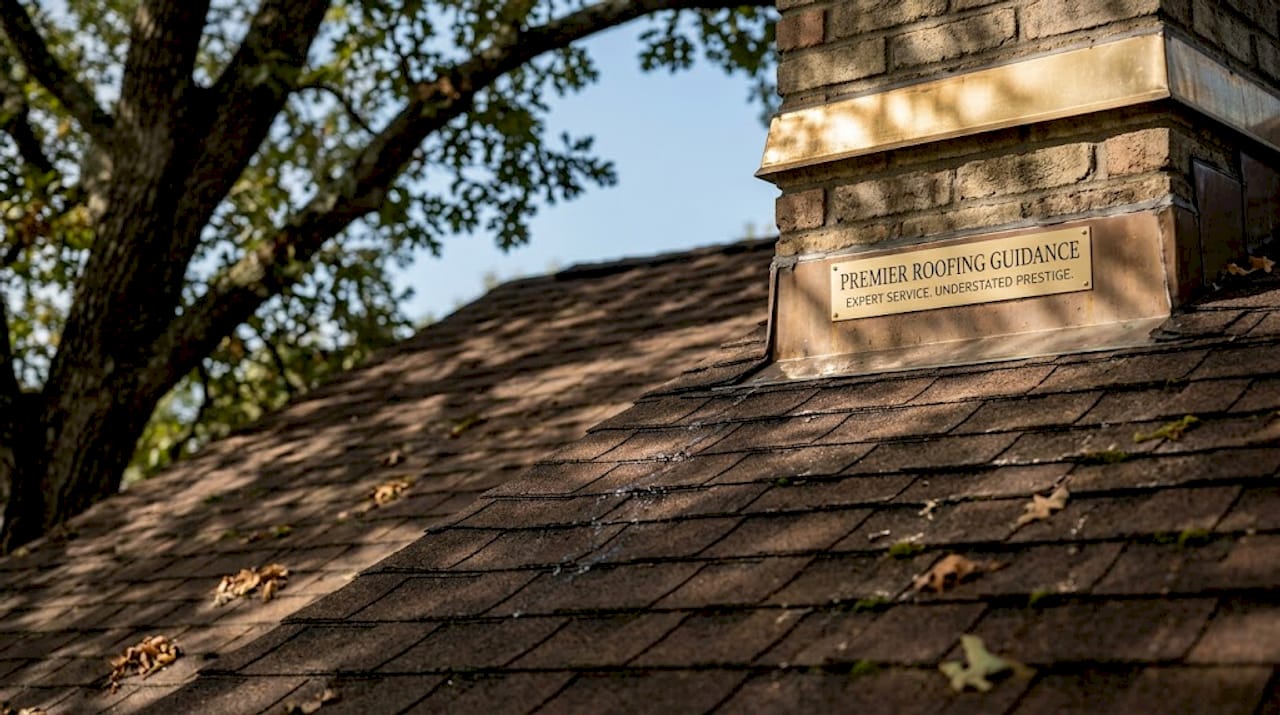
Shingles also block UV radiation. The mineral granules embedded in asphalt shingles absorb and scatter ultraviolet light, protecting the asphalt layer underneath from cracking and degrading. Without those granules, the asphalt would bake and become brittle within a few seasons.
What happens when shingles fail? Water does not automatically stop at the next layer. But the underlayment does provide a critical backup. Underlayment intercepts and redirects water that gets past shingles due to wind-driven rain or damaged areas. On low-slope roofs specifically, building codes require two offset layers of underlayment at slopes between 2:12 and 4:12, plus self-adhering membranes at critical locations.
Pro Tip: When evaluating your roof’s health, always ask about the underlayment condition, not just the shingle surface. A roof with intact shingles but degraded underlayment is still a water intrusion risk.
Here is what shingles protect against as part of a complete system:
- Rain and moisture: Overlapping installation sheds water before it reaches the decking.
- Wind uplift: Sealed shingle tabs resist lifting under high wind loads.
- UV exposure: Granule coatings protect the asphalt core and decking beneath.
- Thermal shock: Shingles buffer temperature extremes that would otherwise warp wood decking.
- Debris impact: Higher-rated shingles absorb hail and falling branches without immediate failure.
Types of roof shingles and how construction affects performance
Asphalt shingles cover about 80% of US homes, and for good reason. They balance cost, durability, and ease of installation in ways that other materials simply do not. But not all asphalt shingles are the same. The construction differences between types have a real impact on how long your roof lasts and how well it performs.
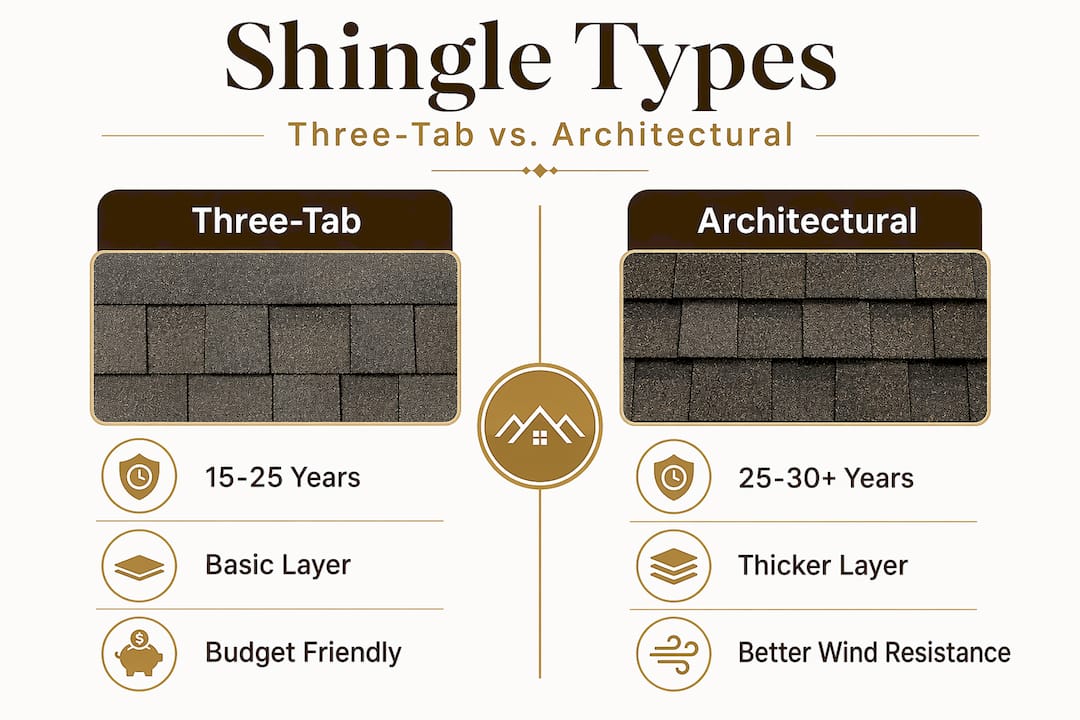
| Shingle Type | Typical Lifespan | Wind Resistance | Cost Range | Best For |
|---|---|---|---|---|
| Three-tab asphalt | 15 to 25 years | Up to 60 mph | Lower | Budget-conscious projects |
| Architectural (dimensional) | 25 to 30+ years | Up to 130 mph | Moderate | Most residential homes |
| Premium / designer | 30 to 50 years | Up to 150 mph | Higher | High-value properties |
Three-tab shingles are the thinnest option. They are flat, single-layer shingles with cutouts that create the appearance of three separate pieces. They were the industry standard for decades, but architectural shingles have largely replaced them at similar or slightly higher price points.
Architectural shingles are more robust than three-tab options, with better wind resistance and a longer service life. They are constructed with multiple bonded layers, which creates the dimensional, textured look that mimics wood shake or slate. That thickness also adds structural integrity. In North Georgia, where we see a real mix of wind events, summer heat, and occasional hail, architectural shingles are typically the right call for most homeowners.
Premium or designer shingles take it further. Some feature polymer modifications in the asphalt formula that improve flexibility and impact resistance. Class 4 impact-rated shingles, for example, can withstand hail better and often qualify for insurance discounts. The higher upfront cost can pay for itself through lower premiums and fewer storm-related repairs.
Pro Tip: Check your insurer before selecting a shingle grade. Class 4 impact-resistant shingles may qualify you for a meaningful discount on your homeowner’s insurance premium in Georgia.
When comparing shingle types, also consider the weight of asphalt used in production and the density of the granule coating. Heavier asphalt per square foot generally means better durability and longer roof shingles lifespan. Quality granules that bond tightly to the surface protect the asphalt longer and delay aging.
Benefits of quality shingles and proper installation
Selecting quality shingles is only half the equation. The benefits of roof shingles are fully realized only when installation and ongoing maintenance are done correctly. This is where many homeowners lose value they paid for upfront.
Here is how to get the most out of your roofing investment:
- Choose the right product for your climate. North Georgia homeowners deal with heat, humidity, and storm seasons. Shingles with algae-resistant granules prevent the black streaking common in humid climates. Wind-rated shingles perform better in storm-prone areas.
- Verify proper installation overlap and nailing patterns. Shingles installed with too few nails or incorrect overlap will fail ahead of their rated lifespan. Always use a licensed contractor who follows manufacturer specifications.
- Confirm adequate attic ventilation before installation. Proper attic ventilation reduces thermal degradation and directly extends shingle lifespan. Heat and moisture trapped in an attic cook shingles from below, voiding warranties and accelerating wear.
- Schedule inspections after major weather events. Hail, high winds, and falling debris cause damage that is not always visible from the ground. Early detection means smaller, cheaper repairs.
- Keep gutters clear. Clogged gutters cause water to back up under shingle edges, leading to rot in the decking below.
Roof shingles maintenance tips do not need to be complicated. A visual check of your gutters twice a year tells you a lot. Granule buildup in gutters is one of the most reliable early indicators of shingle aging. When granules shed in large quantities, the asphalt core is exposed to direct UV, which accelerates brittleness. Early granule loss predicts roof aging before you see cracking or curling, giving you time to plan repairs rather than react to an emergency.
The good news about asphalt shingles is their repairability. Qualified professionals can separate sealed shingles to replace damaged fasteners or individual shingles without tearing off the entire roof. This is a significant advantage over other roofing materials and one of the reasons asphalt remains so dominant. A well-maintained shingle roof does not have to be replaced. It can often be extended with targeted repairs and proper upkeep.
You can learn more about shingle roof structure to understand exactly what is under those shingles and why each layer matters.
Common misconceptions about roof shingles
There are a few beliefs about shingles that consistently lead homeowners to make the wrong call. Addressing them directly saves money and prevents avoidable damage.
- “New shingles mean a new roof.” Not necessarily. Shingles installed over degraded decking or missing underlayment will fail early. Judging roof condition solely on shingle appearance overlooks the whole system function and leads to poor repair decisions.
- “Shingles alone keep water out.” Shingles are the primary barrier, but not the only one. Omitting or misapplying underlayment can convert a water-shedding roof into a water-intrusion problem. Every layer in the system has to be correct.
- “If shingles look fine, the roof is fine.” Granule loss, soft spots in decking, and underlayment failures are not visible from the curb. A surface inspection misses the most important structural signals.
- “Partial repairs are a waste of money.” For asphalt shingle roofs, partial repairs are often the smart choice. Localized damage can be repaired without full replacement, which reduces cost and disruption significantly.
- “All shingles perform the same in storms.” Wind ratings vary widely. A three-tab shingle rated for 60 mph and an architectural shingle rated for 130 mph are not interchangeable in a storm-prone region.
Understanding the importance of roof shingles means looking past the surface and recognizing the system beneath. Roof shingles weather resistance depends on correct installation, quality underlayment, and consistent maintenance, not just the shingle product itself.
My honest take on roof shingles after years in the field
In my experience, the homeowners who get the most out of their roofs are not the ones who spend the most money. They are the ones who understand what they bought. I’ve seen premium shingles fail early because of poor ventilation, and I’ve seen basic architectural shingles outlast their rated lifespan because the installation and maintenance were done right.
What I find most underappreciated is repairability. The roofing industry sometimes pushes full replacements when a targeted repair would do the job just fine. Asphalt shingle systems are uniquely forgiving in that regard. A qualified contractor can assess the roof system and pinpoint exactly where the problem is without tearing everything off.
My honest recommendation: prioritize professional inspections at least once a year, especially after storm season in North Georgia. Catching a problem when it is five shingles wide costs a fraction of what you pay when it becomes a decking replacement. Understand your roof as a system, not just a surface. That shift in thinking alone will save you money.
— Dan
Ready to protect your roof the right way?
Whether you are dealing with storm damage, aging shingles, or just want a professional opinion on your roof’s current condition, Ir-ga is here to help. We serve homeowners and businesses across North Georgia with honest assessments, quality materials, and licensed, insured contractors who stand behind their work.

Not sure if you need a repair or a full replacement? Our detailed repair vs. replacement guide walks you through exactly what to look for and what questions to ask. If a storm has already done damage, our storm damage repair guide gives you a step-by-step breakdown of the process from inspection to final installation. And when you are ready to work with a professional, our team of licensed roofing contractors is available for same-day responses and instant online estimates. Reach out today and we will take it from there.
FAQ
What is the main role of roof shingles?
Roof shingles serve as the primary weather barrier, shedding water, blocking UV radiation, and protecting the decking and underlayment beneath. They work as part of a layered roofing system, not as a standalone protective layer.
How long do roof shingles typically last?
Lifespan depends on the shingle type. Three-tab shingles last 15 to 25 years, architectural shingles last 25 to 30+ years, and premium shingles can last up to 50 years with proper installation and maintenance.
Do shingles alone prevent water damage?
No. Shingles shed most water, but underlayment provides a critical backup layer, especially in wind-driven rain or on low-slope roofs. Both layers must be properly installed for full protection.
How do I know when my shingles need replacing?
Look for granule buildup in gutters, curling or cracking shingle edges, and soft spots on the roof surface. A professional inspection after storm events will catch problems that are not visible from the ground.
Can damaged shingles be repaired without replacing the whole roof?
Yes. Asphalt shingle roofs are specifically designed for localized repairs. A qualified contractor can separate sealed shingles and replace individual damaged pieces or fasteners without a full roof tear-off.