A roof inspection is a structured, documented assessment of a roofing system’s condition, covering visible and accessible components to identify deterioration and guide repair decisions. Most homeowners think of it as someone walking around on the roof, but a professional roof inspection goes much deeper than that. It covers shingles, flashing, drainage, fasteners, decking, and attic ventilation in a single, organized evaluation. Bodies like the National Roofing Contractors Association (NRCA) and the National Roof Certification and Inspection Association (NRCIA) have established standards that define what a thorough inspection must include. Understanding the full scope of a roof inspection is the first step toward protecting one of your home’s most critical systems.
What does a roof inspector look for?
A professional roof inspection covers the roof surface, drainage system, flashing, fasteners, decking, and attic interior as a complete system. Inspectors do not just look at the top layer. They work from the outside in, because surface conditions often reveal or mask damage in the layers beneath.
On the exterior, inspectors check for:
- Missing, curled, cracked, or blistered shingles
- Rust or separation at flashing points around chimneys, vents, and skylights
- Clogged or damaged gutters and downspouts
- Exposed or lifted fasteners
- Moss, algae, or debris buildup that traps moisture
Inside the attic, inspectors look for deck sagging, mold or mildew growth, daylight visible through the roof boards, and signs of moisture intrusion on insulation or rafters. Layered inspection protocols move from exterior surfaces to interior spaces precisely because a leak visible in the attic may originate several feet away at a flashing failure on the roof surface.
The difference between a general home inspector and a roofing professional matters here. A home inspector notes visible defects but does not provide roofing-specific condition estimates or lifespan assessments. A dedicated roofing assessment gives you actionable diagnoses, repair priorities, and an estimated remaining service life. That distinction is critical when you are filing an insurance claim or planning a major repair.
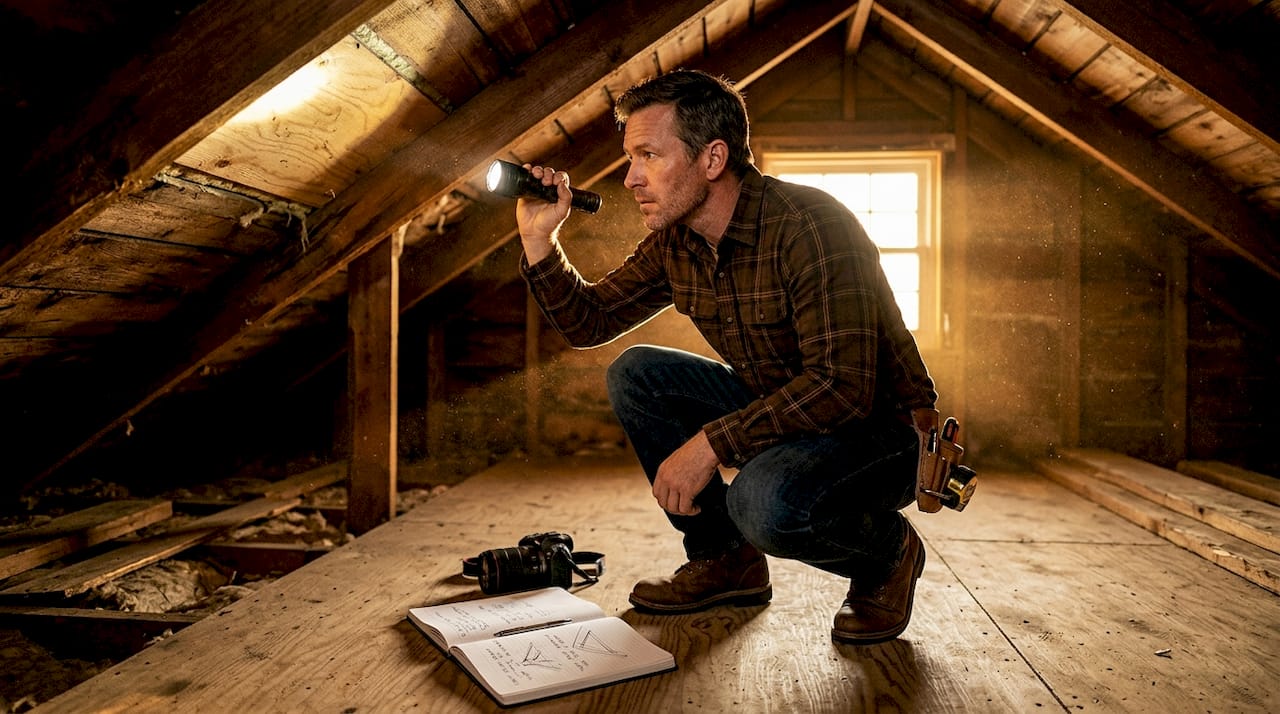
Pro Tip: Most homeowners miss the attic entirely when doing their own visual checks. Walk your attic with a flashlight after any heavy rain and look for water stains, soft spots on the decking, or any daylight coming through. What you find there often tells you more than what you see from the ground.
What methods and tools do inspectors use?
Roof inspections use three primary methods, and the right one depends on your roof’s accessibility, age, and the type of problem suspected.
| Method | Best For | Limitations |
|---|---|---|
| Visual walk-through | Standard residential inspections, accessible roofs | Inspector must physically access the roof; steep or fragile roofs pose safety risks |
| Drone inspection | Steep slopes, multi-story homes, post-storm damage documentation | Cannot detect moisture or subsurface issues |
| Infrared (IR) thermographic scan | Suspected moisture intrusion, insulation failures | Requires temperature differential; best at dusk or dawn |
| Core sampling | Commercial roofs with suspected deep moisture damage | Destructive; used only when non-destructive methods confirm a problem |
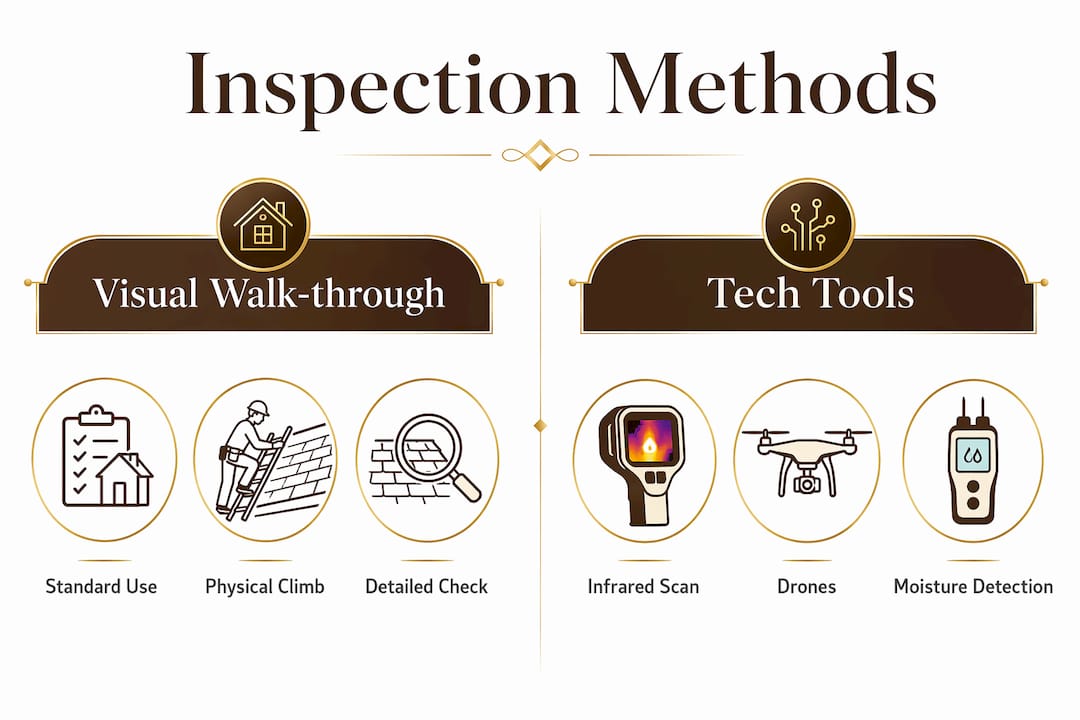
The visual walk-through remains the standard for most residential homes. A licensed roofer climbs the roof, physically checks every component, and documents findings with photos. Drone and infrared inspections are common for roofs with limited access or suspected moisture intrusion that is not visible to the naked eye.
Infrared thermographic scanning works as a first-pass screening tool. It identifies moisture boundaries by detecting temperature differences in wet versus dry roofing materials. For commercial roofs, infrared scanning followed by core sampling is the standard workflow. The scan locates problem zones without cutting into the roof; core samples then confirm the severity and internal conditions. This screen-first approach avoids unnecessary destructive testing while still delivering precise answers.
For most North Georgia homeowners, a visual inspection by a licensed roofing contractor covers everything you need. Drone or infrared options become relevant after a major storm, on a complex roof with multiple penetrations, or when you have a persistent leak that has not been traced to a clear source.
How often should you schedule a roof inspection?
Twice per year is the standard recommendation: once in spring to assess winter damage and once in fall before severe weather season begins. Post-storm inspections should happen any time your area experiences hail, high winds, or falling debris, regardless of where you are in the annual cycle.
Several factors affect how often you should schedule beyond that baseline:
- Roof age: Roofs older than 15 years need more frequent checks. Wear accelerates as materials age, and small issues become large ones faster.
- Climate and weather exposure: North Georgia homeowners face summer storms, high humidity, and occasional ice events. Each of those stresses the roofing system differently.
- History of repairs: A roof that has had multiple patches or repairs needs closer monitoring than one with no prior work.
- Insurance requirements: In Florida, the Roof Age Law requires insurers to accept inspection reports proving at least 5 years of useful life remaining for roofs 15 years or older. While Georgia does not have an identical law, insurers across the Southeast increasingly rely on inspection reports rather than roof age alone when making coverage decisions.
Pro Tip: When planning roof inspections, schedule your fall inspection in September or early October, before leaves fall and before the first freeze. That timing gives you the best window to complete any repairs before winter weather arrives.
Property managers overseeing multiple units should treat roof inspections as a fixed line item in the annual maintenance budget, not a reactive expense. A documented inspection history also strengthens your position during insurance negotiations and at the time of property sale.
What are the benefits of regular roof inspections?
Regular inspections deliver five concrete advantages that go well beyond simply knowing your roof is intact.
-
Early problem detection. Small issues like a lifted shingle or minor flashing gap cost a few hundred dollars to fix. Left undetected, the same issues lead to deck rot, mold, and interior water damage that can cost thousands. Catching problems early is the single most cost-effective thing you can do for your roof.
-
Warranty and insurance compliance. Many roofing manufacturers require documented maintenance to keep material warranties valid. Missing inspections can void coverage. Similarly, post-inspection reports with photos and condition estimates give you documented proof of roof condition, which strengthens insurance claims and prevents disputes over pre-existing damage.
-
Extended roof lifespan. A well-maintained asphalt shingle roof can last 25 to 30 years. Neglected roofs of the same material often fail in 15 to 18 years. Regular inspections and timely minor repairs are the primary reason for that difference.
-
Insurance claim support. When storm damage occurs, an inspection report from before the storm establishes a clear baseline. That documentation makes it far easier to process insurance claims for roof repairs and demonstrate that damage is storm-related rather than pre-existing.
-
Peace of mind and safety. A compromised roof is not just a financial risk. It is a safety risk. Structural deck failures, mold growth from undetected leaks, and electrical hazards from water intrusion are all real consequences of deferred maintenance. Knowing your roof has been professionally assessed gives you confidence that your home is protected.
How to prepare your home for a professional inspection
A little preparation before your inspector arrives makes the process faster and more accurate. Here is what to do in the days leading up to your scheduled inspection:
- Clear gutters and downspouts of leaves and debris so the inspector can assess drainage function accurately.
- Trim overhanging branches that touch or hang over the roof. Branches obscure surface conditions and can cause damage during the inspection itself.
- Provide clear attic access. Move stored items away from the attic hatch and make sure there is a clear path to all areas of the attic space.
- Document any issues you have noticed. Write down the location of any stains on ceilings, drafts near the roofline, or sounds of dripping after rain. That information helps the inspector know where to focus.
- Secure pets and clear the yard around the home so the inspector can safely position ladders and move around the perimeter.
On inspection day, plan to be available for at least part of the visit. A good inspector will walk you through their findings in person and answer questions before they leave. If you cannot be present, ask for a detailed written report with photos. Professional roof cleaning before an inspection also removes moss and algae that can obscure surface damage, giving the inspector a cleaner view of the actual shingle condition.
Key takeaways
A roof inspection is the most cost-effective maintenance tool available to homeowners, and skipping it consistently is the leading cause of premature roof failure and denied insurance claims.
| Point | Details |
|---|---|
| Definition and scope | A roof inspection covers the surface, flashing, drainage, decking, and attic as a complete system. |
| Inspection frequency | Schedule twice per year (spring and fall) plus after any significant storm event. |
| Method selection | Visual inspections cover most homes; use drone or infrared for complex roofs or suspected moisture issues. |
| Insurance and warranty value | Documented inspection reports protect warranty coverage and support insurance claims with clear condition baselines. |
| Preparation matters | Clear gutters, trim branches, and document known issues before the inspector arrives to maximize accuracy. |
What I have learned after years of roof inspections
I have been involved in hundreds of roof assessments across North Georgia, and the pattern I see most often is this: homeowners wait until there is a visible problem inside the house before they call anyone. By that point, the damage has almost always spread well beyond the original source. A stain on a bedroom ceiling typically means the leak has been active for months, not days.
The other mistake I see regularly is treating a general home inspection as a substitute for a dedicated roof inspection. Home inspectors are generalists. They flag what they can see from a ladder at the eave line. A roofing professional walks the surface, checks every flashing point, and goes into the attic. Those are two completely different levels of assessment, and NRCIA-certified inspectors deliver standardized, documented reports that hold up during insurance reviews and warranty claims.
One thing that surprises homeowners is how much the attic tells you. I have walked roofs that looked fine from the outside and found significant mold and deck damage the moment I opened the attic hatch. The exterior can look intact while the interior is already failing. That is why I always say: the inspection is not complete until you have been in the attic.
My honest advice is to treat roof inspections the same way you treat annual HVAC service or a dental checkup. You do not wait for something to hurt. You go on schedule, catch small issues early, and avoid the expensive emergencies that come from deferred attention.
— Dan
What to do after your inspection

Once your inspection is complete, you will have a clear picture of your roof’s condition and a prioritized list of any repairs needed. If the report flags storm damage, the next step is getting those repairs handled by a licensed contractor before the damage spreads or your insurance window closes. Ir-ga has served homeowners across North Georgia since 2018, handling everything from minor repairs to full replacements with licensed, insured crews and a documented track record with insurance carriers. Check out our storm damage repair guide for a step-by-step walkthrough of what comes next, or connect with our team for a same-day response on your specific situation. Our licensed roofing contractors are ready to help you move from inspection findings to completed repairs quickly and without the stress.
FAQ
What is a roof inspection exactly?
A roof inspection is a structured assessment of a roofing system’s condition covering the surface, flashing, gutters, fasteners, decking, and attic interior. Its purpose is to identify deterioration, estimate remaining service life, and prioritize repairs.
What is a free roof inspection?
A free roof inspection is an assessment offered by a roofing contractor at no charge, typically after a storm event or as part of a service consultation. The scope varies by contractor, so confirm in advance that it includes both exterior and attic evaluation.
How does a roof inspection affect my roofing warranty?
Many roofing material manufacturers require documented maintenance, including periodic inspections, to keep warranties valid. A written inspection report with photos serves as proof of maintenance and can prevent warranty disputes if a material defect claim arises later.
How long does a roof inspection take?
A standard residential roof inspection takes between 45 minutes and two hours depending on roof size, complexity, and the number of penetrations. Attic access adds time but is a necessary part of a thorough assessment.
Can I do my own roof inspection?
You can perform a basic visual check from the ground or through the attic, but it does not replace a professional inspection. A licensed roofing professional identifies conditions that are not visible without walking the surface and has the training to assess flashing integrity, fastener patterns, and structural deck conditions accurately.