A roof damage inspection is a systematic evaluation of your roof’s exterior, attic, and structural components to identify deterioration, storm impact, or leak pathways before they become costly failures. For homeowners and property managers across North Georgia, where severe thunderstorms, hail, and high winds are seasonal realities, following a reliable roof damage inspection guide is the difference between a paid insurance claim and a denied one. This guide walks you through every step: ground-level scanning, attic checks, surface component review, and documentation practices that hold up with adjusters.
How to do a roof damage inspection from the ground
The safest first step in any home roof inspection guide is a thorough ground-level scan. You do not need to climb anything to gather meaningful evidence. Grab a pair of binoculars and a camera or smartphone with zoom capability, then walk the full perimeter of your home.
Here is what to look for from the ground:
- Missing or displaced shingles: Gaps in the shingle field are visible from the street, especially after wind events. Even one missing tab exposes the underlayment to water.
- Curling or cupping shingles: Shingles that curl upward at the edges or cup in the center signal aging or moisture damage. Curling and cracking shingles are confirmed distress indicators that require prompt assessment.
- Granule loss: Walk to your downspout splash zones and check for gritty, sand-like deposits. Granule deposits in gutters confirm shingle surface erosion, which accelerates UV degradation and shortens roof life.
- Sagging areas: Any visible dip or wave in the roofline suggests decking damage or structural compromise underneath. This is a red flag that requires professional attention immediately.
- Gutter condition: Look for sagging gutters, rust stains on the fascia, or sections pulling away from the roofline. Gutter sagging and fascia discoloration signal chronic drainage problems that risk water intrusion into your walls and foundation.
Pro Tip: Inspect in the morning when low-angle sunlight rakes across the roof surface. This lighting reveals subtle depressions, lifted shingles, and granule loss that flat midday light completely hides.
After your ground scan, photograph every area of concern from multiple angles. These images become part of your documentation record, which we cover in detail later.

What does the attic reveal about roof damage?
The attic is the most underused diagnostic tool in a DIY roof damage inspection. Most homeowners skip it entirely, which means they miss the clearest evidence of active leaks. A ground-level scan combined with attic moisture evidence confirms subtle roof damage that exterior views alone cannot detect.
Enter the attic during daylight hours and turn off any artificial lights. Give your eyes 30 seconds to adjust. Then look for these signs:
- Daylight penetration: Any pinpoints or streaks of light coming through the roof deck indicate a breach in the roof envelope. Attic daylight spots are a direct guide to leak entry points and should be marked and photographed before you exit.
- Moisture stains and dark streaking: Brown or gray stains on the decking or rafters show where water has traveled. Stains do not always appear directly below the entry point because water follows the wood grain.
- Damp or compressed insulation: Wet insulation loses its R-value and becomes a mold substrate within 24 to 48 hours. Dark stains and wet insulation after storms highlight active roof leaks and mold risk.
- Musty odors: A persistent musty smell without visible staining often means mold is growing inside insulation or behind the decking where you cannot see it.
- Interior ceiling stains: Before entering the attic, check every ceiling in the home for water rings or bubbling paint. These map to the general area of roof failure above.
Pro Tip: Bring a flashlight even in daylight. Shine it along the underside of the decking at a low angle to spot moisture sheen or early mold growth that looks like dark fuzzy patches.
Safety matters here. Wear a dust mask, step only on joists or a board laid across them, and never step on the insulation itself. In older North Georgia homes, blown-in insulation can conceal gaps between joists.
Which roof surface components show the most damage?
Once you have completed your ground and attic checks, a closer look at the roof surface itself reveals damage that binoculars cannot fully capture. Limit roof access to dry conditions and pitches of 6:12 or less, and always use a spotter on the ground. If the pitch is steep or the surface is wet, stop and call a licensed roofer.
When safe access is possible, work through these components in order:
-
Flashings at chimneys, vents, and skylights: Metal flashings seal the joints where the roof meets vertical surfaces. Look for rust, gaps, lifted edges, or missing sealant. Inspecting chimney and vent flashings for rust and gaps is one of the most critical steps because flashing failures cause the majority of residential roof leaks.
-
Pipe boots: These rubber or metal collars seal around plumbing vent pipes. In North Georgia’s heat and UV exposure, rubber boots crack and shrink within 10 to 15 years. Press gently on the rubber collar. If it crumbles or feels brittle, it needs replacement regardless of shingle condition.
-
Ridge cap shingles: Walk the ridge line visually from the ladder before stepping on the roof. Missing or lifted ridge caps expose the peak to direct wind and rain infiltration. This is one of the first areas to fail in a high-wind event.
-
Valleys: Roof valleys channel the highest volume of water runoff. Look for worn-through shingles, exposed underlayment, or debris buildup that redirects water under the shingle edges.
-
Gutters and downspouts: Check for dents from hail, rust spots, separated seams, and blockages. Clogged gutters force water back under the drip edge and into the fascia board, causing rot that spreads to the decking.
-
Hail impact marks: On asphalt shingles, hail leaves circular bruises or depressions where the granules have been knocked away. On metal components like flashing or gutters, hail leaves distinct round dents. These marks are the primary evidence adjusters look for in storm damage claims.
Pro Tip: Check the air conditioning unit, metal vents, and any painted wood trim on the exterior. Hail dents on soft metals confirm the storm intensity and date, which strengthens your insurance claim even if shingle damage is subtle.
How to document roof damage for an insurance claim
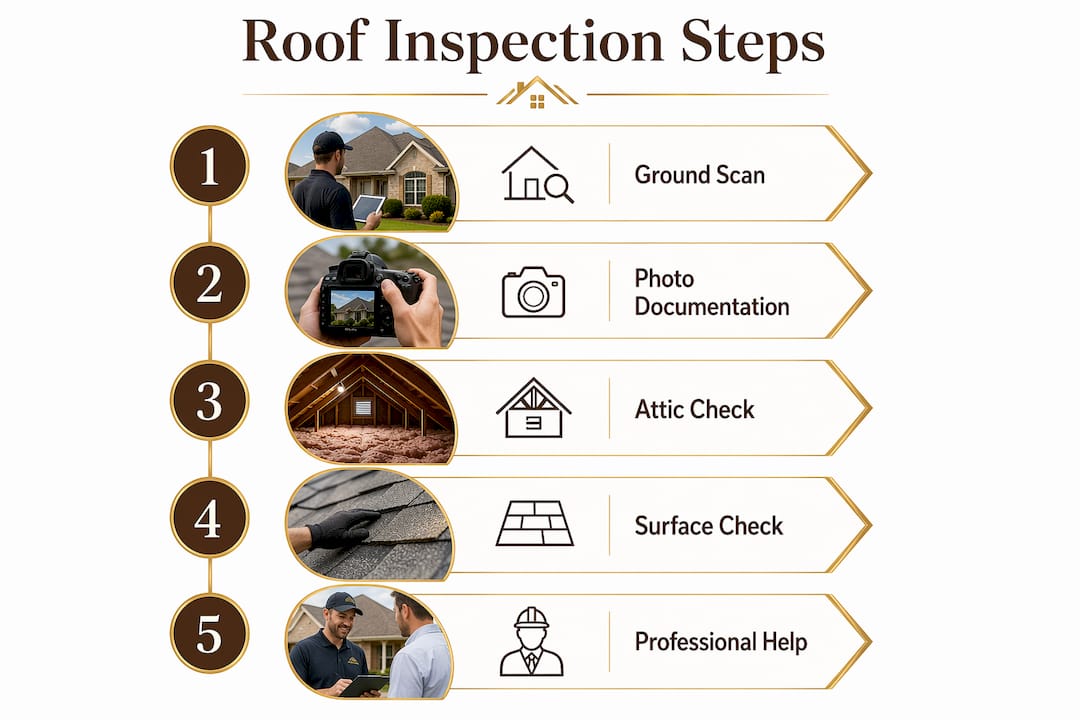
Documentation is where most North Georgia homeowners lose money on legitimate claims. The evidence you gather in the first 48 hours after a storm is worth more than anything you collect a week later. Inspect within 48 hours after major storms to preserve claim potential and prevent further interior damage.
Follow this documentation checklist without skipping steps:
- Date-stamped photos: Your smartphone automatically embeds date and time metadata in every image. Photograph all damage from multiple distances: wide shots for context, close-ups for detail. Photograph damage before cleanup to preserve critical evidence that validates claims with insurers and contractors.
- Weather records: Download a radar screenshot or weather report from the National Weather Service for your zip code on the date of the storm. Save it as a PDF alongside your photos.
- Written damage log: Note the location of each issue using compass directions and reference points. “Northwest slope, third row of shingles from the ridge, two missing tabs” is far more useful to an adjuster than “some shingles are gone.”
- Preserve the damage condition: Do not clean up debris or make repairs before your adjuster visits, except for emergency tarping to prevent further interior damage. Policy coverage applies only to losses during the policy period, so you must link visible damage to a specific storm event date, not just the date you noticed it.
| Documentation item | Why it matters |
|---|---|
| Date-stamped photos | Ties physical damage to a specific storm event for policy coverage |
| Weather service records | Confirms storm occurrence and intensity on the claimed date |
| Written damage log | Provides precise location data for adjusters and repair contractors |
| Pre-repair condition photos | Prevents insurers from arguing damage occurred after the policy event |
Your roof insurance claim guide for North Georgia homeowners covers the full claims process in detail, including how to work with public adjusters and what to do if your claim is underpaid.
When should you call a professional roofer?
A DIY inspection covers a lot of ground, but there are clear situations where professional assessment is not optional. Knowing the line protects both your safety and your claim outcome.
Call a licensed roofer when you observe any of the following:
- Visible structural sagging anywhere on the roofline or decking, which indicates compromised trusses or rafters
- Widespread shingle loss covering more than one slope or more than a handful of individual tabs
- Active water intrusion into living spaces during or after rain
- Attic decking damage including soft spots, rot, or visible mold growth across large areas
- Steep or complex roof geometry that makes safe personal access impossible
Licensed roofers provide comprehensive assessments and detailed written reports that document shingle condition, flashing integrity, attic ventilation, and decking health. These reports carry weight with insurance adjusters in a way that homeowner photos alone do not. A professional inspection report also establishes a baseline for repair scope, which prevents contractors from adding unnecessary work to the estimate. At Ir-ga, we provide free roof inspections for North Georgia homeowners and deliver a written damage report you can submit directly to your insurer.
Key takeaways
A thorough roof damage inspection combines ground-level scanning, attic moisture checks, and surface component review to build the complete evidence record your insurance claim requires.
| Point | Details |
|---|---|
| Start at ground level | Use binoculars to spot missing shingles, granule loss, and gutter damage before accessing the roof. |
| Always check the attic | Daylight spots and moisture stains in the attic reveal active leaks that exterior views miss entirely. |
| Inspect critical components | Flashings, pipe boots, ridge caps, and valleys are the highest-failure areas on any North Georgia roof. |
| Document within 48 hours | Date-stamped photos and weather records tie damage to a storm event, which is required for policy coverage. |
| Know when to call a pro | Structural sagging, widespread loss, or steep pitches require a licensed roofer for safe and accurate assessment. |
What I’ve learned after years of North Georgia roof inspections
After working with hundreds of homeowners across Paulding, Cobb, and Cherokee counties, the single most common mistake I see is skipping the attic. Homeowners walk the yard, spot a few missing shingles, and call it done. Then they file a claim and the adjuster finds water damage in the decking that has been building for months. At that point, the insurer questions whether the damage is storm-related or the result of deferred maintenance. That distinction costs thousands of dollars.
The second mistake is waiting too long to document. I have seen homeowners clean up storm debris, tarp the roof, and then try to file a claim two weeks later with no photos of the original damage. Georgia courts have been clear on this: you must link damage to the policy period, not just the date you noticed it. Your phone is your best tool in the first 24 hours after a storm.
My practical advice: do the ground scan and attic check yourself every time. Use that information to have an informed conversation with your roofer. But for anything involving structural concerns, steep pitches, or a formal insurance claim, bring in a licensed contractor. The inspection is free with Ir-ga. The cost of a missed or denied claim is not.
— Dan
Get a free professional roof inspection from Ir-ga
If your inspection has turned up damage, or if you are not sure what you are looking at, Ir-ga is ready to help. We are a licensed and insured roofing company serving Dallas, GA and communities across North Georgia, and we have been handling storm damage repair and insurance restoration since 2018. Our team provides free on-site roof inspections with a written damage report you can submit directly to your insurer.

We also walk you through the full insurance claims process from documentation to adjuster meetings to final repair, so you get maximum coverage without the stress. Same-day responses, honest assessments, and no pressure. Call us or request your free estimate online today.
FAQ
What are the first signs of roof damage to look for?
Missing or curling shingles, granule deposits in gutters, and water stains on attic decking are the three most reliable early signs of roof damage. A ground-level scan with binoculars combined with a quick attic check covers both exterior and interior indicators.
How soon should I inspect my roof after a storm?
Inspect within 48 hours after a major storm to document damage before weather or debris removal alters the evidence. Timely inspection also prevents minor leaks from becoming major interior water damage.
Can I inspect my own roof safely?
Most of a DIY roof damage inspection can be done safely from the ground and attic without climbing the roof. If roof access is needed, limit it to dry conditions and pitches of 6:12 or less, and always use a spotter.
What documentation do I need for a roof insurance claim?
You need date-stamped photos of all damage, a weather service record confirming the storm date, and a written log of damage locations. Georgia insurance policy coverage requires you to link damage to a specific event date, not just the date of discovery.
When does a roof inspection require a professional?
Call a licensed roofer when you observe structural sagging, widespread shingle loss, active interior leaks, or any damage on a steep or complex roof. A professional written inspection report also carries significantly more weight with insurance adjusters than homeowner photos alone.