Reflective roofing, the industry term for what the Department of Energy calls a “cool roof,” is a roofing system engineered to reflect sunlight and release absorbed heat rather than transferring it into your building. The result is a measurable drop in indoor temperatures and a direct reduction in air conditioning costs. Cooling cost reductions range from 5% to 30% depending on your climate, insulation levels, and the specific materials used. That range is wide because reflective roofing performs differently across building types and regions, which is exactly why understanding the science and the tradeoffs matters before you invest. This guide covers how reflective roofs work, what materials perform best, and how to decide if this upgrade is right for your property.
Why reflective roofing is worth understanding before your next roof project
Reflective roofing works on two measurable physical properties: solar reflectance and thermal emittance. Solar reflectance, also called albedo, measures how much of the sun’s energy a surface bounces back instead of absorbing. Thermal emittance measures how efficiently a roof releases the heat it does absorb. A roof that scores high on both stays significantly cooler than a conventional dark roof.
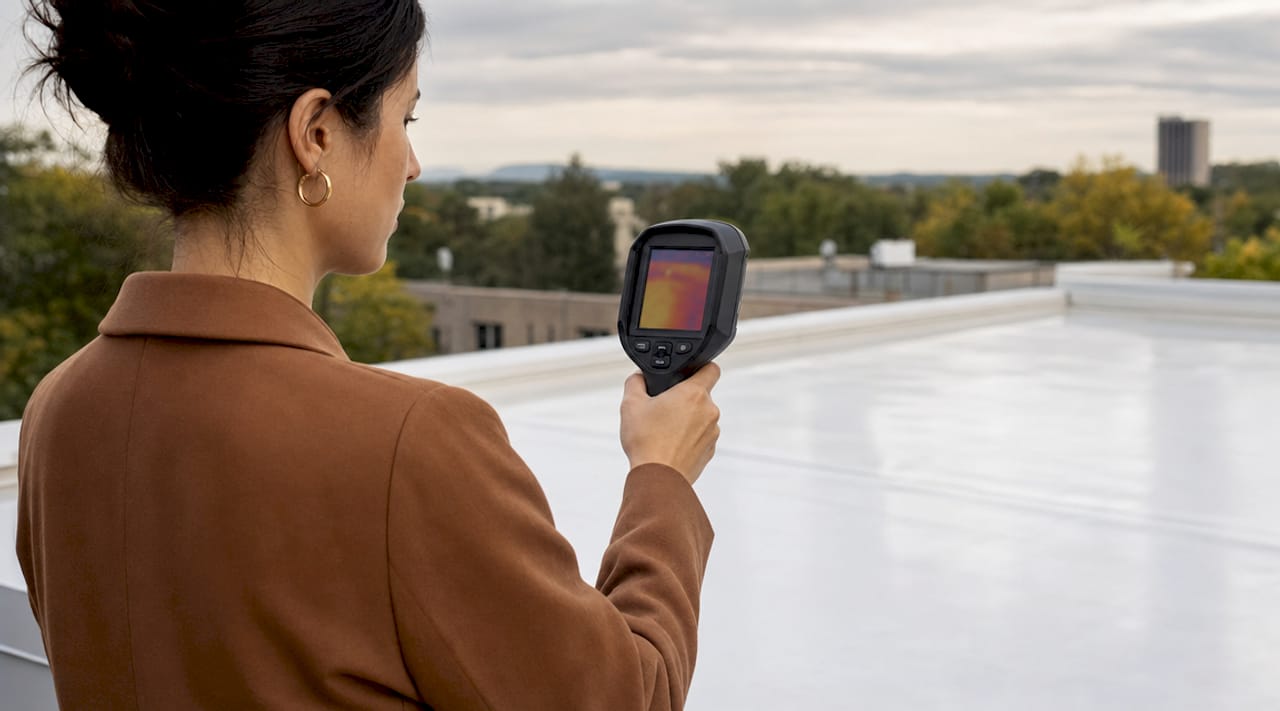
The combined performance of these two properties is captured in a single number called the Solar Reflectance Index, or SRI. Most U.S. energy codes require an SRI minimum of 78 for low-slope roofs, which means any product you select should meet or exceed that threshold to qualify for code compliance and most rebate programs. Hitting that number is not difficult with today’s materials, but knowing to ask for it separates a well-specified project from one that falls short.
Here is how the key metrics break down across common reflective materials:
- White TPO membranes: Solar reflectance of 0.80 to 0.88 with thermal emittance above 0.90. One of the most widely used options for flat and low-slope commercial roofs.
- White silicone coatings: Initial solar reflectance of 0.80 to 0.88, with aged values holding at 0.65 to 0.75. A strong retrofit choice for existing roofs.
- White EPDM membranes: Slightly lower reflectance than TPO but still well above conventional black EPDM, with good emittance performance.
- Coated metal roofs: Reflectance varies by coating color and finish, but factory-applied cool-roof coatings on metal panels can achieve SRI values well above 78.
Pro Tip: Always ask your contractor for the aged reflectance value, not just the initial value. Products tested after three years of weathering give you a far more accurate picture of long-term performance.
One factor many property owners overlook is degradation. Reflectivity decreases over time due to soiling, biological growth like algae and mold, and UV exposure. A roof that starts at 0.85 reflectance may drop to 0.65 within a few years without proper maintenance. Aged reflectance ratings, available from the Cool Roof Rating Council (CRRC), are more predictive of actual energy savings than the shiny new numbers on a product sheet.
How reflective roofs compare to traditional roofing materials
The performance gap between a reflective roof and a conventional dark roof is larger than most homeowners expect. Reflective roofs can stay more than 50°F cooler than dark roofs on a sunny afternoon. That temperature difference directly reduces the heat load transferred into your attic and living space, which means your HVAC system runs less and lasts longer.
| Feature | Dark conventional roof | Reflective cool roof |
|---|---|---|
| Surface temperature (peak sun) | Up to 150°F or higher | 100°F or lower |
| Solar reflectance | 0.05 to 0.20 | 0.65 to 0.88 |
| Cooling cost impact | Baseline | 5% to 30% reduction |
| HVAC strain | High | Significantly reduced |
| Roof material lifespan | Standard | Extended due to less heat stress |
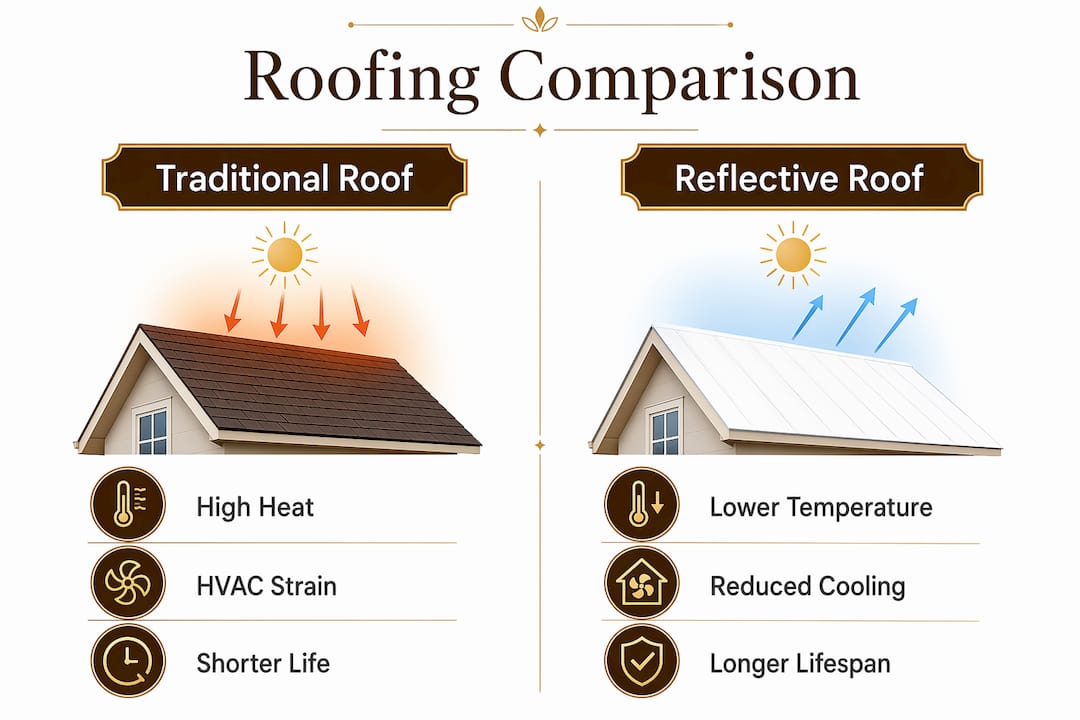
Beyond the numbers, reflective roofs offer indirect benefits including reduced HVAC strain, prolonged roof life, and improved occupant comfort. Less thermal cycling means fewer expansion and contraction cycles in your roofing materials, which translates to fewer cracks, seam failures, and premature aging. For property managers overseeing multiple buildings, that reduction in maintenance frequency adds up fast.
The cost picture is also more accessible than many people assume. Existing dark roofs can be converted to reflective surfaces using elastomeric coatings, avoiding a full tear-off and replacement. White silicone coatings, for example, can be applied directly over many existing roof types and immediately improve reflectance. Utility rebate programs through providers like Georgia Power and federal tax incentives under the Inflation Reduction Act further reduce the net cost. Check with the CRRC and your local utility before purchasing to confirm which products qualify.
Explore sustainable roofing options for North Georgia homes to see how reflective materials fit into a broader energy-efficiency upgrade strategy.
Does climate affect how much you save with a reflective roof?
Climate is the single biggest variable in whether reflective roofing delivers strong returns. The benefits are clearest in hot, sunny regions where air conditioning runs for most of the year. In those climates, the cooling savings consistently outweigh any tradeoffs.
Here is how to think through the climate question for your specific property:
- Hot and humid climates (like North Georgia): Cooling demand is high from April through October. Reflective roofing reduces peak heat gain during the hottest months, which is exactly when electricity rates and grid demand are highest. The payback period here is typically shorter than in northern states.
- Mixed climates: You gain in summer but lose a small amount of passive solar heat in winter. The Department of Energy notes that heating demand can offset cooling savings in cooler regions, so a climate-specific energy model is worth running before committing.
- Cold climates: The winter heating penalty is real. A highly reflective roof reflects away solar heat that would otherwise warm your building for free in January. In these regions, the net annual savings may be minimal or even negative without additional insulation to compensate.
- Urban properties in any climate: Widespread cool roof adoption lowers ambient air temperatures and reduces peak electricity demand during heatwaves. If you own property in a dense urban area, your reflective roof contributes to urban heat island mitigation beyond your own energy bill.
Pro Tip: The ENERGY STAR Cool Roof Calculator is a free tool that lets you input your zip code, building type, and current roof to estimate annual energy savings before you spend a dollar.
Reflective roofing also contributes to urban heat island mitigation at the community scale, which has real public health implications. Cooler neighborhoods mean lower rates of heat-related illness during summer peaks. That is a benefit that extends well beyond your property line.
What homeowners and property managers should do before choosing reflective roofing
Choosing the right reflective roofing product starts with an honest assessment of your current roof. Not every roof is a good candidate for a coating retrofit. Here is what to evaluate:
- Roof condition: Coatings adhere best to structurally sound surfaces. If your existing roof has significant ponding water, delamination, or active leaks, address those issues first. Applying a coating over a failing substrate wastes money and shortens the coating’s life.
- Roof slope: Most reflective coatings are designed for low-slope or flat roofs. Steep-slope residential roofs typically use reflective shingles or metal panels with cool-roof coatings instead of liquid-applied products.
- CRRC certification: Only select products listed in the Cool Roof Rating Council database. CRRC-rated products have independently verified reflectance and emittance values, including aged performance data. This protects you from inflated manufacturer claims.
- Local code requirements: Many Georgia counties and municipalities have adopted energy codes that specify minimum SRI values for re-roofing projects. Confirm requirements with your local building department before specifying materials.
- Maintenance plan: Schedule annual cleaning to remove dirt, algae, and biological growth. A clean reflective surface performs significantly better than a soiled one. Pressure washing with appropriate detergents restores much of the lost reflectance.
- Rebates and incentives: Georgia Power offers energy efficiency rebates for qualifying commercial properties. Federal tax credits under the Inflation Reduction Act cover certain energy-efficient home improvements. Verify current eligibility with your utility and a tax advisor.
For a broader look at what separates a quality installation from a mediocre one, the homeowner’s guide to quality roofing covers the material and installation standards that matter most.
Key takeaways
Reflective roofing reduces cooling costs by 5% to 30% by reflecting sunlight and releasing absorbed heat, with the greatest savings in hot climates like North Georgia.
| Point | Details |
|---|---|
| Core mechanism | High solar reflectance and thermal emittance keep roof surfaces 50°F cooler than dark roofs. |
| SRI code standard | Most U.S. energy codes require an SRI of at least 78 for low-slope roofs. |
| Climate matters | Hot climates see the strongest returns; cold climates may face a winter heating penalty. |
| Aged reflectance | Always evaluate aged reflectance ratings, not just initial values, for accurate ROI projections. |
| Retrofit is possible | White silicone coatings can convert existing dark roofs without full replacement. |
What I’ve seen after years of roofing projects in North Georgia
I have worked on enough roofs across Paulding, Cobb, and Cherokee counties to say this plainly: the homeowners who get the most out of reflective roofing are the ones who treat it as a system decision, not just a product swap. Picking a white coating without addressing attic ventilation or insulation gaps leaves a lot of savings on the table.
The winter penalty concern comes up often, and I understand why. But in North Georgia, where summers are long and cooling bills are real, the math almost always favors reflective materials. The heating penalty here is modest compared to what you recover from May through September. I have seen properties in the Dallas and Marietta areas cut their summer cooling loads noticeably after a coating retrofit, without any change to their HVAC equipment.
The aesthetic objection is the one I push back on most. White or light-colored roofs are not the only option anymore. Manufacturers like GAF and Owens Corning now offer cool-roof-rated shingles in a range of colors that meet ENERGY STAR requirements. You do not have to choose between curb appeal and performance.
What I find most compelling about reflective roofing in 2026 is the community dimension. When a neighborhood shifts toward cooler roof surfaces, the ambient temperature drops for everyone. That is not a small thing during a Georgia heat wave. It is the kind of upgrade that pays you back individually and contributes to the broader community at the same time.
— Dan
Ready to upgrade your roof with reflective materials?
At Ir-ga, we help homeowners and property managers across North Georgia evaluate their roofing options honestly and install the right solution for their building and budget. Whether you are considering a full roof replacement with cool-roof-rated materials or a coating retrofit on an existing flat roof, our licensed and insured team provides same-day responses and transparent pricing.

We work with CRRC-certified products and stay current on Georgia energy codes and utility rebate programs so you do not have to. If you are ready to reduce your cooling costs and extend the life of your roof, explore our roofing upgrade options and get an instant online estimate today.
FAQ
What is reflective roofing?
Reflective roofing, also called a cool roof, is a roofing system with high solar reflectance and thermal emittance that keeps building surfaces significantly cooler than conventional dark roofs. The Department of Energy defines it by its ability to reflect sunlight and release absorbed heat efficiently.
How much can reflective roofing reduce my energy bills?
Cooling cost reductions range from 5% to 30% depending on climate, insulation, and the specific materials used. Properties in hot, sunny climates like North Georgia typically see savings at the higher end of that range.
Does reflective roofing work in winter?
In cold climates, reflective roofs can increase heating costs slightly by reflecting away solar heat that would otherwise warm the building. In mixed or warm climates like North Georgia, the summer cooling savings far outweigh any minor winter heating penalty.
What is the Solar Reflectance Index and why does it matter?
The Solar Reflectance Index combines solar reflectance and thermal emittance into one number. Most U.S. energy codes require an SRI of at least 78 for low-slope roofs, making it the standard benchmark for code compliance and rebate eligibility.
Can I add reflective properties to my existing roof without replacing it?
Yes. White silicone and elastomeric coatings can be applied over many existing roof types to achieve solar reflectance values of 0.80 or higher, converting a dark roof into a reflective surface without a full tear-off.