A roof leak is defined as any uncontrolled water intrusion through the roof assembly into the structure below, and the reason to address roof leaks immediately is simple: water that enters today causes damage that multiplies by the week. GAF, one of North America’s largest roofing manufacturers, confirms that quick attention protects both the property and the lifespan of the entire roof system. What starts as a damp spot on the ceiling can progress to mold colonies, rotted framing, and a repair bill that dwarfs the original fix. This article gives homeowners and property managers a direct, practical guide to understanding the causes, consequences, and solutions for roof leaks.
Why address roof leaks as soon as you spot them
The core reason to act fast is that water does not stay where it enters. It travels along rafters, insulation batts, and ceiling joists before appearing as a visible stain, which means the damage zone is always larger than it looks. The EPA frames leak response as a moisture control workflow: stop leaks, dry quickly, and clean mold to protect indoor air quality. By the time a homeowner notices a brown ring on the drywall, water may have been pooling in the attic for days or weeks.
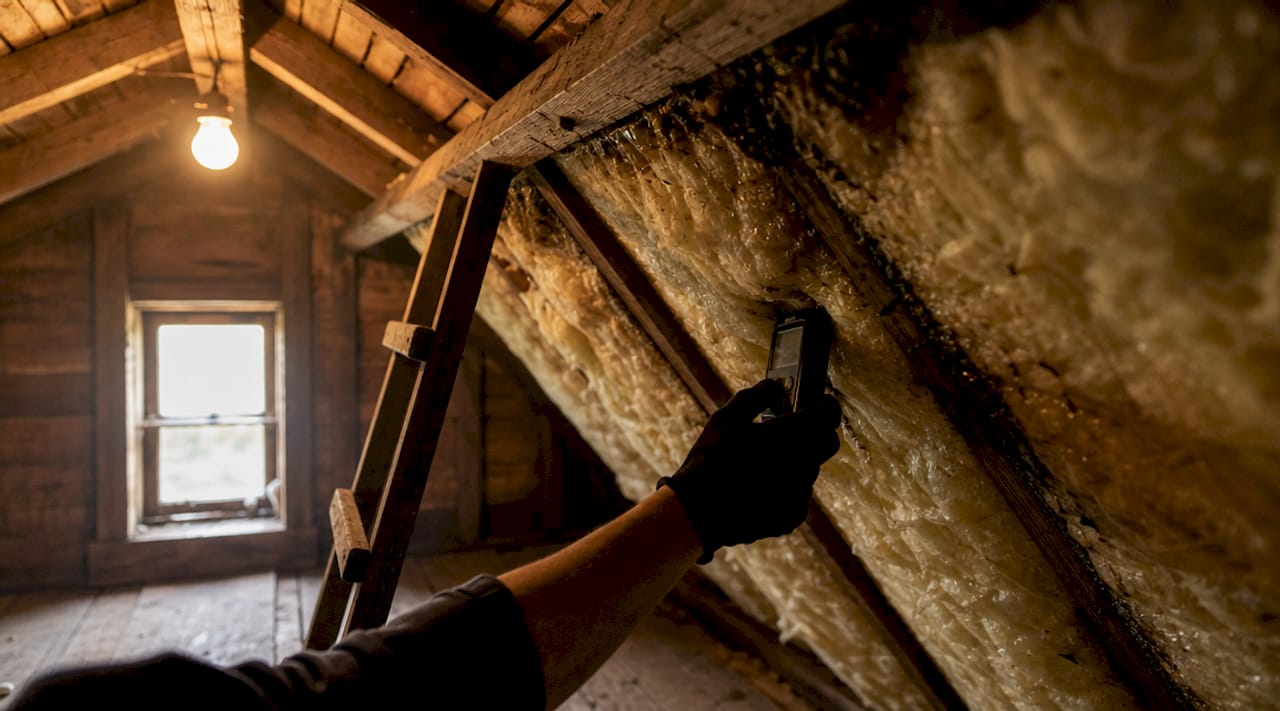
The importance of fixing roof leaks also extends to your insurance coverage. Many standard homeowner policies require you to take reasonable steps to prevent further damage after a leak is discovered. Failing to act can give insurers grounds to deny or reduce a claim. Understanding your insurance claim process before a leak becomes a crisis is one of the most practical steps a property manager can take.
What causes roof leaks and how do they develop unnoticed?
Most leaks do not start in the middle of a roof plane. They originate at the system details where water concentrates and changes direction. GAF identifies the most common weak points for leaks as flashing around chimneys, pipe boots, skylights, and valleys, along with clogged gutters that force water backward under shingles. These are the spots where two materials meet, where sealants age, and where debris accumulates.
Here is what typically triggers a leak at each of these points:
- Damaged or lifted flashing: Metal flashing around chimneys and vents corrodes or separates over time, creating a gap water exploits during heavy rain.
- Clogged gutters: When gutters overflow, water backs up under the first course of shingles, saturating the roof deck before draining.
- Ice dams: In North Georgia winters, freeze-thaw cycles push ice under shingles at the eave, forcing meltwater into the attic.
- Cracked or missing shingles: Wind, hail, and UV degradation expose the underlayment, which is not designed for long-term water exposure.
- Pipe boot failures: The rubber collar around plumbing vents cracks after years of sun exposure, creating a direct water entry point.
One reason leaks go unnoticed for so long is that water travels unseen. A leak at the ridge flashing can run down a rafter for six feet before dripping onto insulation, and the insulation absorbs it silently. Ceiling stains are a late symptom, not an early warning. Many homeowners underestimate how far water travels from the actual entry point.
Pro Tip: After any storm with winds above 50 mph or hail larger than a quarter, walk the perimeter of your home and look for granules in the gutters. Granule loss is one of the earliest signs of shingle failure, and it shows up long before a leak appears inside.
What are the risks of delaying roof leak repairs?
Delaying repairs turns a localized water intrusion into a multi-system failure. The consequences of roof leaks that go unaddressed fall into three categories: structural, biological, and financial.
On the structural side, wet materials cause rot and attract termites that rapidly degrade wood framing, potentially leading to roof collapse. Saturated OSB roof decking loses its structural integrity within weeks. Once the decking fails, a simple flashing repair becomes a full deck replacement.
The biological risk is equally serious. The EPA’s guidance is direct: dry wet materials within 24 to 48 hours after a leak to prevent mold growth, and keep indoor humidity below 60%. That 24 to 48 hour window is not a guideline. It is the point at which mold spores begin colonizing porous materials like insulation, drywall, and wood framing. Once mold is established, you are no longer dealing with a roofing problem. You are dealing with a remediation project.
Research published in the ESMED Health Review links water-damaged buildings with respiratory and immune system problems, including multisystem illness risks from chronic mold exposure. Families with children, elderly members, or anyone with asthma face elevated health risks from a leak that goes unaddressed for even a few weeks.
The financial consequences compound quickly. A minor flashing repair that costs a few hundred dollars becomes a mold remediation project costing thousands once porous materials are affected. Delaying roof repairs increases the likelihood of needing broad remediation rather than a targeted fix. Insurance adjusters also look at the timeline. If documentation shows a leak was known and ignored, coverage for secondary damage, such as ruined drywall or flooring, may be denied.
How can homeowners prevent roof leaks and maintain roof health?
Prevention is the most cost-effective strategy available. Routine inspections and seasonal maintenance can prevent the majority of leaks and extend roof lifespan significantly, particularly in demanding climates like North Georgia where storms, heat, and humidity all stress roofing materials.
Follow this seasonal maintenance sequence to reduce leak risk year-round:
- Spring inspection: After winter, check all flashing for separation or corrosion. Look for granule loss in gutters. Inspect pipe boots for cracking.
- Summer trim: Cut back overhanging branches to at least six feet from the roof surface. Branches deposit debris, retain moisture, and can puncture shingles during storms.
- Fall gutter cleaning: Clear gutters and downspouts before leaf fall peaks. Clogged gutters are one of the leading causes of water intrusion at the eave.
- Pre-winter attic check: Confirm attic ventilation is unobstructed and that insulation is not blocking soffit vents. Poor ventilation causes condensation that mimics a leak from the inside.
- Post-storm walkthrough: After any significant weather event, inspect the roof from the ground with binoculars. Look for lifted shingles, displaced flashing, or debris accumulation in valleys.
Pro Tip: Controlling indoor humidity is part of roof leak prevention. Use exhaust fans in bathrooms and kitchens, and run a dehumidifier in the attic if you live in a high-humidity area. Condensation from inside the home accounts for a surprising number of “leak” calls that are actually moisture management problems.
Here is a quick comparison of prevention approaches by cost and effectiveness:
| Prevention method | Approximate cost | Effectiveness |
|---|---|---|
| Annual professional inspection | $150 to $300 | High. Catches flashing and detail failures early. |
| Gutter cleaning (twice yearly) | $100 to $200 | High. Eliminates a primary water backup cause. |
| DIY visual inspection | Free | Moderate. Misses hidden detail failures. |
| Sealant touch-ups only | $20 to $50 | Low. Surface fixes rarely address root causes. |
For homeowners in North Georgia, Ir-ga’s roof damage inspection guide covers the specific failure points most common in the region’s climate.
What are the best practices for managing and repairing roof leaks?
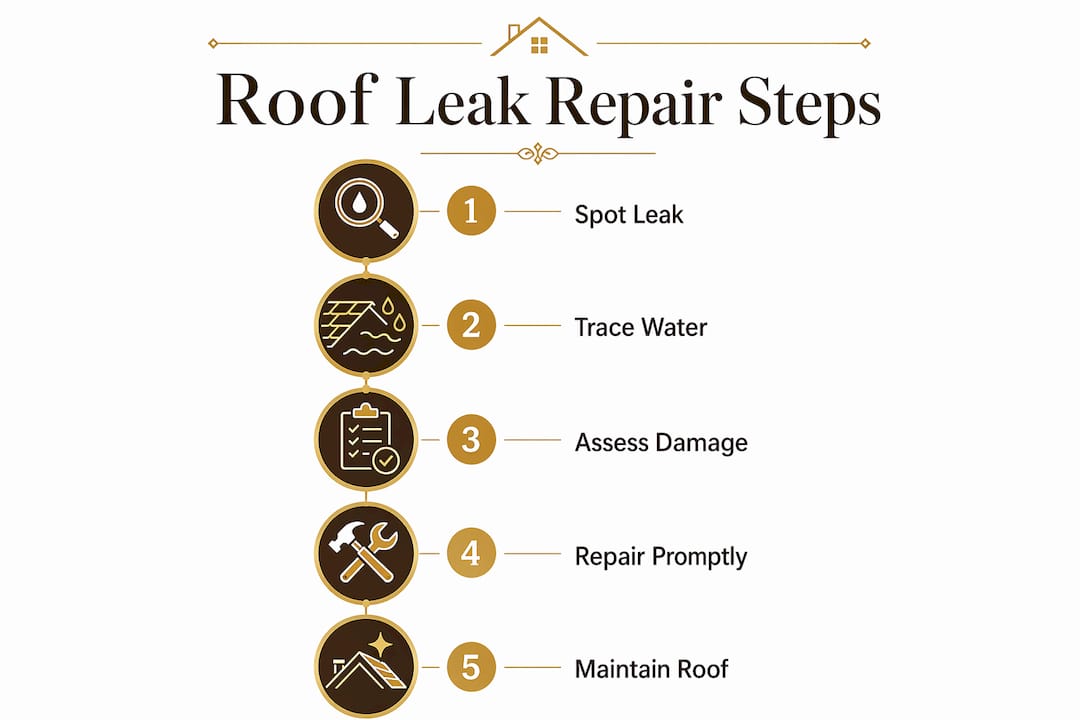
When a leak is active, the first priority is limiting interior damage, not diagnosing the source. Place buckets, move furniture, and use plastic sheeting to protect flooring and belongings. Then, if it is safe to access the attic, locate the wet area and place a bucket or absorbent material to catch dripping water. Do not attempt to walk on a wet or storm-damaged roof.
Once the weather clears, effective leak management follows this sequence:
- Trace the full wet path: Water entry and water appearance are rarely at the same point. GAF advises tracing leaks to root cause at system details like pipe boots, chimney flashing, and valley intersections rather than patching the visible stain.
- Dry porous materials fast: The 24 to 48 hour drying window is the standard for preventing mold. Use fans, dehumidifiers, and open ventilation to remove moisture from insulation and framing.
- Remove compromised materials: Wet insulation does not dry effectively and becomes a mold substrate. Remove and replace it rather than drying in place.
- Address the root cause: Surface patches over failed flashing or cracked boots will re-leak. Permanent repairs require correcting the underlying detail failure.
The repair versus replacement decision depends on the scope of damage and the age of the roof. A roof under 15 years old with isolated flashing failures is a strong candidate for targeted repair. A roof over 20 years old with multiple leak points, widespread granule loss, and compromised decking is more likely to need replacement. Ir-ga’s guide on repair vs. replacement walks through this decision with specific criteria for North Georgia homeowners.
Professional contractors using thermal imaging can identify moisture trapped in the roof assembly that is invisible to the naked eye. This technology reduces leak recurrence compared to surface-only fixes and is worth requesting when the leak source is unclear.
Key takeaways
Addressing roof leaks without delay is the single most effective way to prevent structural damage, mold growth, and escalating repair costs.
| Point | Details |
|---|---|
| Act within 24 to 48 hours | The EPA’s drying window is the threshold before mold colonizes porous materials. |
| Leaks start at system details | Flashing, pipe boots, gutters, and valleys are the primary entry points, not open roof planes. |
| Delay multiplies costs | A minor repair becomes full remediation once mold or structural rot sets in. |
| Prevention beats repair | Annual professional inspections and gutter cleaning eliminate the majority of leak causes. |
| Trace before you patch | Fixing the visible stain without finding the root cause leads to repeat leaks. |
What I’ve learned from years of watching homeowners wait too long
I have seen the same pattern repeat more times than I can count. A homeowner notices a small stain on the ceiling, assumes it was a one-time event from a heavy storm, and decides to watch it for a few months. By the time they call us, the stain has grown, the insulation is saturated, and there is visible mold on the framing. What would have been a $400 flashing repair is now a $4,000 project that includes mold remediation and drywall replacement.
The detail that surprises most people is how common it is to misidentify the leak source. A stain above the master bedroom is almost never directly below the entry point. Water travels along rafters and roof decking for several feet before it finds a gap to drip through. This is why surface patches so often fail. The homeowner seals what they can see, but the water is still entering six feet away at a failed pipe boot or a separated valley flashing.
The other thing I would tell every property manager is this: your maintenance log is your best defense in an insurance dispute. Document every inspection, every repair, and every storm event with photos and dates. Insurers look for evidence of neglect. A clean maintenance record showing annual inspections and prompt repairs tells a very different story than a roof with no documented history.
Proactive roof care is not about spending money. It is about controlling when and how much you spend. A $200 inspection that catches a failing flashing seal costs far less than the remediation that follows six months of undetected water intrusion. The signs of a successful restoration are worth knowing too, so you can confirm the work was done right the first time.
— Dan
How Ir-ga helps North Georgia homeowners stop leaks fast
When a leak appears, you need a team that responds the same day and traces the problem to its source, not just its symptom. Ir-ga has served homeowners across North Georgia since 2018 with licensed, insured roof repair services backed by a 5-star reputation and a commitment to honest pricing.

Our team handles everything from targeted flashing repairs to full storm damage restoration, and we manage the insurance claim process so you get maximum coverage without the paperwork headache. If you are dealing with an active leak or want to get ahead of the next storm season, our storm damage repair guide walks through every step. You can also work with our licensed roofing contractors for repairs that meet North Georgia code and come with quality guarantees. Get your same-day estimate today at ir-ga.com.
FAQ
What are the first signs of a roof leak?
The earliest signs include granules in gutters, water stains on ceilings or walls, and damp or discolored insulation in the attic. Visible interior stains are typically a late indicator, meaning water has already been present for some time.
How fast does mold grow after a roof leak?
Mold can begin growing on wet porous materials within 24 to 48 hours, according to EPA guidance. Drying affected materials within that window is the standard threshold for preventing mold colonization.
Can a small roof leak fix itself?
No. Roof leaks do not self-seal. Flashing gaps, cracked pipe boots, and failed sealants only worsen with repeated rain and temperature cycles. Delaying repair allows water to expand the damage zone and increases total repair cost.
When should I repair versus replace my roof?
A roof under 15 years old with isolated leak points is generally a repair candidate. A roof over 20 years old with multiple failure points, widespread granule loss, or compromised decking typically warrants replacement. A professional inspection with moisture mapping gives the clearest answer.
Does homeowner’s insurance cover roof leaks?
Most policies cover sudden and accidental damage, such as storm-caused leaks, but exclude damage resulting from neglect or lack of maintenance. Documenting inspections and repairs strengthens any claim and reduces the risk of denial for secondary damage.